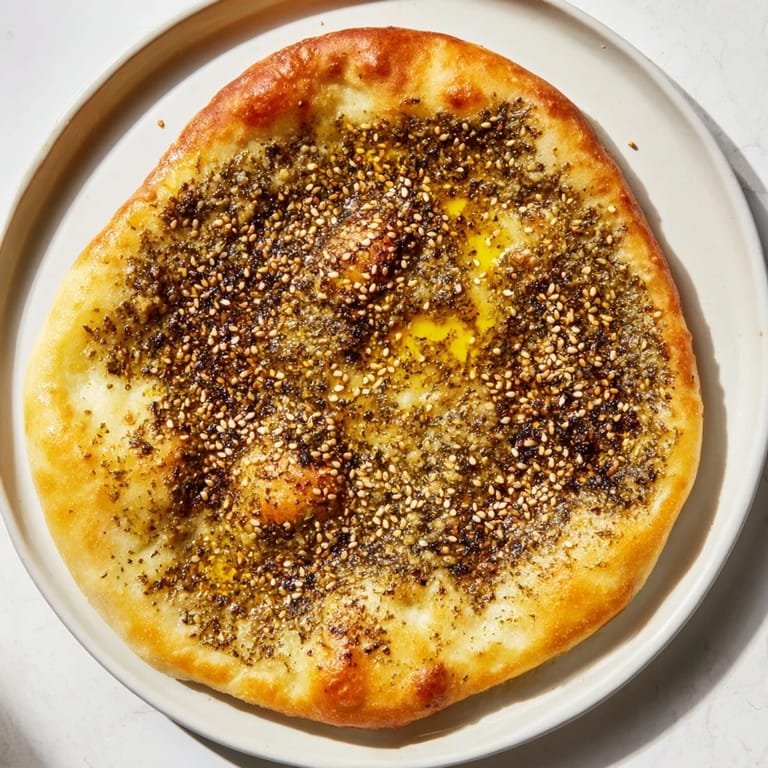
 Save
Save The first time I truly understood zaatar bread was during a family gathering when my cousin brought fresh flatbreads from a Lebanese bakery, still warm in their paper bag. The moment she unwrapped them, the kitchen filled with this grassy, tangy aroma that made everyone stop talking. I watched how people tore into those golden rounds, drizzling them with more olive oil, and realized this wasn't fancy cooking—it was the kind of food that brings people together without pretense. Years later, when I finally made my own version at home, that same magic happened, and I've been making it ever since.
I remember making this for a late-night gathering with friends who'd dropped by, and I didn't even have a real zaatar blend on hand—so I improvised with what I had. Those breads still disappeared first from the table, and my friend Sarah asked for the recipe before she'd even finished her piece. There's something about the smell of it baking that makes a house feel instantly welcoming.
Ingredients
- All-purpose flour (2 cups/250 g): The foundation—use a good-quality flour that feels slightly granular, not powdery, for the best structure.
- Instant dry yeast (1 teaspoon): This is your rise, so make sure it hasn't been sitting open in your pantry for months; fresh yeast makes all the difference in how puffy your breads turn out.
- Sugar (1 teaspoon): A tiny bit of sweetness wakes up the yeast and helps it do its job during rising.
- Salt (3/4 teaspoon): Don't skip this—it seasons the dough itself and gives it strength to hold its shape.
- Olive oil (2 tablespoons for dough, 1/3 cup for topping): Use a decent-quality oil; you'll taste it in every bite, especially in the topping where it carries the zaatar flavor.
- Warm water (2/3 cup/160 ml): Warm, not hot—if it's too hot you'll kill the yeast, so aim for about body temperature when you dip your finger in.
- Zaatar spice blend (1/4 cup/30 g): This is the star; if you can't find ready-made, it's typically a mix of thyme, sumac, and sesame, with a bright, slightly lemony taste.
- Toasted sesame seeds (2 tablespoons): The toasting brings out their nuttiness—if yours aren't toasted, quickly warm them in a dry pan for a minute and they'll transform.
Tired of Takeout? 🥡
Get 10 meals you can make faster than delivery arrives. Seriously.
One email. No spam. Unsubscribe anytime.
Instructions
- Bring Your Ingredients Together:
- In a large bowl, whisk the flour, yeast, sugar, and salt so everything's evenly distributed. Add the olive oil first, then pour in the warm water slowly while stirring with your hand, bringing it all together into a shaggy, soft dough.
- Knead Until Silky:
- Turn the dough onto a lightly floured surface and knead for 5–7 minutes, using the heel of your hand to push it away, then fold it back over itself. You're looking for smooth and elastic—it should feel alive under your hands, not stiff.
- Let It Rise:
- Place the dough in a lightly oiled bowl, cover with a damp cloth or plastic wrap, and set it somewhere warm (near a sunny window works beautifully). After about an hour, it should have roughly doubled in size; you can test by poking your finger in—if the indentation stays, it's ready.
- Heat Your Oven:
- Turn your oven to 220°C (425°F) and line two baking sheets with parchment paper so nothing sticks.
- Shape the Flatbreads:
- Divide the risen dough into 4 equal pieces, roll each into a ball, then gently flatten and stretch into a round about 6–7 inches across. Lay them on your prepared sheets, and if they're resisting, give them a few minutes to relax before stretching further.
- Make the Zaatar Paste:
- In a small bowl, combine the zaatar blend, toasted sesame seeds, and olive oil, stirring until it looks like a fragrant, chunky paste. Taste a tiny bit on your finger—it should be savory, slightly tangy, and make you want more.
- Top and Bake:
- Spread the zaatar mixture generously over each round, leaving a small border so the edges stay crispy and golden. Slide into the oven and bake for 12–15 minutes until the breads are golden brown with slightly darkened edges.
- Rest and Serve:
- Let them cool for just a minute or two—they'll firm up slightly as they cool. Serve warm or even at room temperature with labneh, olives, fresh tomatoes, or whatever you have nearby.
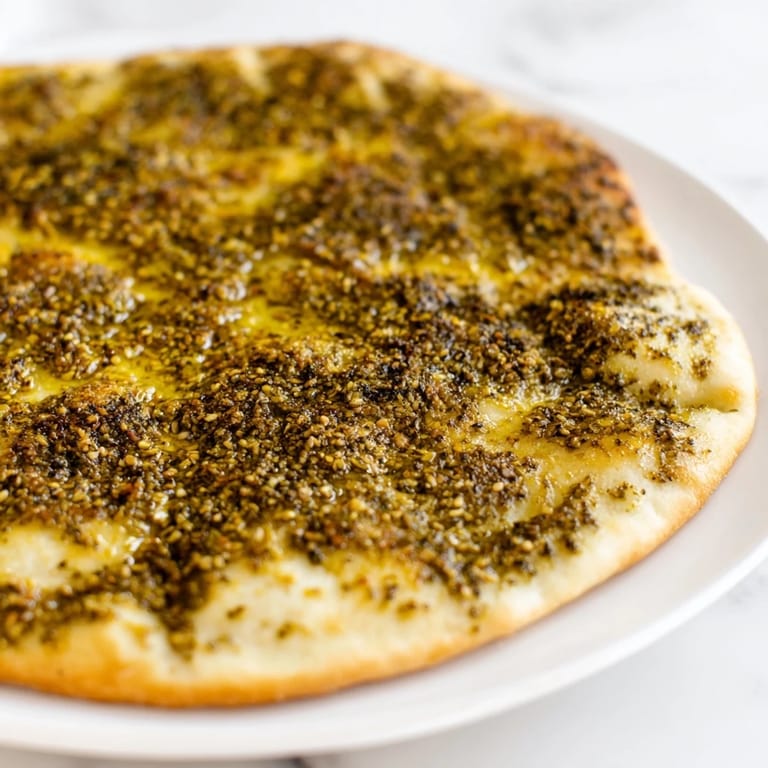 Save
Save There was a moment when my kids came home from school, and before they even took off their jackets, the smell of zaatar bread pulled them to the kitchen. They sat at the table, still in their uniforms, tearing into these warm flatbreads and talking about their day—and I realized this simple recipe had created a tiny, perfect ritual that now happens whenever I make it.
The Secret to Perfect Rise
The biggest revelation for me came when I stopped worrying about exact timing and started paying attention to how the dough actually looked. A warm kitchen—maybe where the sun comes through a window or near (but not touching) a heating vent—makes all the difference. I've had dough rise in forty minutes on a particularly warm afternoon, and other times it's needed the full hour. Instead of setting a timer and walking away, I check on it after thirty minutes and look for that doubled, puffy appearance. Trust your eyes more than the clock.
Customizing Your Topping
One of the joys of making zaatar bread at home is that you can adjust it to match your mood or what's in your kitchen. I've added a small pinch of sumac for extra tartness when I wanted something brighter, thrown in red pepper flakes for heat, or even scattered a few olives on top before baking. The base recipe is flexible enough that these breads can taste different every time you make them, which keeps them interesting even after you've made them dozens of times.
Serving and Storing
These breads shine when served warm with something cool and creamy alongside—labneh is traditional, but hummus, baba ganoush, or even a simple yogurt dip all work beautifully. If you've made them ahead and they've cooled, a quick warm-up in a 160°C (320°F) oven for about 5 minutes brings back that fresh-baked quality. The wonderful thing about zaatar bread is that it's equally good at a sit-down dinner or wrapped up and taken on a picnic.
- Serve with labneh, olives, or fresh vegetables for a complete mezze spread.
- Wrap cooled breads in a kitchen towel to keep them soft, or store in an airtight container for up to two days.
- These freeze beautifully—just thaw and reheat gently when you're ready to eat.
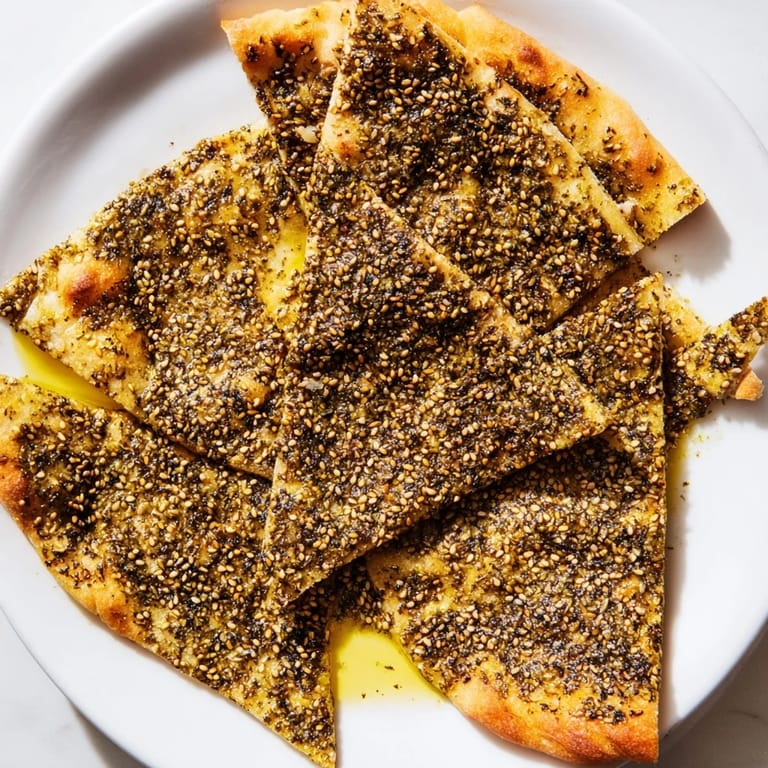 Save
Save Making zaatar bread has become one of those small kitchen skills that feels like a superpower—turning basic ingredients into something that tastes like it came from a proper bakery. Whenever you make this, you're not just feeding people; you're creating a moment.
Recipe Help
- → What is zaatar?
Zaatar is a Middle Eastern spice blend commonly including thyme, oregano, sumac, and sesame seeds, offering a herbal and nutty flavor.
- → Can I prepare the dough ahead of time?
Yes, the dough can be prepared in advance and refrigerated for a slower rise, enhancing flavor and convenience.
- → How to achieve a fluffier bread texture?
Let the shaped dough rest for 10 minutes before applying the topping to promote a lighter, airier crumb.
- → What are suitable accompaniments for this bread?
This flatbread pairs beautifully with labneh, olives, hummus, baba ganoush, or fresh vegetables.
- → Are sesame seeds required?
Sesame seeds add a distinctive crunch and flavor in the topping but can be omitted or substituted if allergies are a concern.
- → Can this bread be made vegan?
Yes, this bread uses plant-based ingredients only, making it suitable for vegan diets.