 Save
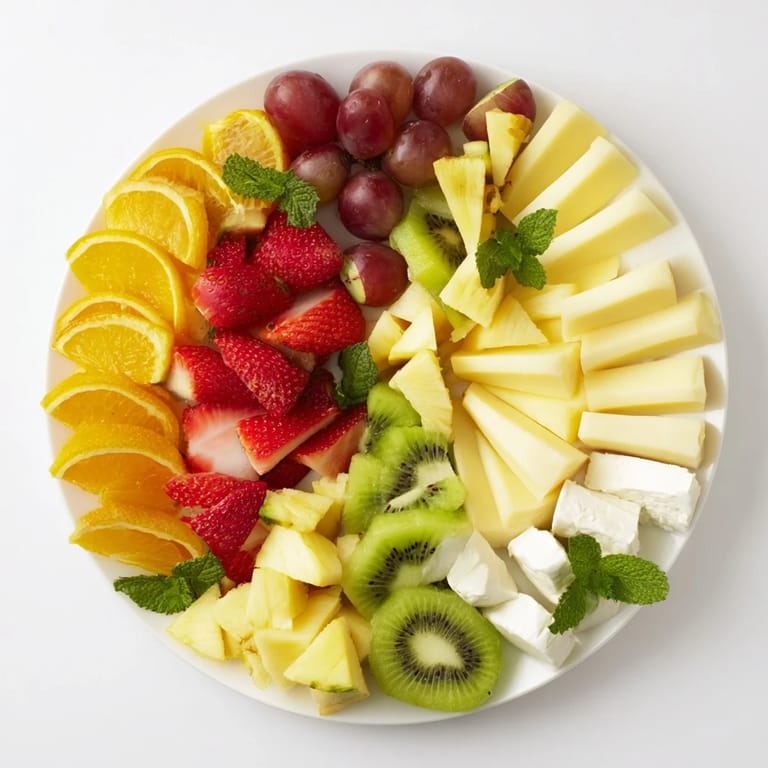
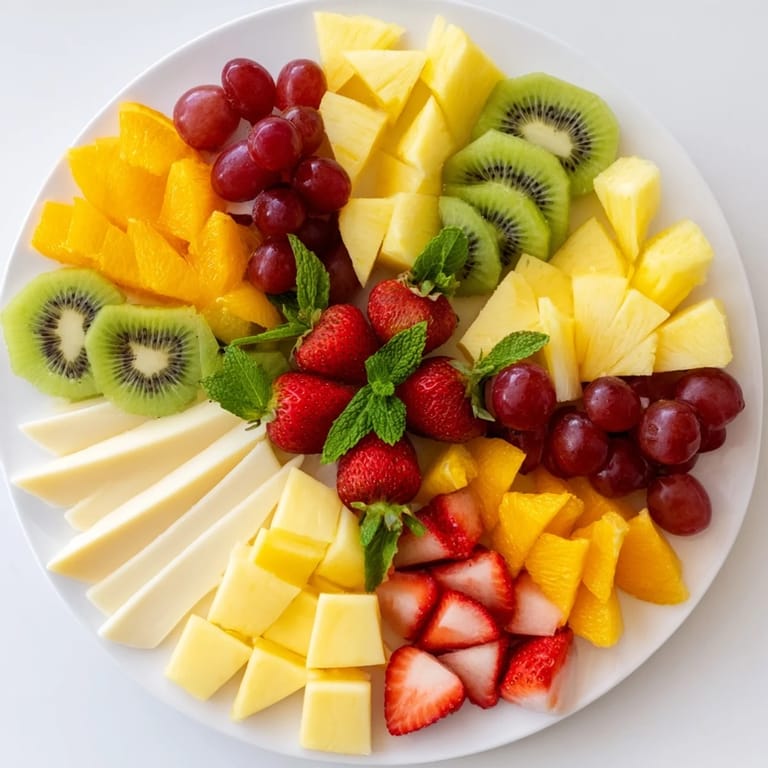
Save The first time I arranged fruit and cheese in anything resembling a pattern, my friend casually mentioned how therapeutic it was to watch, and I realized I'd been so focused on taste that I'd missed half the joy. Years later, when I started playing with kaleidoscopic arrangements, something clicked—the repetition, the symmetry, the way each wedge had to earn its place. That's when this platter stopped being about snacks and became about the moment guests lean in, genuinely delighted before they even take a bite.
I made this for a small dinner party where someone had forgotten to bring wine, and instead of panicking, everyone gravitated to this board and just... talked. Turns out the platter became the real centerpiece, something to admire while chatting rather than rush through. It was then I understood that food arranged with intention invites people to slow down.
Ingredients
- Seedless red grapes (1 cup): These stay firm and glossy, catching light beautifully in the pattern.
- Fresh strawberries (1 cup, hulled and halved): Their bright red is non-negotiable for that stunning visual pop, and halving them lets them nestle snugly into the design.
- Kiwi (1 cup, peeled and sliced into wedges): The green interior creates natural contrast, and slicing into wedges (rather than rounds) makes arrangement so much cleaner.
- Pineapple (1 cup, cut into small wedges): The pale yellow adds warmth without overwhelming the palette, and small wedges keep proportions balanced.
- Blueberries (1 cup): These become your secret filler, tucking into gaps and tying colors together.
- Orange (1 small, peeled and segmented): The brightness juxtaposed with deeper reds teaches you about color harmony on a plate.
- Aged cheddar (100g, cut into triangular wedges): That deep golden color is pure visual magic, and the slight tang balances all the sweetness.
- Manchego (100g, sliced into thin wedges): Its pale, creamy tone softens the bolder yellows and adds sophistication without pretension.
- Brie (100g, cut into small wedges): The pale interior with its white rind creates a pristine contrast that feels almost architectural.
- Goat cheese (100g, sliced into rounds): Creamy, slightly tart, and when sliced into circles, it adds a soft geometric element to all those wedges.
- Fresh mint leaves (optional garnish): A whisper of aroma and one final touch of green that says someone cared about the details.
Tired of Takeout? 🥡
Get 10 meals you can make faster than delivery arrives. Seriously.
One email. No spam. Unsubscribe anytime.
Instructions
- Prep Everything with Purpose:
- Wash, peel, and cut each fruit and cheese into matching shapes—wedges for most fruits, rounds for the goat cheese. This uniformity is what makes the kaleidoscope work, so take a breath and let this become meditative rather than rushed.
- Build From the Edge Inward:
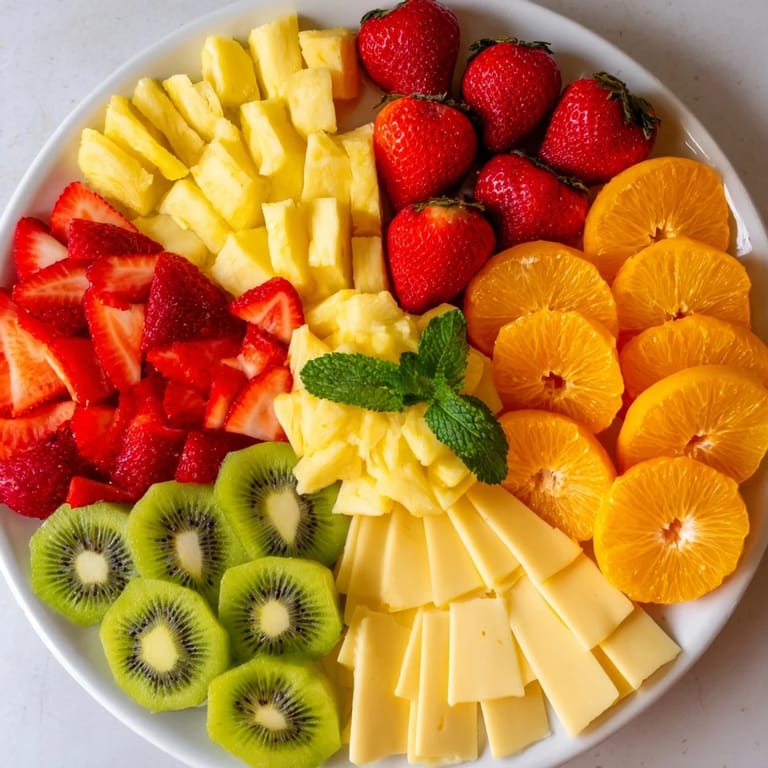
- Start at the outer rim of your platter and place your first fruit wedge, then follow immediately with a cheese wedge, alternating back and forth. The rhythm of this becomes almost musical if you let it.
- Create Concentric Rings:
- Once you've circled the platter, begin a new ring closer to the center, staggering your choices so no two adjacent rings start with the same ingredient. This is where it stops looking like a charcuterie board and becomes something people photograph.
- Fill Gaps Like You're Solving a Puzzle:
- Those blueberries and leftover grapes? They're not afterthoughts—they're the glue that makes the pattern feel intentional rather than accidental. Let them nestle into spaces naturally.
- Add a Final Green Whisper:
- Scatter mint leaves casually across the top just before serving, treating them like the period at the end of a well-written sentence.
 Save
Save There was a moment, mid-arrangement, when a piece of brie caught the kitchen light and I stopped to really look at what I'd built so far. It wasn't just food anymore—it was proof that patience and repetition create something bigger than the sum of its parts. That's the gift this platter keeps giving.
The Geometry of Deliciousness
What makes this platter work isn't luck—it's understanding that our eyes eat first. The kaleidoscope pattern tricks your brain into seeing something almost sacred about simple fruit and cheese, which means every bite tastes a little bit better because of what you've seen. I've learned that the same three ingredients arranged differently can feel either casual or ceremonial.
Seasonal Improvisation
Once you grasp the framework, this platter becomes a canvas for whatever's at the market. Summer calls for berries and stone fruits; autumn whispers stone fruits and grapes; winter thrives on citrus and pomegranate arils. The structure stays the same, but the story changes with the seasons, and somehow that feels more generous than sticking to a single recipe.
Pairing and Presentation
Serve this alongside sparkling wine or light rosé, and watch how the bubbles complement the tartness of the goat cheese and the brightness of the kiwi. The platter works on a round board, a marble slab, even a large wooden cutting board—the vessel matters less than the conviction you arrange it with. If you're feeling adventurous, add a scattering of candied nuts or a few Castelvetrano olives in the gaps for a savory-sweet moment.
- Chill your platter for 15 minutes before arranging if your kitchen is warm—cold fruit and cheese hold their shape and shine better.
- Use a sharp knife for clean cuts; ragged edges dull the visual impact and make the whole thing feel less intentional.
- Assemble just before your guests arrive so the presentation feels like a gift they're witnessing, not a prop they've been staring at for hours.
 Save
Save This platter is proof that elegance doesn't require complexity, just intention. Make it once, and you'll understand why something this simple has such staying power in people's memories.