 Save
Save I still remember the first time I discovered the Golden Ratio in nature during a walk through the botanical gardens—spiraling pinecones, unfurling ferns, the way shells curved in perfect mathematical harmony. Years later, standing in my kitchen late one evening, I wondered if I could capture that same transcendent beauty in something edible, something that would make people pause mid-bite and simply appreciate the artistry. That's when The Golden Ratio Shell was born, a dessert that whispers mathematical poetry through layers of chocolate, fruit, and sponge.
I made this for my sister's dinner party last spring, and I'll never forget the moment she turned off her phone mid-conversation just to really look at it. She traced the spiral with her finger before cutting into it, and that's when I knew the effort was worth it—when a dessert becomes something people want to savor rather than just consume.
Ingredients
- All-purpose flour (60 g): The foundation of your sponge—sift it gently because overworking develops gluten and makes your cake tough instead of ethereal
- Granulated sugar (60 g for sponge, 30 g for jelly, 25 g for mousse): Each component needs its own sweetness balance; don't skip weighing these
- Large eggs (2 for sponge, 2 yolks for mousse): Room temperature eggs whip up better and incorporate more air—trust me on this one
- Unsalted butter, melted (30 g): The gentle incorporation of butter keeps your sponge tender; add it slowly so it doesn't deflate all that whipped air
- Vanilla extract (1 tsp for sponge, 1 tsp for mousse): Real vanilla makes a difference here—those tiny black flecks add authenticity
- Salt (pinch): Just enough to make everything taste more like itself
- Fresh raspberry puree (110 g): The heart of your jelly spiral; if you can't find fresh raspberries, frozen work beautifully—just thaw and press through a sieve
- Powdered gelatin (4 g): The magic that holds your spiral together; always bloom it in cold water first or it'll seize up
- Cold water (25 ml): For blooming gelatin—temperature matters more than you'd think
- Lemon juice (1 tsp): Brightens the raspberry and prevents the jelly from tasting one-dimensional
- Dark chocolate 70% (180 g): Quality matters here because this is the star; cheap chocolate tastes waxy by comparison
- Heavy cream (140 ml for mousse, 40 ml for glaze): Cold cream whips better, and it needs to be properly cold before you start
- White chocolate, chopped (100 g): The glossy crown that makes everything look professionally finished
- Edible gold leaf or gold dust: Optional but worth the small investment—it transforms the dessert from beautiful to unforgettable
Tired of Takeout? 🥡
Get 10 meals you can make faster than delivery arrives. Seriously.
One email. No spam. Unsubscribe anytime.
Instructions
- Prepare Your Canvas:
- Preheat your oven to 180°C and line your baking tray with parchment paper. I like to smooth it down with my hands so there are no bubbles—it's a small gesture that makes the finished sponge look pristine.
- Whip the Sponge Base:
- In a clean bowl, whisk your room-temperature eggs with sugar until the mixture turns pale and thick, about 5-7 minutes of whisking. This takes longer than you'd expect, but you're incorporating air that will make your sponge light and tender. When you lift the whisk, the mixture should fall in ribbons that sit for a few seconds before disappearing.
- Fold in the Flour:
- Sift your flour and salt directly over the egg mixture, then fold gently with a rubber spatula. Use a cutting motion down the center, across the bottom, and up the side—turning the bowl as you go. This is meditation, not haste; rough handling deflates everything you just whipped.
- Add Butter and Vanilla with Care:
- Combine your melted butter with vanilla, then add it to the batter in three additions, folding gently after each. The batter will seem reluctant to accept the butter, like oil refusing to mix with water, but trust the folding process.
- Bake to Perfection:
- Spread the batter evenly in your prepared tray and bake for 10-12 minutes. Your sponge is done when a toothpick comes out clean and the top springs back when you touch it gently. It should smell like vanilla dreams and look golden.
- Cool and Cut with Precision:
- Let the sponge cool completely on a wire rack—patience here prevents your mousse from melting later. Once cool, cut it into eight rectangles following the 5:8 ratio (approximately 5 x 8 cm each). I use a ruler and a sharp knife, which feels fussy but ensures your final spiral looks intentional.
- Bloom Your Gelatin:
- Sprinkle gelatin over cold water in a small bowl and let it sit for exactly 5 minutes. This blooming process allows the gelatin to absorb water uniformly; skip this and you'll end up with lumpy jelly.
- Create the Jelly Base:
- Heat your raspberry puree and sugar together until it's just warm—steaming actually destroys some of the delicate raspberry flavor, so you're aiming for warm but not hot. Stir in your bloomed gelatin and lemon juice until completely dissolved. The mixture should be smooth and glossy.
- Set the Jelly:
- Pour into your 16 x 16 cm tray lined with plastic wrap and chill until it's set but not rock-hard, about 1.5-2 hours. You want it firm enough to cut but supple enough to curl. This is a critical texture to judge by touch.
- Cut Your Spiral Strips:
- Once set, cut the jelly into strips following the Golden Ratio proportions—starting at 3 cm wide and gradually narrowing to 1.8 cm. If this sounds complicated, just remember you're creating a visual spiral, and each strip gets slightly narrower as you move through. Use a very sharp knife and clean it between cuts so the ruby red stays pristine.
- Melt Your Chocolate Gently:
- Chop your dark chocolate and place it in a heatproof bowl over gently simmering water, making sure the bowl doesn't touch the water. Stir occasionally until melted and smooth. Overheating chocolate makes it grainy and disappointing—low and slow is the only way.
- Temper Your Egg Yolks:
- In a separate bowl, whisk egg yolks with sugar until pale and thick. In a small saucepan, heat 70 ml of your cream until it just barely steams. Slowly pour this hot cream into your egg yolk mixture while whisking constantly. This tempering prevents scrambled eggs and creates a silky base.
- Combine into Mousse Magic:
- Pour your tempered yolk mixture into the melted chocolate along with vanilla extract, whisking until completely combined and glossy. Let this cool to about body temperature before proceeding.
- Whip and Fold the Cream:
- In a clean, cold bowl, whip the remaining 70 ml of cream to soft peaks—that moment when the cream holds gentle peaks but still looks slightly billowy. Fold this whipped cream into your chocolate mixture in two additions, turning gently each time. You're keeping the aeration you created during whipping.
- Layer with Intention:
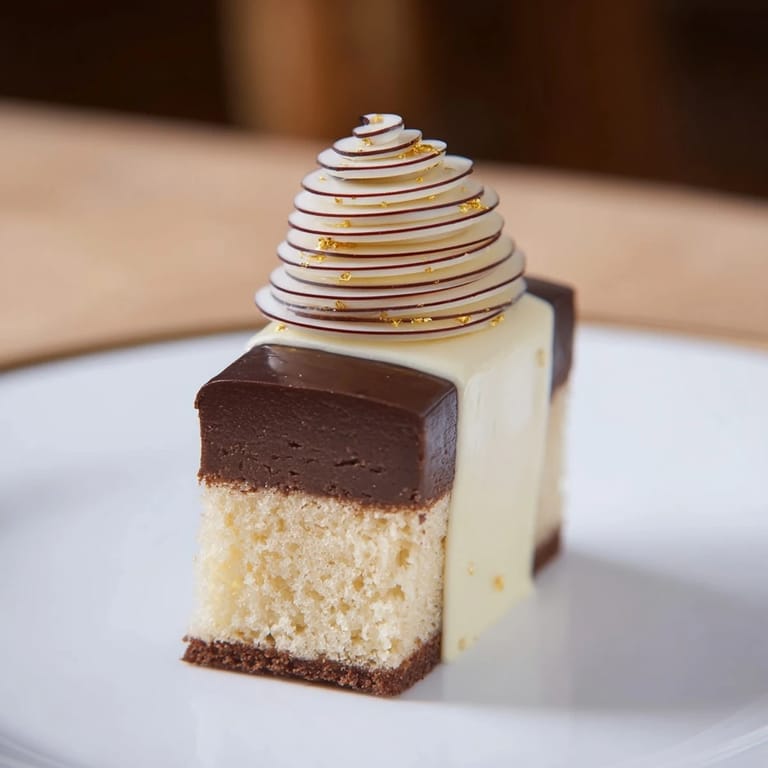
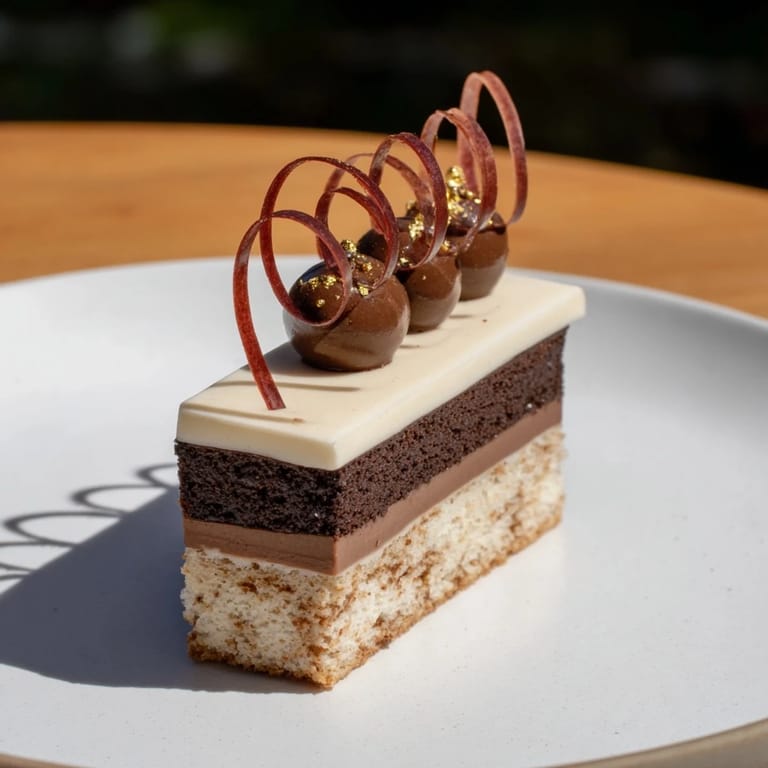
- On each sponge rectangle, pipe or spread a layer of mousse about 3 cm high. Arrange your jelly spiral on top, following the Golden Ratio curve from the outer edge spiraling inward. The spiral should look like it's been carved into the mousse rather than just placed on top.
- Create Your Glaze:
- Chop your white chocolate and place it with the 40 ml of cream in a heatproof bowl over gently simmering water. Stir until completely smooth and silky. Cool slightly—it should still be pourable but cool enough that it won't melt the delicate layers beneath.
- Pour and Adorn:
- Pour the white chocolate glaze over each assembled dessert, letting it cascade gently down the sides. While it's still wet, apply edible gold leaf or dust if using. Gold catches the light and makes everything look more precious.
- Final Chill:
- Place in the refrigerator for at least 2 hours, though overnight is even better. This chill sets everything into place and allows the flavors to marry and deepen.
 Save
Save The moment that made me truly love this dessert came when my young niece asked me to show her how to cut it. As the knife slid through the layers and revealed that spiral of deep ruby jelly against the rich chocolate, her eyes went wide. She whispered, 'It's like it grew that way'—and that's exactly what I was aiming for all along.
The Mathematics Behind the Magic
The Golden Ratio, approximately 1.618 to 1, appears throughout nature because it represents the most aesthetically pleasing proportions to the human eye. When I started researching this dessert, I realized that baking is already mathematics—precise ratios of flour to eggs to fat create specific textures. Why not make that mathematical beauty visible? By cutting your jelly strips so each is slightly narrower than the last, you're creating something that feels both intentional and natural. It's the same ratio that shells use to grow, that flowers use to arrange their seeds, and that your own eyes find beautiful without even understanding why.
Variations and Flavor Explorations
While raspberry is my default because its tartness cuts through the richness of chocolate mousse so elegantly, this dessert is endlessly adaptable. I've made it with mango puree for a tropical version that tastes like summer in every bite, with passion fruit for something more exotic and floral, and even with a dark cherry puree that looked almost black and tasted intensely sophisticated. The key is using a fruit puree with enough flavor and acidity to balance the sweetness of the sponge and mousse. Each variation creates a slightly different visual story, but they all follow the same spiral principle that makes this dessert special.
Serving and Presentation Wisdom
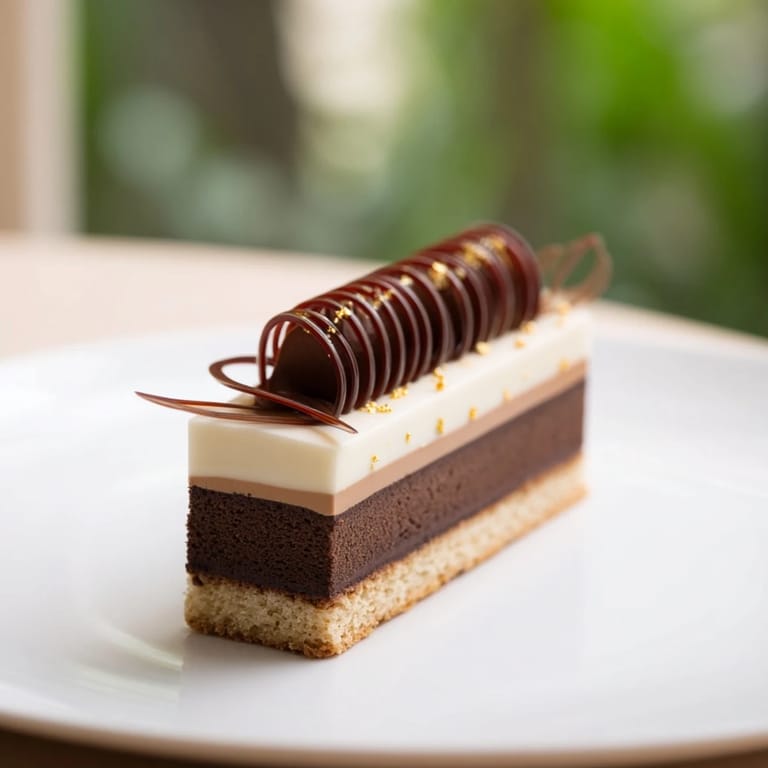
These desserts are special enough that they deserve proper presentation. I always serve them on a pristine white plate or a slate that contrasts with the white glaze, and I like to have the dessert at room temperature for about 15 minutes before serving so the mousse becomes creamy rather than firm. A crisp glass of Moscato d'Asti or champagne beside it feels natural and celebratory. The first bite should be experienced without hurry—it's a moment to appreciate both the flavors and the beauty on the plate.
- Chill your serving plates in the freezer for 10 minutes before plating to keep everything cool longer
- Serve within 2 hours of removing from the refrigerator for optimal texture—the mousse will have the perfect silky consistency
- A small gold leaf placed thoughtfully during service adds luxury without excess
 Save
Save This dessert isn't about impressing with complexity—it's about understanding that mathematics, art, and flavor can exist in the same perfect bite. When you make it, you're not just baking; you're creating something that bridges science and beauty.
Recipe Help
- → How is the Golden Ratio applied in the dessert layers?
The sponge, mousse, and jelly are cut and arranged according to the Golden Ratio spiral, creating balanced proportions and a visually appealing presentation.
- → Can the raspberry jelly be substituted?
Yes, mango or passionfruit puree can be used as alternatives for varied fruity flavors while maintaining the jelly texture.
- → What is the best way to achieve a smooth chocolate mousse?
Gently melt dark chocolate over a bain-marie, temper egg yolks with warm cream, then fold whipped cream carefully for a light, airy mousse.
- → How long should the dessert be chilled before serving?
At least 2 hours of chilling is recommended to set layers firmly and enhance flavors and textures.
- → What tools help with the precise layering and assembly?
Using a spiral cutter for jelly strips, piping bags for mousse, and offset spatulas ensures neat, clean layering following the spiral design.