 Save
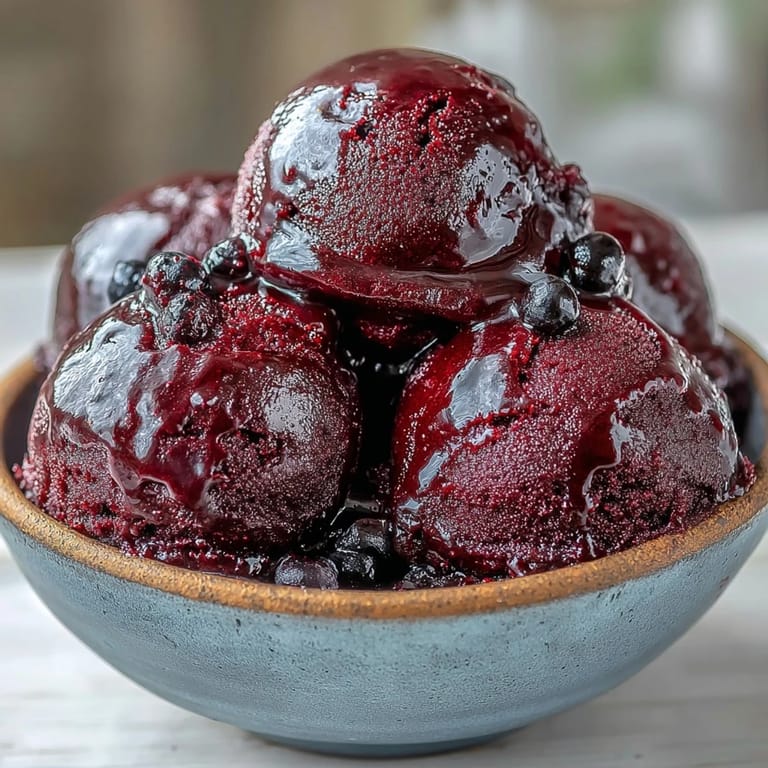
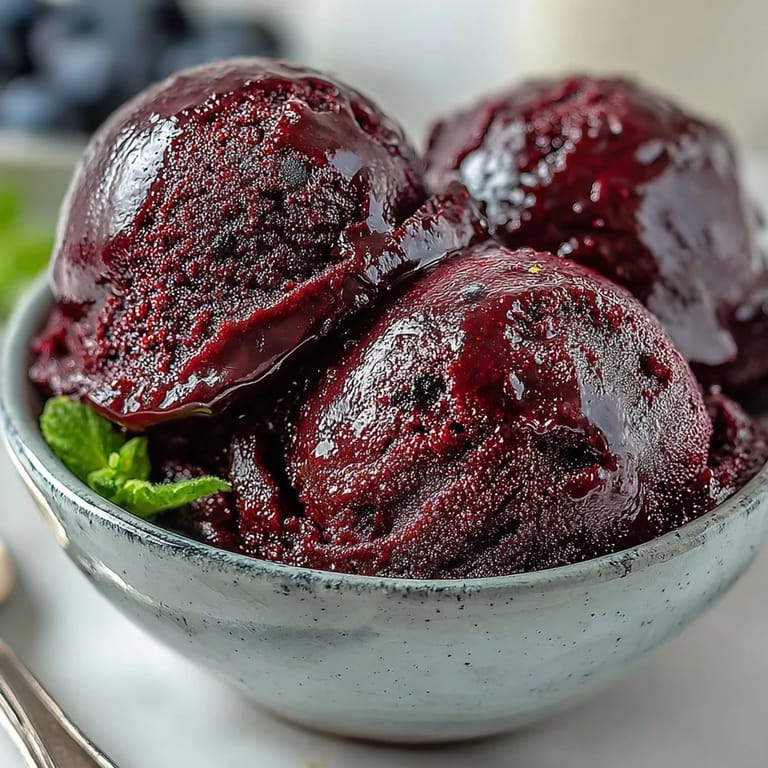
Save There's something about the deep purple-black of black currants that stops me mid-thought every summer. I discovered this sorbet on a sweltering afternoon when my freezer held nothing but ice cubes and hope, and a farmer's market bag of these tart little berries seemed like the only reasonable answer. The first spoonful was a revelation—bright, almost electric on the tongue, with this perfect balance of tartness and sweetness that felt both simple and sophisticated. My kitchen smelled like jammy fruit and summer all at once, and I realized I'd found something I'd be making again and again.
I made this for a dinner party last summer when a guest mentioned they were avoiding dairy, and I wanted something that felt special, not like a sad afterthought. Watching their face when they tasted it—that moment of surprise when sourness turned to pure delight—made the whole process feel worth it. Since then, it's become my go-to when I want to impress people without spending hours in the kitchen.
Ingredients
- Black currants (fresh or frozen, 500 g): The star of the show, these berries are tart enough to keep the sorbet from feeling cloying, and their deep color is absolutely beautiful in the bowl.
- Granulated sugar (200 g): This amount is deliberate—it sweetens without masking the berry's personality, but don't hesitate to adjust if your currants are particularly sour.
- Water (250 ml): Cool water helps create that simple syrup base that carries the berry flavor without diluting it.
- Lemon juice (2 tbsp, freshly squeezed): Fresh lemon brightens everything and adds a subtle complexity that makes people pause and ask what that flavor is.
Tired of Takeout? 🥡
Get 10 meals you can make faster than delivery arrives. Seriously.
One email. No spam. Unsubscribe anytime.
Instructions
- Prepare your berries:
- Rinse the black currants under cold water and pick through them gently, removing any stems or leaves. If you're using frozen currants, you can skip the rinsing and go straight ahead.
- Make the simple syrup:
- In a medium saucepan, combine the sugar and water over medium heat, stirring occasionally until the sugar dissolves completely—you'll notice the mixture becomes clear and glossy, usually in 3 to 4 minutes. This is your sweet foundation.
- Cook the currants:
- Add the black currants to the hot syrup and let them simmer gently for about 5 minutes, stirring occasionally, until they're soft and you see them starting to burst and release their juice. The kitchen will smell incredible at this point.
- Blend it smooth:
- Remove from heat and let cool for just a minute or two, then blend the mixture until completely smooth using a stick blender or regular blender. This creates a gorgeous, silky purée.
- Strain away the seeds:
- Pour the blended mixture through a fine-mesh sieve into a bowl, pressing gently with the back of a spoon to push through all the juice while leaving the seeds and skins behind. This step matters—it gives you that refined texture.
- Add brightness:
- Stir in the fresh lemon juice and taste the mixture before it chills. If it feels too tart, add a touch more sugar; if it's too sweet, a squeeze more lemon brings it back into balance.
- Chill thoroughly:
- Cover the bowl and refrigerate for at least 2 hours until the mixture is completely cold—this helps the ice cream maker do its job more efficiently and creates a smoother final texture.
- Churn to frozen magic:
- Pour into your ice cream maker and churn according to the manufacturer's instructions, usually 20 to 30 minutes, until it's thick and slushy with a soft-serve consistency. Watch it transform is oddly satisfying.
- Freeze solid:
- Transfer to a freezer-safe container and freeze for at least 2 hours until it reaches that perfect scoop-able firmness. It actually improves after a day in the freezer as the flavors deepen.
- Serve with intention:
- Let the sorbet sit at room temperature for just a few minutes before serving so it's not rock-hard—a soft scoop is always more inviting than something that requires real effort.
 Save
Save There's a moment when sorbet stops being just a dessert and becomes a conversation starter, and for me, it happened when a friend took one small spoonful and closed their eyes. That's when I knew I'd made something worth remembering.
The Beauty of Black Currants
Black currants aren't as common in everyday cooking as raspberries or blueberries, which makes finding them feel a bit like a small triumph. Their tartness is their gift—they push back against sugar in a way that keeps this sorbet from tasting like sweetened ice, instead landing somewhere between dessert and palate cleanser. In Europe, they're beloved for this exact reason, which is why so many traditional recipes feature them in sorbets and coulis.
Without an Ice Cream Maker
I know not everyone has an ice cream maker sitting in a cabinet, and honestly, that shouldn't stop you from making this. The freezer-and-stir method takes more active time, but the sorbet you'll end up with is just as delicious, even if the texture is slightly less smooth. It's just about committing to those vigorous stirs every 30 minutes—the movement breaks up ice crystals and creates that creamy texture you're after.
Serving and Storage
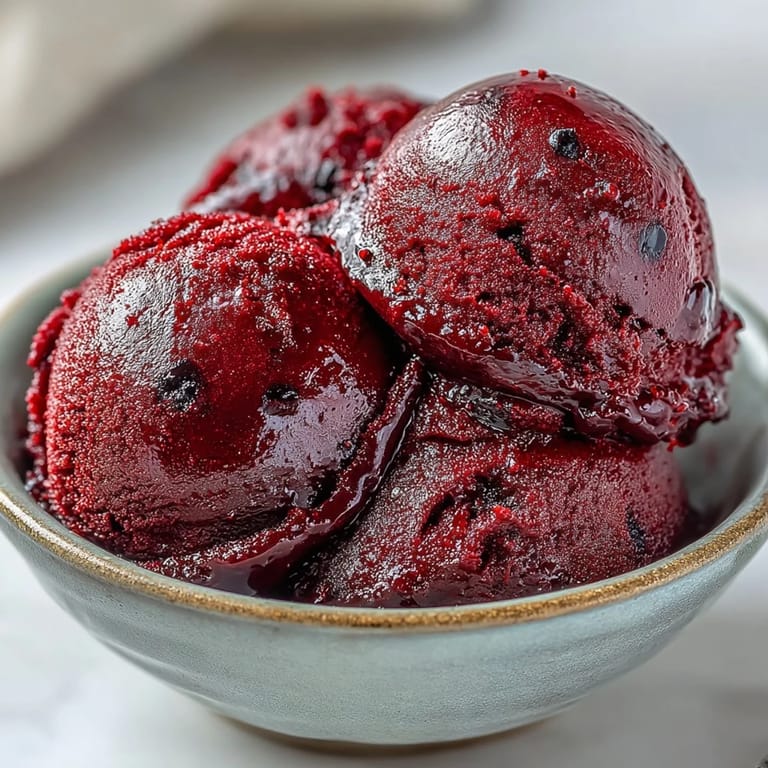
This sorbet keeps beautifully in the freezer for up to two weeks, which means you can make it ahead and feel prepared for unexpected guests or evening cravings. I've learned to let it sit on the counter for three to five minutes before scooping—it softens just enough to be easy but stays perfectly frozen. Pair it with something buttery like lemon shortbread, or keep it simple with a scatter of fresh berries on top.
- Store in an airtight container with a piece of parchment pressed directly onto the surface to prevent freezer burn.
- If it's been frozen for more than a few days, let it sit at room temperature for 10 minutes before serving, as it firms up over time.
- For an adult version, stir in a tablespoon of crème de cassis before churning for a deeper, almost wine-like flavor that feels special.
 Save
Save This sorbet is proof that the simplest recipes often deliver the most honest flavors. Make it, taste it, and enjoy that moment when something tart and sweet and cold becomes exactly what you didn't know you needed.
Recipe Help
- → Can I use frozen black currants instead of fresh?
Yes, frozen black currants work beautifully in this preparation. No need to thaw them first—simply add them directly to the simmering sugar syrup. They may need an extra minute or two to soften completely.
- → How long does the sorbet keep in the freezer?
Properly stored in an airtight container, this sorbet maintains optimal texture for up to 2 weeks. For best results, press a piece of parchment paper directly against the surface before sealing to prevent ice crystals from forming.
- → What can I use if I don't have an ice cream maker?
Pour the chilled mixture into a shallow metal pan and freeze. Every 30 minutes, stir vigorously with a fork to break up ice crystals. Repeat this process 4-5 times until fully frozen and smooth. The texture will be slightly more granular but still delicious.
- → Can I reduce the sugar content?
Sugar helps create the smooth, scoopable texture by lowering the freezing point. Reducing sugar below 150g may result in icier, harder sorbet that's difficult to scoop. For a natural alternative, honey or maple syrup work but will subtly alter the bright berry flavor profile.
- → What's the purpose of straining the mixture?
Pressing the purée through a fine-mesh sieve removes all skins and seeds, creating the signature smooth, velvety texture that distinguishes professional-quality sorbet. This step ensures no fibrous bits remain, delivering a consistently silky mouthfeel.
- → Why does the mixture need to chill before churning?
Curing the base in the refrigerator for at least 2 hours allows flavors to meld and mature while ensuring the mixture is thoroughly cold before churning. Warm mixtures take longer to freeze and may produce coarser ice crystals.