 Save
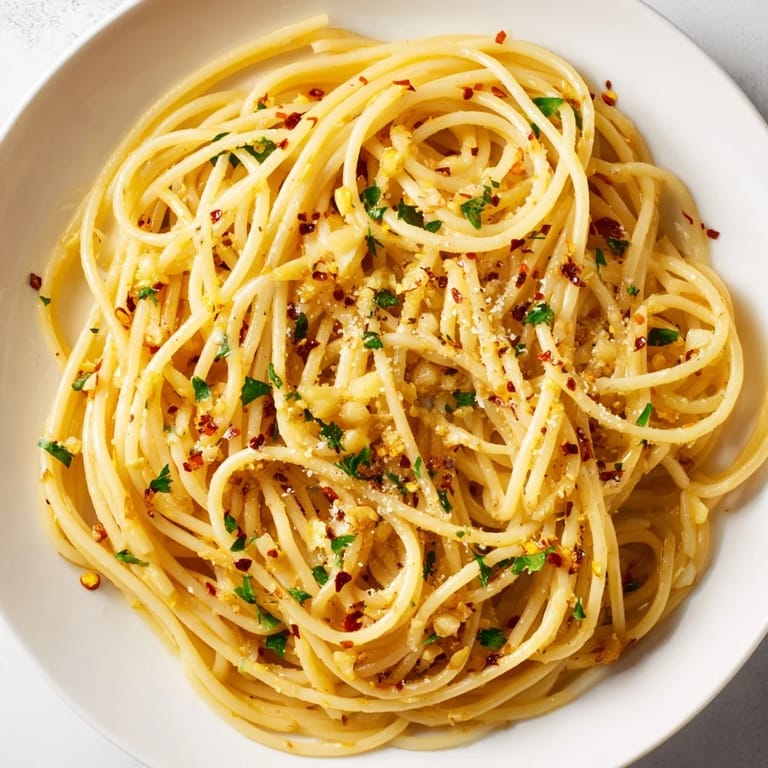
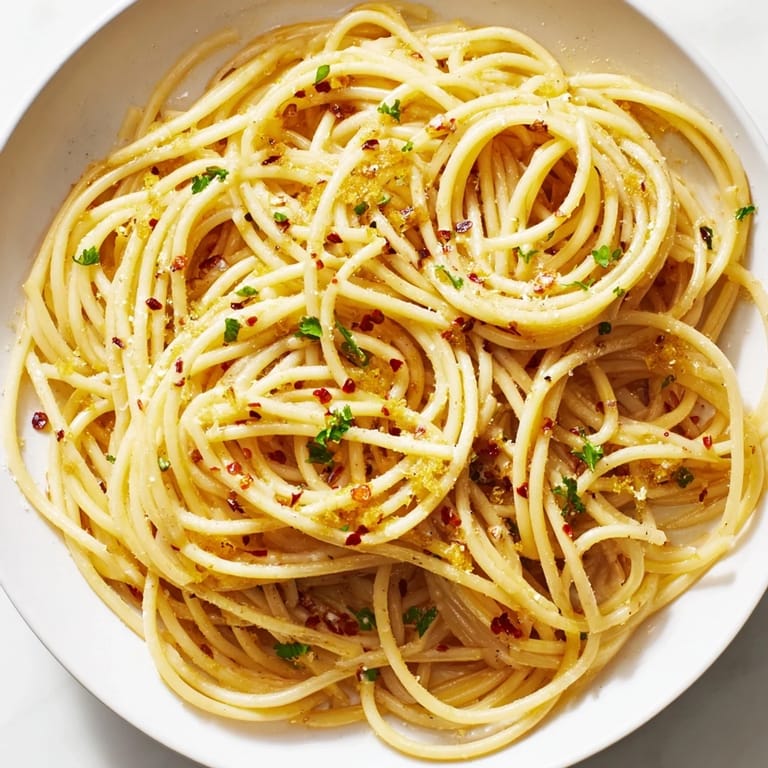
Save There's something about standing over a pan of golden garlic that makes me feel like I've unlocked a secret. My first aglio e olio came together almost by accident one weeknight when I had nothing in the pantry except pasta, olive oil, and garlic—the holy trinity of Italian cooking. The smell that rose from that skillet was so good I nearly burned the pasta water because I was too busy inhaling. It taught me that sometimes the simplest dishes are the ones worth mastering.
I made this for someone I was trying to impress who claimed they didn't eat much pasta, and they asked for seconds before finishing their first plate. That's when I realized aglio e olio isn't just a quick dinner—it's the kind of dish that speaks for itself, no explanation needed.
Ingredients
- Dried spaghetti, 200 g: The thinner strands catch the oil and garlic better than thicker pastas, creating those little pockets of flavor in every bite.
- Extra-virgin olive oil, 4 tbsp: This is where quality truly matters—cheap oil tastes thin and flat, while good oil carries the warmth of the garlic and makes the whole dish sing.
- Garlic cloves, 4 large, thinly sliced: Slicing rather than mincing gives you those tender, slightly crispy edges that add texture and prevent the garlic from disappearing into nothing.
- Red chili flakes, 1 tsp: Start here and adjust upward if you like heat; I've learned that chili flakes can be deceptively spicy once they steep in hot oil.
- Fresh parsley, 2 tbsp chopped: It brightens everything at the end and adds a hint of freshness that keeps the dish from feeling heavy.
- Freshly ground black pepper, to taste: The final grind matters more than you'd think—pre-ground pepper tastes tired by comparison.
- Sea salt, to taste: For seasoning the pasta water and the final dish; it dissolves faster and tastes cleaner than table salt.
- Parmesan cheese, 2 tbsp freshly grated (optional): A light hand here is key; too much cheese mutes the delicate garlic-and-oil balance that makes this dish special.
Tired of Takeout? 🥡
Get 10 meals you can make faster than delivery arrives. Seriously.
One email. No spam. Unsubscribe anytime.
Instructions
- Boil the pasta:
- Bring a large pot of salted water to a rolling boil—the water should taste like the sea. Add spaghetti and stir immediately so it doesn't clump; cook until al dente, which means still with a slight firmness when you bite through it, usually about 8 minutes.
- Infuse the oil gently:
- While pasta cooks, pour olive oil into a large skillet and set it over medium-low heat. Add your sliced garlic and let it warm slowly, stirring now and then, until the edges turn pale gold and the kitchen smells incredible—this takes only 1 to 2 minutes.
- Add heat and spice:
- Once the garlic looks just right, scatter in the chili flakes and give everything a quick stir for about 10 seconds, letting the heat bloom without burning anything.
- Unite and coat:
- Before draining your pasta, scoop out about half a cup of that starchy pasta water and set it aside—you'll need it. Drain the spaghetti and pour it directly into the skillet with the garlic oil, then toss everything together gently but thoroughly, splashing in pasta water a little at a time until the strands glisten and the sauce feels silky.
- Season and finish:
- Taste as you go and add salt and pepper until it feels right. Remove the pan from heat, toss in the chopped parsley so it stays bright green, then divide between serving plates.
- Top and serve immediately:
- If you're using Parmesan, grate it fresh over each plate and serve right away while everything is still steaming.
 Save
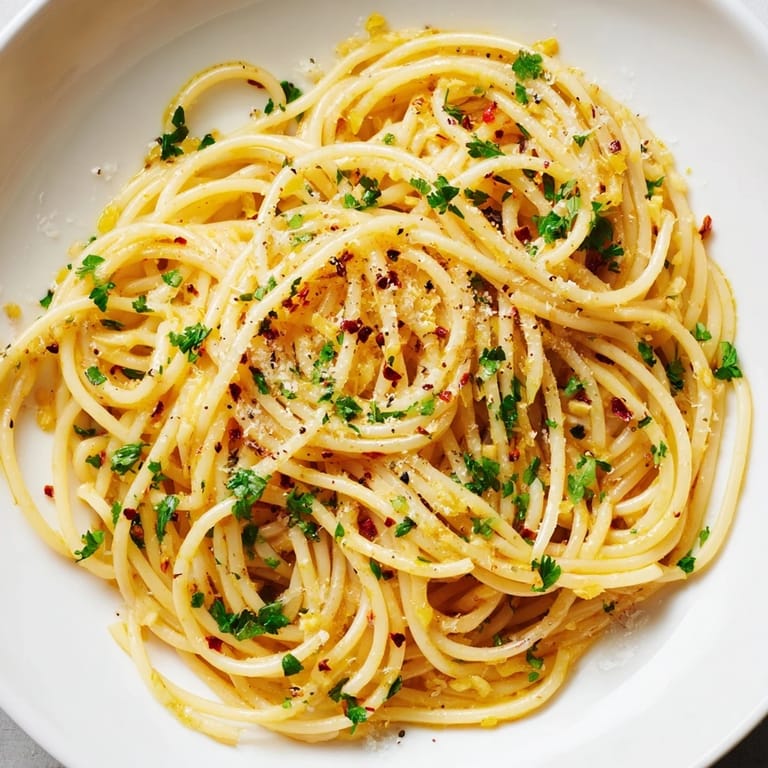
Save I served this to my grandmother once, and she looked at the plate for a moment before tasting it, then smiled and said it reminded her of a tiny restaurant in Rome where she'd eaten the same thing in 1962. That's when I understood that some dishes are tiny edible bridges to other people's memories.
Timing Is Everything
The magic of this dish lives in its speed and simplicity, but that means every step needs your attention. If you step away while garlic is cooking, it'll turn dark before you notice. If you drain your pasta too early, it'll be gummy by the time it hits the oil. Build a rhythm where the pasta water boils as the garlic warms, and everything flows together naturally without any rushing.
The Quality of Quiet Ingredients
With only five core ingredients, each one has to pull its weight. There's no tomato or cream to hide behind, no cheese to soften a weak flavor. This is the dish that finally made me understand why Italian cooks talk so much about sourcing good oil and fresh garlic—because in dishes like this, shortcuts show up immediately on the plate.
Endless Small Variations
Once you've made this a few times, you'll find yourself improvising. A whisper of lemon zest, a handful of toasted breadcrumbs, a single anchovy melted into the oil for depth—the base is so clean that additions feel intentional rather than necessary. Some nights it's pure and plain, other nights I dress it up depending on what I'm craving.
- A squeeze of fresh lemon juice just before serving brightens everything and adds a subtle complexity.
- Red pepper flakes can be adjusted from a whisper to a real kick depending on your mood and heat tolerance.
- Toasted panko breadcrumbs scattered on top add crunch and keep the dish interesting for every bite.
 Save
Save This is the recipe I come back to when I want to remember why I love cooking—not for the applause, but for that moment when something simple tastes exactly right. Keep it close.
Recipe Help
- → How do I prevent garlic from burning?
Sauté garlic over medium-low heat and stir frequently to soften it gently until golden, avoiding high heat that causes burning and bitterness.
- → Can I adjust the heat level of the dish?
Yes, modify the amount of red chili flakes to suit your preferred spice intensity or omit them for a milder flavor.
- → What is the purpose of reserved pasta water?
Adding reserved pasta water helps loosen the sauce and allows the oil and seasonings to coat the pasta evenly, creating a silky texture.
- → Is Parmesan cheese necessary?
Parmesan adds a savory finish but is optional. For vegan or dairy-free options, simply skip it or use a plant-based alternative.
- → Can I use gluten-free pasta for this dish?
Absolutely, gluten-free pasta works well and keeps the dish suitable for those with gluten sensitivities.