 Save
Save The unmistakable sizzle of vegetables hitting a hot wok takes me right back to my tiny first apartment where I mastered vegetable fried rice. With just one burner working reliably, this colorful dish became my culinary salvation after long workdays. What began as a practical way to use leftover rice evolved into a canvas of vibrant vegetables that changed with the seasons and whatever looked fresh at the market. Now, years later, the familiar aroma of ginger and garlic hitting hot oil still signals comfort is minutes away.
Last winter during a power outage, I fired up our camping stove on the balcony and made this fried rice by flashlight. Neighbors wandering outside caught the scent and soon we had an impromptu hallway dinner party with everyone contributing whatever was about to spoil in their powerless refrigerators. The dish stretched remarkably well, and someone brought candles that cast dancing shadows across our bowls while we laughed about eating like kings during what should have been a miserable evening.
Ingredients
- Day-old rice: The secret weapon that prevents mushiness, as freshly cooked rice contains too much moisture and will turn your stir-fry into a sticky mess.
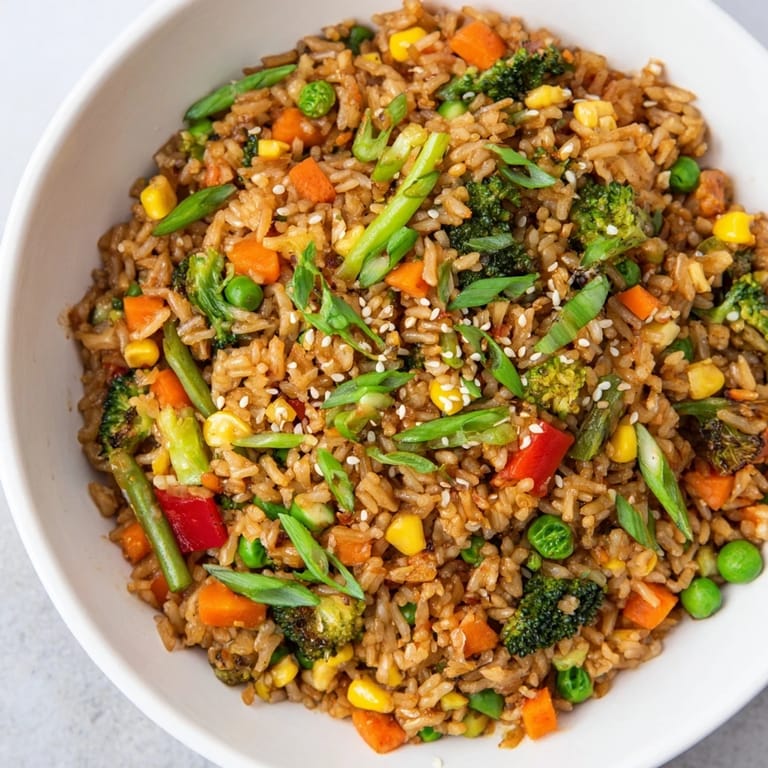
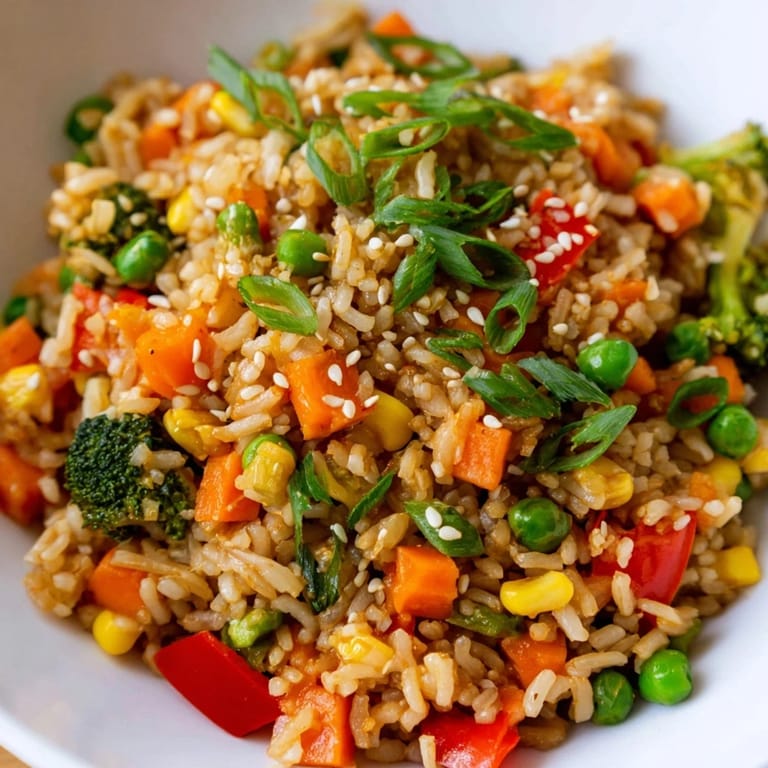
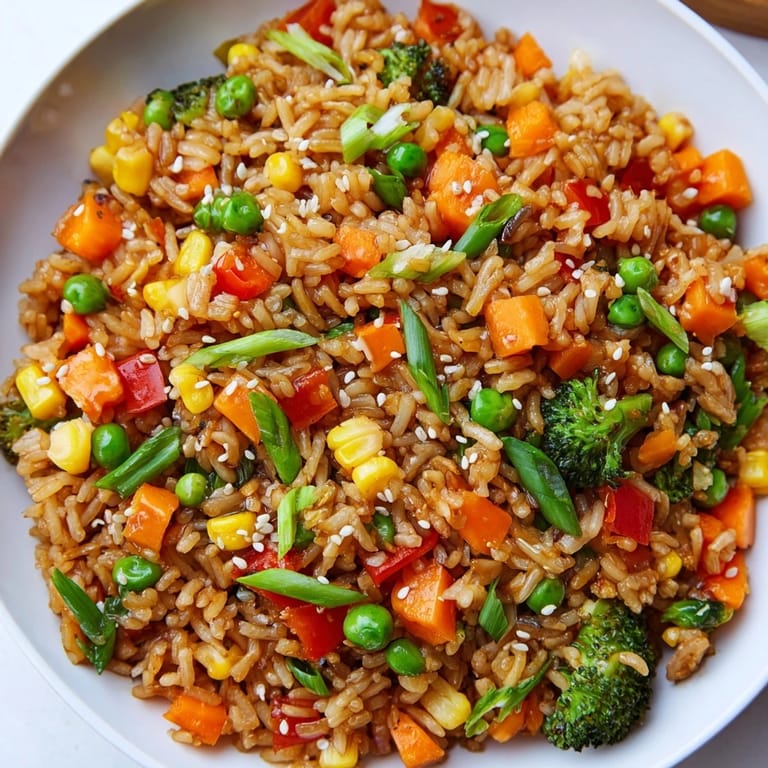
- Diced vegetables: The rainbow of carrots, peppers, broccoli, and peas not only provides nutritional balance but creates those pockets of flavor that make each bite slightly different from the last.
- Minced ginger and garlic: I learned the hard way that these aromatics need to hit hot oil first, creating the fragrant foundation that permeates every grain of rice.
- Sesame oil: Just a tablespoon transforms the entire dish, adding that distinctive nutty undertone that makes people ask what your secret ingredient is.
Tired of Takeout? 🥡
Get 10 meals you can make faster than delivery arrives. Seriously.
One email. No spam. Unsubscribe anytime.
Instructions
- Wake up your aromatics:
- Heat your vegetable oil until it shimmers, then add minced garlic and ginger, breathing in that amazing fragrance as they dance in the hot oil for about 30 seconds.
- Add the hardy vegetables first:
- Toss in carrots, bell pepper, broccoli, green beans, and corn, giving them a head start since they need more time to soften. You want them to remain slightly crisp for that perfect textural contrast.
- Introduce the quick-cookers:
- Add the peas and most of your sliced green onions, saving some for garnish. These delicate ingredients only need about a minute to warm through.
- Rice revival time:
- Crank the heat to high and add your cold rice, breaking up any stubborn clumps with your spatula. Keep things moving constantly to prevent sticking and to help each grain get evenly coated.
- Season with purpose:
- Drizzle soy sauce and sesame oil around the edges of the wok so they hit the hot surface before meeting the rice, intensifying their flavors. Toss everything together until each grain is glistening with sauce.
- Taste and adjust:
- Take a moment to sample your creation, adding more salt or soy sauce if needed. The flavors should be bold but balanced.
- Finish with flair:
- Kill the heat and sprinkle those reserved green onions and optional sesame seeds over the top. That final fresh bite and visual appeal makes all the difference.
 Save
Save During a particularly rough patch after losing my job, this simple fried rice became both emotional and financial support. I made giant batches on Sundays, portioning it into containers that sustained me through the week. Friends who stopped by to check on me often commented on how something so basic could smell so extraordinary. One friend, after her third visit coincidentally during fried rice night, finally admitted she was timing her visits to coincide with this dish, which somehow made both of us feel better about everything.
Making It Your Own
The flexibility of this recipe has saved countless dinner plans when ingredients run short. When bell peppers were absurdly expensive one season, I substituted chopped cabbage which caramelized beautifully and added an unexpected sweetness. Snow peas stepped in when broccoli looked sad at the market, and leftover roasted sweet potatoes once made a guest appearance that was so successful they became part of my regular rotation. This adaptability taught me to approach cooking with creativity rather than rigid adherence to ingredient lists.
Storage Secrets
Vegetable fried rice holds remarkably well in the refrigerator, developing even deeper flavors overnight as the grains continue absorbing the seasonings. I discovered this by accident when running late for work and grabbing yesterday's leftovers without time to reheat them. The cold version had an entirely different appeal, with the sesame notes more pronounced and the vegetables maintaining their distinct textures. This revelation led to intentionally making extra for next-day cold lunch boxes, which several coworkers have since adopted after curious tastes of my not-sad desk lunches.
Serving Suggestions
While perfectly satisfying on its own, this fried rice pairs beautifully with other Asian-inspired dishes to create a more elaborate spread. When my sister visited from out of town, I served this alongside simple marinated cucumber salad and store-bought dumplings, creating an impressive feast with minimal effort that had her convinced I had become a culinary wizard in her absence.
- Serve in small, deep bowls rather than on plates to capture every last grain and make eating with chopsticks more manageable.
- Keep bottles of chili oil, extra soy sauce, and rice vinegar on the table so everyone can adjust their bowl to personal taste preferences.
- For potlucks or gatherings, transport the rice in a thermal container and add the fresh garnishes just before serving to maintain optimal texture and visual appeal.
 Save
Save This vegetable fried rice has been there through celebrations and consolations, quick weeknight dinners and leisurely Sunday meal preps. Its colorful appearance and comforting reliability make it the recipe I turn to when asked to bring something to a gathering or when teaching a novice cook that homemade can indeed rival takeout.
Recipe Help
- → Why should I use day-old rice?
Day-old rice is drier and firmer, which prevents the fried rice from becoming mushy. Freshly cooked rice contains too much moisture and will clump together when stir-fried, resulting in a sticky texture rather than the desired separate, fluffy grains.
- → Can I use brown rice instead of jasmine rice?
Yes, brown rice works well and adds extra fiber and nutrients. Keep in mind that brown rice has a chewier texture and nuttier flavor. Make sure it's fully cooked and preferably cold before stir-frying for best results.
- → What vegetables can I substitute?
You can use almost any vegetables you have on hand. Mushrooms, zucchini, snap peas, bok choy, cabbage, and bean sprouts all work wonderfully. Just maintain similar cooking times by grouping harder vegetables together and adding softer ones later.
- → How do I add protein to this dish?
Scramble 2-3 eggs in the wok before adding vegetables, then set aside and mix back in at the end. Alternatively, add cubed firm tofu, edamame, or cooked chickpeas. For non-vegetarian options, cooked chicken, shrimp, or pork work beautifully.
- → Can I make this ahead of time?
While best served fresh and hot, you can prepare it up to 2 days ahead. Store in an airtight container in the refrigerator and reheat in a hot wok or skillet with a splash of water or oil to refresh the texture and prevent drying out.
- → How do I prevent the rice from sticking to the wok?
Ensure your wok is very hot before adding ingredients, use sufficient oil, and keep the rice moving constantly while stir-frying. Breaking up clumps with your spatula and using cold, dry rice also helps achieve that perfect non-sticky texture.