 Save
Save The first time I made merguez at home, I was standing in my kitchen on a cool autumn evening, my hands stained with harissa paste, and the smell of cumin and coriander already filling the air. A friend had just returned from Tunisia and brought back this small jar of harissa, insisting I had to try making these sausages. I wasn't confident about the spice levels or whether I could even get the casings right, but something about the combination of beef and lamb with all those North African spices pulled me in. Three hours later, after a slightly messy stuffing adventure and a few twisted links that weren't quite even, I grilled the first batch and bit into one still steaming from the heat. That single moment of crispy, spiced meat with the cool bite of fresh herbs made me realize why these sausages were so legendary.
I'll never forget the day I served these to a dinner party and my usually quiet neighbor actually stood up from the table and asked for the recipe. She said she hadn't tasted anything like it since visiting Marrakech as a student, and suddenly everyone was reaching for seconds while debating whether the heat came from the harissa or the cayenne. That's when I knew these weren't just sausages—they were a conversation starter, a little edible passport on a plate.
Ingredients
- Ground beef and lamb (500 g total): The combination gives you richness from the lamb and leaner structure from the beef, creating a texture that holds together beautifully when grilled.
- Harissa paste (2 tbsp): This is your backbone of authentic flavor—it's not just heat, it's a complex blend of chilies, garlic, and spices that defines the whole dish.
- Cumin, coriander, fennel, and caraway (1 tbsp each of cumin and coriander, 1 tsp each fennel and caraway): These warming spices layered together create that distinctive North African warmth that lingers on your palate.
- Smoked paprika and cayenne (1 tsp each): The paprika adds depth and color, while cayenne brings the final kick—adjust based on your heat tolerance and the intensity of your harissa.
- Fresh cilantro and parsley (2 tbsp each): These herbs brighten everything at the end, cutting through the richness with their fresh, peppery notes.
- Cold water (2 tbsp): This small amount of moisture helps bind everything into a cohesive mixture that won't dry out during grilling.
- Sheep sausage casings (1.5 m, optional): Natural casings give you that traditional snap and appearance, but you can absolutely skip them and make kefta-style patties instead.
Tired of Takeout? 🥡
Get 10 meals you can make faster than delivery arrives. Seriously.
One email. No spam. Unsubscribe anytime.
Instructions
- Combine your meats:
- In a large bowl, mix the ground beef and lamb together with your hands until they're just blended—don't overwork it or the texture becomes dense and unpleasant.
- Build the spice layer:
- Add the minced garlic, harissa paste, and all your dry spices (cumin, coriander, paprika, fennel, caraway, cayenne, salt, and pepper) directly to the meat. Mix thoroughly with your hands until every bit of meat is coated in that spiced paste, which usually takes about a minute of patient mixing.
- Add the fresh herbs and binder:
- Stir in the cilantro and parsley, then add the cold water and mix again until the whole mixture becomes sticky and slightly cohesive—you're aiming for a texture that holds together but still feels alive and loose.
- Prepare your casings (if using):
- Rinse the sausage casings under cool water and let them soak in a bowl of water for about 5 minutes to make them flexible and easier to work with. Fit a sausage stuffer or piping bag with a wide nozzle and carefully stuff the casings, twisting them into 12–15 cm links as you go—this step takes patience, but it gets easier with practice.
- Form skinless sausages (if not using casings):
- Shape the mixture into sausage-sized logs, about 10 cm long and as thick as your thumb, then refrigerate for 30 minutes so they firm up and hold their shape on the grill.
- Heat your grill:
- Preheat a grill or grill pan over medium-high heat until it's hot enough that a drop of water sizzles immediately on contact.
- Grill with care:
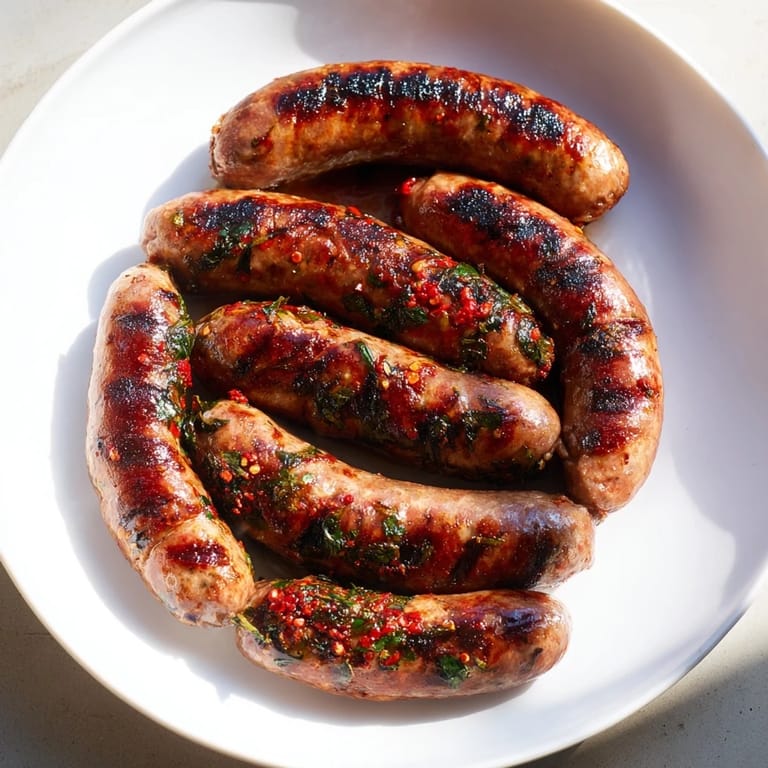
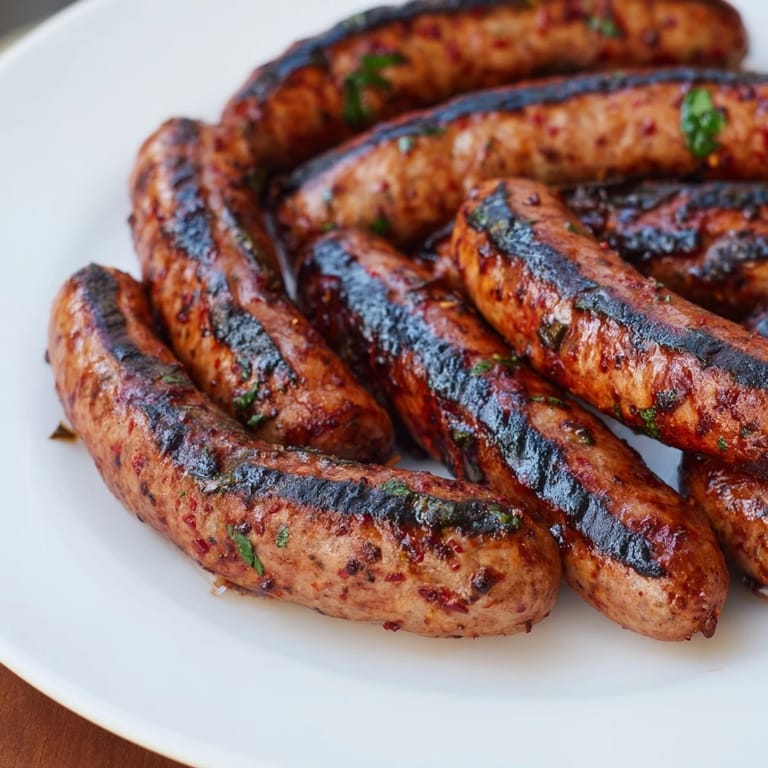
- Place the sausages on the hot grill, leaving space between each one so heat can circulate. Grill for 8–10 minutes total, turning occasionally (every 2–3 minutes) until they're deeply browned on all sides and cooked through—the internal temperature should reach about 71°C (160°F).
- Rest and serve:
- Let them rest for a minute on a warm plate before serving, which keeps them juicy inside while staying crispy outside.
 Save
Save What I love most about these sausages is that they taste intentional and bold—nothing apologetic or mild about them. They carry the warmth of a kitchen where someone actually cared about getting the spices right.
The Spice Balance You Actually Want
The first time I made merguez, I worried the harissa would be too aggressive, so I held back and added less than the recipe called for. The result was surprisingly bland, all the individual spices competing for attention without any one of them taking the lead. The next batch I went full strength, and suddenly everything clicked—the harissa created a backbone that held all the other spices together, and the cayenne brought a clean, final kick of heat that didn't linger uncomfortably. Now I actually taste the mixture before I stuff or form the sausages, just a tiny pinch cooked in a skillet for 30 seconds, so I know exactly what I'm getting into.
Casings vs. Kefta Style
Natural sheep casings are wonderful if you want that traditional appearance and that satisfying snap when you bite in, but they do require a bit of patience and a sausage stuffer or even a piping bag in a pinch. The casing-free version—what's called kefta in North African cooking—is honestly just as tasty and arguably more reliable for home cooking because you don't have to worry about casings splitting or the mixture not filling evenly. Both styles grill up beautifully, and honestly, once they're topped with a dollop of yogurt and wrapped in warm flatbread, nobody's counting the casings.
Serving and Pairing Ideas
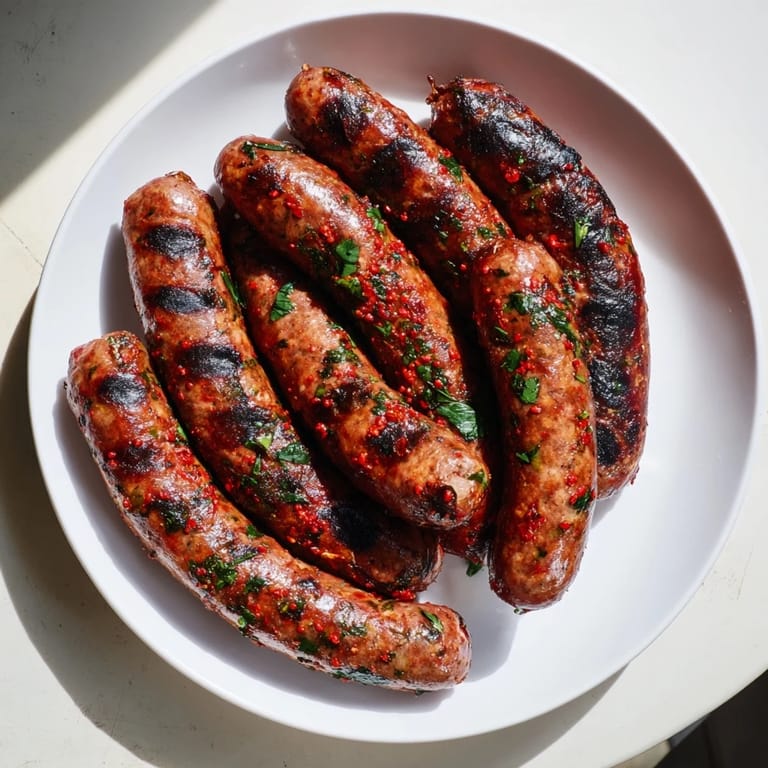
These sausages are endlessly flexible, which is part of their magic. I've served them crumbled over couscous with a drizzle of yogurt and fresh herbs, stuffed into a crusty baguette with harissa mayo and pickled vegetables, or simply arranged on a plate as part of a mezze spread with hummus and flatbread. The key is pairing them with something cool or creamy to balance the heat—either a minty yogurt sauce or the brightness of fresh salad greens. My favorite discovery was grilling them alongside summer vegetables and then slicing them to toss through a warm grain salad, which turned a simple dinner into something that felt restaurant-worthy.
- A bold red wine like Syrah or Côtes du Rhône echoes the warmth without competing with the spices.
- Serve with cool yogurt on the side, mixed with fresh mint and a squeeze of lemon.
- Flatbread, pita, or even soft tortillas work perfectly as vehicles for eating these warm and messy.
 Save
Save Making merguez at home connects you to something real and unforgettable—these aren't sausages that apologize for their flavor, and neither should you. Once you've tasted one still warm from the grill, you'll find yourself making them again and again.
Recipe Help
- → What spices are essential for authentic Merguez?
Key spices include cumin, coriander, smoked paprika, fennel, caraway, cayenne pepper, and harissa paste for heat and depth.
- → Can Merguez be cooked without casings?
Yes, the mix can be formed into patties or skinless logs, then grilled or pan-cooked for a similar texture and flavor.
- → How should Merguez be served traditionally?
Merguez pairs wonderfully in sandwiches, alongside couscous, or as part of a mezze with fresh salad or flatbread.
- → How do I control the spiciness of the sausage?
Adjust the cayenne pepper quantity and harissa paste used to either mellow or intensify the heat level to your taste.
- → What cooking method suits the sausage best?
Grilling over medium-high heat until browned and cooked through enhances the spices and creates a flavorful crust.