 Save
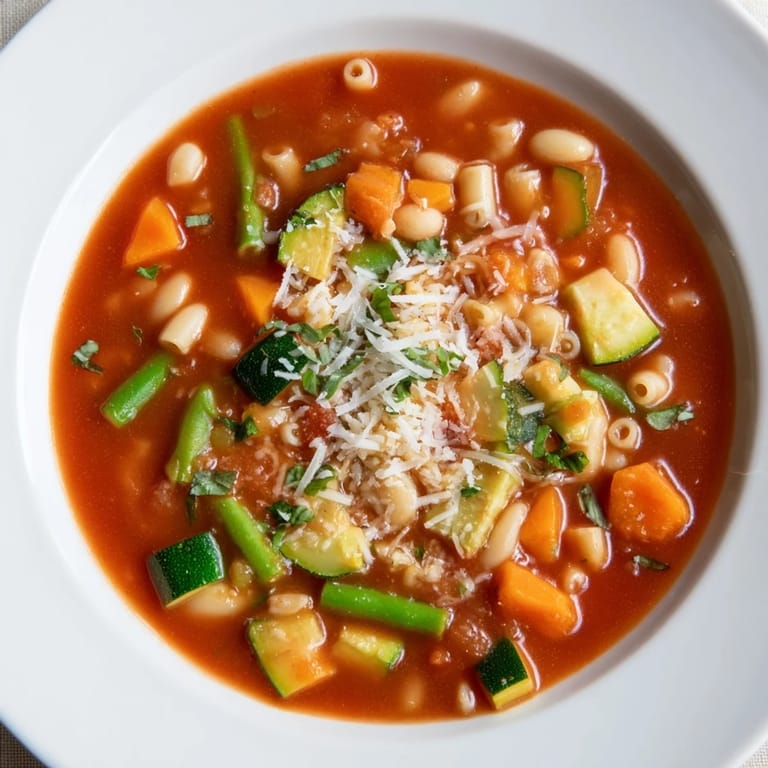
Save There's something about a pot of minestrone that feels like a hug in a bowl. I discovered this version on a gray Tuesday afternoon when my fridge had that in-between look—too many vegetables, not quite enough for a proper meal. Rather than let things wilt, I tossed them all into a pot with some tomato and broth, and what emerged was this honest, warming soup that somehow tasted like it had been simmering for hours. Now it's become my default answer when someone asks what I'm making for dinner.
I made this soup for my neighbor who had just moved in, and she showed up at my door a week later with a jar of homemade pesto because it made such an impression. There's something about sharing a bowl of minestrone that breaks through the awkwardness of being new somewhere—it's humble enough to not feel showy, but good enough to remember.
Ingredients
- Olive oil: This is the foundation—don't skimp here, as it carries the flavor of everything that follows into the broth.
- Onion, carrots, and celery: This trio is the soffritto, the holy base that every good soup in Italy starts with, and for good reason.
- Garlic: Just two cloves, minced fine so they melt into the oil and season everything evenly.
- Zucchini and green beans: These stay bright and don't get mushy if you add them partway through cooking, which is the secret to the whole soup's texture.
- Diced and crushed tomatoes: The combination gives you both texture and depth—the diced pieces stay intact while the crushed ones break down into the broth.
- Vegetable broth: Use a good quality one if you can; it matters more than you'd think in a soup where it's the main liquid.
- Oregano and thyme: Dried herbs work beautifully here and actually bloom when they hit the warm broth.
- Salt, pepper, and red pepper flakes: Start conservative and taste as you go—you can always add more, but you can't take it back.
- Tomato paste: This concentrates the tomato flavor and adds a slight richness that ties everything together.
- Small pasta: Ditalini or elbow macaroni are traditional, but any small shape works—just don't use long noodles.
- Cannellini beans: They add protein and substance without overwhelming the soup's delicate balance.
- Fresh basil and parsley: Add these at the very end so they stay bright and don't fade into the background.
- Parmesan cheese: Optional, but a handful grated on top catches the steam and adds a savory note that feels a bit like magic.
Tired of Takeout? 🥡
Get 10 meals you can make faster than delivery arrives. Seriously.
One email. No spam. Unsubscribe anytime.
Instructions
- Build your base:
- Heat the olive oil in your large pot over medium heat, then add the diced onion, carrots, and celery. Let them soften for about 5 minutes, stirring occasionally—you want them to release their sweetness and become almost golden at the edges. The kitchen will smell immediately better.
- Add the second wave:
- Stir in the minced garlic, diced zucchini, and green beans, cooking for another 3 minutes until everything is fragrant. The garlic should be barely sizzling in the oil, just starting to turn golden.
- Pour in the tomatoes and broth:
- Add both cans of tomatoes, the vegetable broth, oregano, thyme, salt, pepper, red pepper flakes, and tomato paste all at once. Stir well to combine, then bring the whole pot to a boil—this takes about 5 minutes and you'll see the surface getting restless.
- Lower the heat and let it breathe:
- Once it's boiling, reduce the heat to a gentle simmer and cook uncovered for 15 minutes. The soup will darken slightly and the flavors will start to meld together in a way that smells intentional and deep.
- Finish with pasta and beans:
- Add the pasta and drained cannellini beans, then simmer for another 10 to 12 minutes until the pasta is tender. Taste the pasta as you go—there's nothing worse than overcooked pasta, and it happens faster in soup than you'd expect.
- Final flourish:
- Turn off the heat and stir in the chopped fresh basil and parsley. Adjust the salt and pepper if needed—this is your moment to make it taste exactly right to you.
 Save
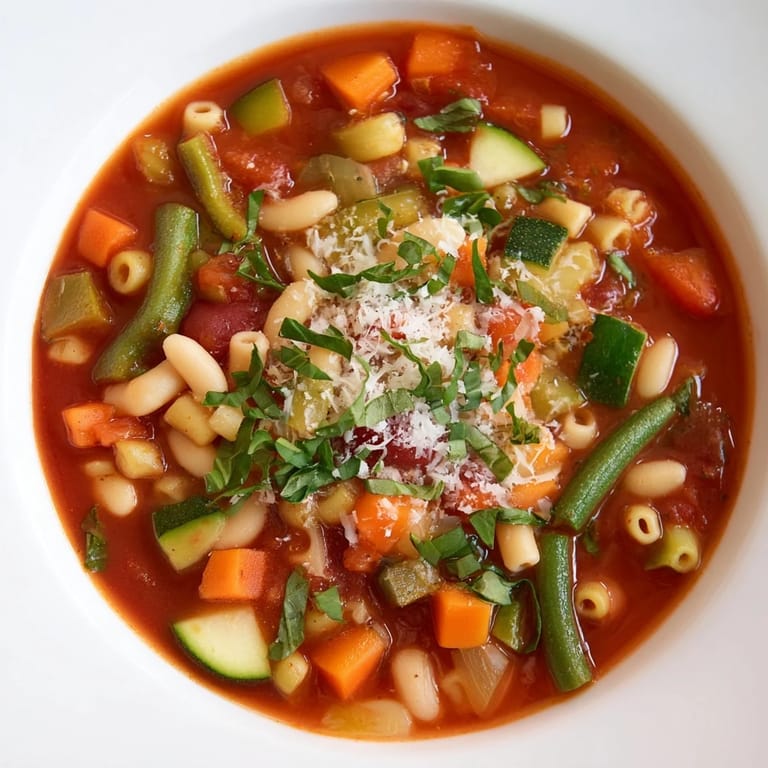
Save My partner ate three bowls of this soup one winter evening without saying much, just quietly getting more and more content with each spoonful. That's when I knew this recipe had crossed from being a good dinner into something that meant something—the kind of food that makes people feel cared for without needing fanfare.
Customizing Your Bowl
One of minestrone's greatest gifts is how it welcomes change. I've made it with spinach stirred in at the end, with diced celery root instead of zucchini on a whim, and once with a handful of kale when that's what I had. The soup adapts without complaint, actually gets better when you treat it like a conversation rather than a fixed recipe. Some people add a parmesan rind while it simmers—you fish it out at the end, but it adds an umami depth that haunts the broth in the best way.
The Day-After Magic
If you manage to have leftovers (and honestly, they disappear faster than you'd expect), they're even better the next day. The pasta softens slightly, the flavors deepen, and the whole thing tastes less like something you made and more like something that's been thinking about itself overnight. I reheat mine gently on the stove with a splash of broth, just to coax the warmth back without shocking it.
What Makes This Soup Different
Minestrone exists in this beautiful space between being a light vegetable soup and a substantial meal—it has the broth's delicate character but enough pasta and beans to feel grounding. It's the kind of soup that doesn't need anything else, though a thick slice of crusty bread on the side won't hurt anyone. The beauty is in its restraint and honesty, the way every ingredient stays true to itself instead of disappearing into a creamy sauce.
- The combination of diced and crushed tomatoes gives you texture and depth at the same time.
- Adding pasta and beans at the very end means they stay distinct textures rather than turning to mush.
- Always taste and adjust the seasoning at the end—it's the difference between good minestrone and the kind you crave.
 Save
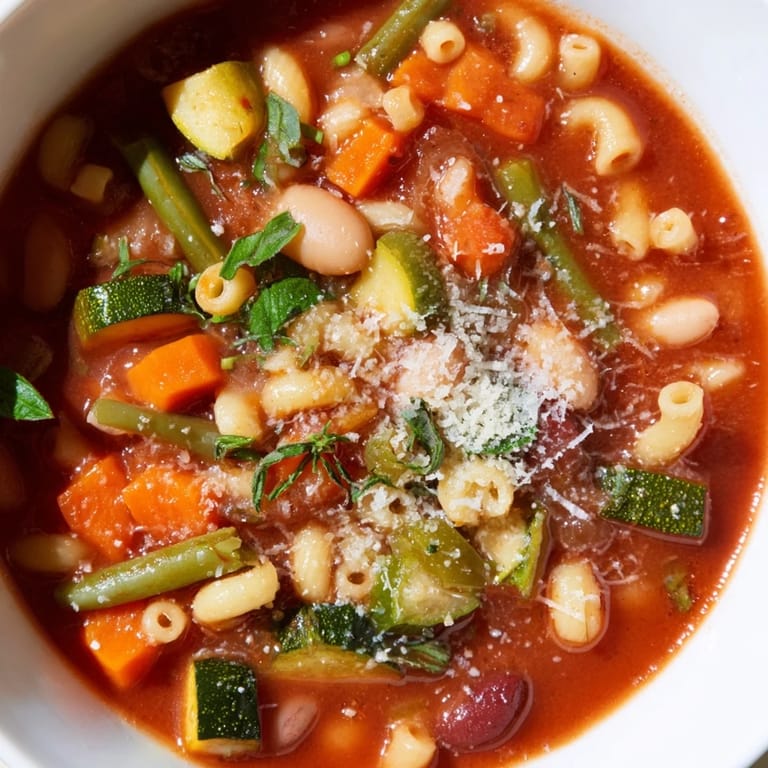
Save This soup tastes like coming home, like being understood without having to explain. Make it once and you'll understand why minestrone has lasted five hundred years.