 Save
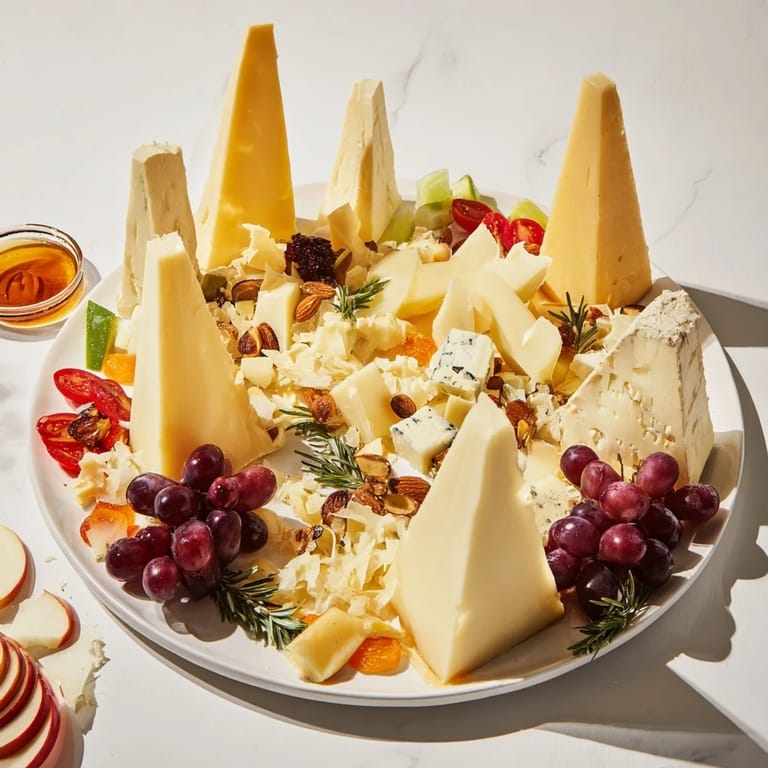
Save I still remember the first time I saw a truly sculptural cheese board at a dinner party in the Cotswolds. Instead of the flat, predictable arrangement I'd always made, our host had arranged aged cheeses into towering peaks, with soft cheeses pooling gently below like foothills. The whole platter looked like a landscape you could actually explore with your hands. That evening, everyone stopped talking and just stared at it for a moment before diving in. I came home determined to recreate that magic, and this Sculptural Cheese Landscape has become my signature move ever since. It's the kind of appetizer that makes guests feel like they've walked into an edible art gallery.
I made this for my partner's family gathering last autumn, and I watched his grandmother actually gasp when she saw it. She spent twenty minutes just pointing out her favorite paths through the landscape, pairing different cheeses with crackers as if she were planning a route through mountains. By the end of the evening, she'd convinced me that serving cheese this way made it taste better, and honestly, I think she was right. It had become more than food—it was an experience they could touch and personalize.
Ingredients
- Aged Manchego (150 g, cut into tall irregular chunks): This Spanish beauty is your foundation. It's got a nutty warmth and breaks into dramatic, uneven shapes that look absolutely architectural when stood upright. The irregular edges catch the light beautifully.
- Parmigiano-Reggiano (150 g, broken into rugged shards): This is your dramatic showpiece. Instead of neat slices, let it shatter naturally—those rough, jagged pieces photograph like mountain peaks. The crystalline texture adds visual interest and that satisfying crunch.
- Aged Cheddar (150 g, sliced into tall triangles): The warmth and slight sweetness of cheddar bridges between hard and soft. Cutting it into tall triangles means each piece stands proud without needing support.
- Brie (100 g, cut into thick wedges): This is your softer foundation that creeps around the base like foothills claiming space. Cut it thick so wedges don't collapse when placed on the board.
- Gorgonzola (100 g, broken into rustic pieces): The blue veining provides dark visual contrast, and those pieces naturally break into organic shapes. A little goes a long way flavor-wise, so this placement matters.
- Red Grapes (1 cup, halved): Their jewel-tones fill valleys and create pockets of color. Halving them means they nestle between cheeses without rolling everywhere.
- Cherry Tomatoes (1 cup, halved): These add bright red accents and slight juiciness to balance the richness of cheese. The seed-side up creates little cups that catch light.
- Cucumber (1 small, sliced into rounds): Thin rounds create a cool, refreshing visual texture and taste. They're your garden element in this landscape.
- Apple (1 small, thinly sliced): The paleness of apple creates contrast and provides natural sweetness. Slice just before serving to prevent browning, though a tiny brush of lemon juice helps if you're preparing early.
- Dried Apricots (1/2 cup): These chewy-soft pieces add another layer of sweetness and a warm golden tone. They're especially good tucked into crevices.
- Roasted Almonds (1/2 cup): These act as scattered boulders. The nuttiness pairs perfectly with aged cheese, and their tan color anchors the composition.
- Walnuts (1/2 cup): Darker than almonds, these add depth and visual variation. Roasted means they won't taste bitter or raw.
- Thin Baguette Slices (12 slices): These are your paths across the landscape. Thin means they don't overwhelm the showcase, and slicing them creates an intentional geometry.
- Assorted Crackers (12 pieces): Mix shapes and colors here—some round, some square, different shades. This variety keeps the landscape feeling organic and explorer-friendly.
- Honey (2 tbsp): Drizzle strategically across aged cheeses. It catches light and adds richness. A small wooden spoon for serving keeps things elegant.
- Fresh Rosemary Sprigs: These add that forest-floor magic, tucked between cheeses like little pine trees. The aroma matters as much as the look.
Tired of Takeout? 🥡
Get 10 meals you can make faster than delivery arrives. Seriously.
One email. No spam. Unsubscribe anytime.
Instructions
- Build Your Mountain Range:
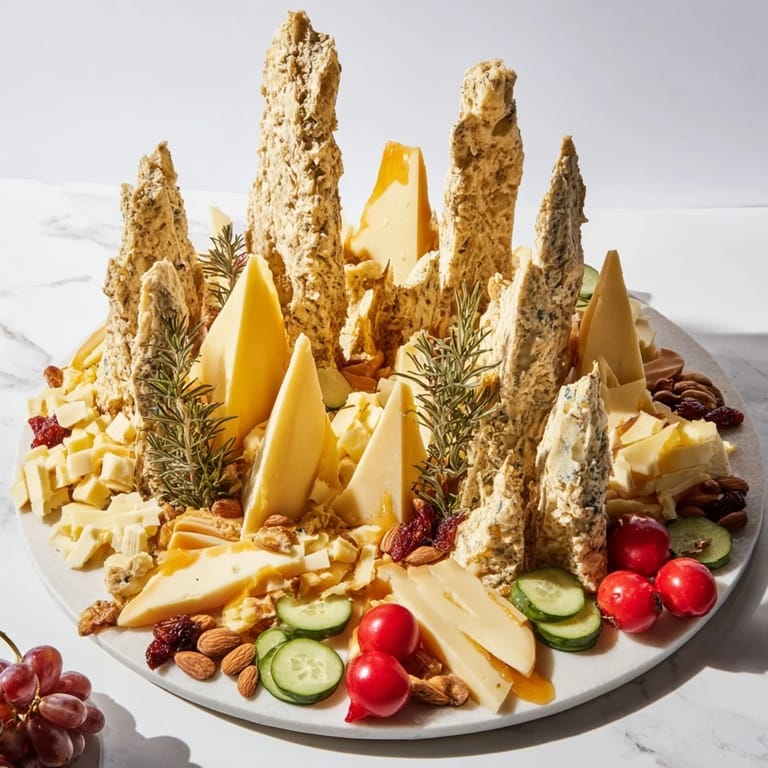
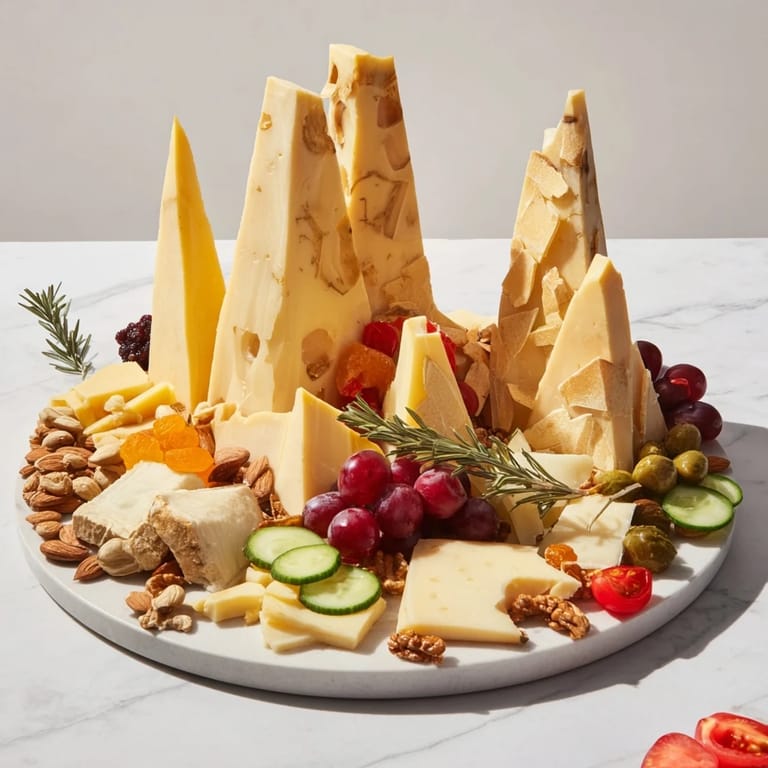
- On your largest wooden board or platter, arrange those tall chunks of hard cheese—Manchego, Parmigiano-Reggiano, and aged Cheddar—as if they're peaks jutting upward. Stand them vertically or at dramatic angles. Don't make them symmetric; nature isn't symmetrical, and that's what makes this feel alive. Leave generous space between peaks because what comes next will fill those valleys.
- Create the Foothills:
- Now take your Brie wedges and Gorgonzola pieces and nestle them around the base of those hard cheese mountains. These softer cheeses should feel like they're settling naturally, as if gravity has gently placed them there. The Brie cream should catch a little light, and the blue veining of Gorgonzola should peek out invitingly.
- Fill the Valleys with Life:
- This is where the platter becomes a landscape. Scatter your halved grapes and cherry tomatoes into the lower areas, creating pockets of color. Arrange cucumber rounds like stepping stones. Tuck apple slices in places where their pale elegance contrasts with darker cheeses. Distribute dried apricots as if they're naturally scattered across the slopes. Step back and look—you're creating dimension.
- Scatter the Boulders:
- Roasted almonds and walnuts get scattered across the board, not in neat lines but as if they've tumbled down from higher elevations. Let them cluster in some places and stand alone in others. This textures the landscape and gives guests tactile variety.
- Mark the Paths:
- Arrange thin baguette slices and assorted crackers along the edges and weaving through the board. Think of these as trails and plateaus—ways to navigate the landscape. They should feel intentional but not rigid, creating invitation rather than instruction.
- Add the Magic:
- Drizzle honey in small pools across some of the aged cheeses, especially where it'll catch light. The honey should look deliberate but not controlled—organic placement matters. Tuck fresh rosemary sprigs between cheeses like evergreens on a mountainside. These little green touches ground the composition and release their herbal aroma when people lean in.
- Serve with Invitation:
- Place this on your table and step back. Encourage guests to explore, to build their own combinations, to take their time moving through this edible landscape. Provide small cheese knives for the harder varieties and let people use their hands for crackers and fruits—there's something about this kind of casual elegance that brings people together.
 Save
Save The moment that made me understand why this platter matters came when a usually quiet dinner guest started describing the cheeses to his young daughter, pointing out which were soft, which were hard, explaining why some tasted sharp and others tasted creamy. The vertical arrangement made the cheeses feel like they were worth analyzing, like sculpture in a museum rather than just food on a plate. That's when I realized this wasn't about being fancy—it was about making people slow down and really notice what they were eating.
Choosing Your Cheeses Wisely
The beauty of this platter is that it's deeply flexible. Don't feel locked into the specific cheeses I've listed—they're just examples. What matters is the balance: you want at least one hard cheese that'll stand tall (aged Cheddar, Manchego, Gruyère, or Parmigiano all work), at least one soft or semi-soft that'll pool gracefully (Brie, Camembert, or even thick cream cheese), and if you want complexity, include one with distinctive visual character (anything blue, or a washed-rind cheese with its peachy exterior). Buy from a proper cheese counter if you can—they'll let you taste tiny samples and often have varieties you won't find in supermarkets. The quality really does matter here because these cheeses are the stars of the show.
The Art of Strategic Placement
I've learned that the platter reads better when you think about visual weight and color distribution. Don't put all your red elements (tomatoes, grapes) in one corner—spread them so the eye travels. Same with the nuts—distribute them so they feel like scattered texture rather than a pile. The pale apple and cucumber slices create visual breathing room, so use them to break up dense cheese areas. Think like a painter dividing canvas rather than a cook following a recipe. This mental shift is what takes a cheese board from functional to genuinely beautiful.
Wine Pairing and Serving Moments
I've found that the sculptural nature of this board makes it a natural conversation starter, which means people linger longer. Bring it to the table with several wine options if you're able—aged cheeses often shine with crisp whites like Sauvignon Blanc or Chablis, while softer cheeses are forgiving with almost anything. Have small plates nearby so people can actually sit down with their selections rather than standing and juggling crackers and cheese. The best version of this board is one where people slow down enough to have real conversations while grazing. That's when the magic happens.
- If you're serving this at a dinner party, place it out about 30 minutes before eating so cheeses come to room temperature—cold cheese loses its flavor and texture complexity.
- Keep a damp kitchen towel nearby to wipe cheese knives between cuts so flavors don't bleed into each other.
- Consider putting out a small empty plate labeled for discarded fruit peels or nutshells so your landscape stays looking intentional.
 Save
Save This cheese landscape has taught me that sometimes the most impressive dishes are ones where the ingredients speak for themselves. You're not cooking, not transforming—you're simply honoring what each element brings and arranging it with intention and a little bit of playfulness.
Recipe Help
- → What types of cheese work best for creating the mountain shapes?
Hard cheeses like aged Manchego, Parmigiano-Reggiano, and aged Cheddar are ideal due to their sturdy texture and ability to hold tall, irregular shapes.
- → How can I keep the fruits fresh and visually appealing on the board?
Choose firm fruits like grapes, cherry tomatoes, and apples, and slice or halve them shortly before serving to maintain freshness and vibrant color.
- → What nuts add the best crunch and complement the cheese flavors?
Roasted almonds and walnuts offer a rich, crunchy texture that pairs well with the creamy and sharp notes of the cheeses.
- → Are there any tips for arranging the elements to enhance the landscape effect?
Place taller hard cheese chunks vertically as peaks, then nestle soft cheeses at the base. Scatter fruits in clusters around—like valleys—and add nuts as scattered boulders. Bread and crackers serve as natural pathways on the edges.
- → How does honey and rosemary enhance the overall board?
Drizzling honey adds a sweet contrast that balances the savory flavors, while fresh rosemary sprigs bring an aromatic, forest-like touch to the presentation.
- → Can this platter be adapted for a non-vegetarian version?
Yes, adding cured meats alongside the cheeses and other elements creates a fuller, more diverse charcuterie-inspired spread.