 Save
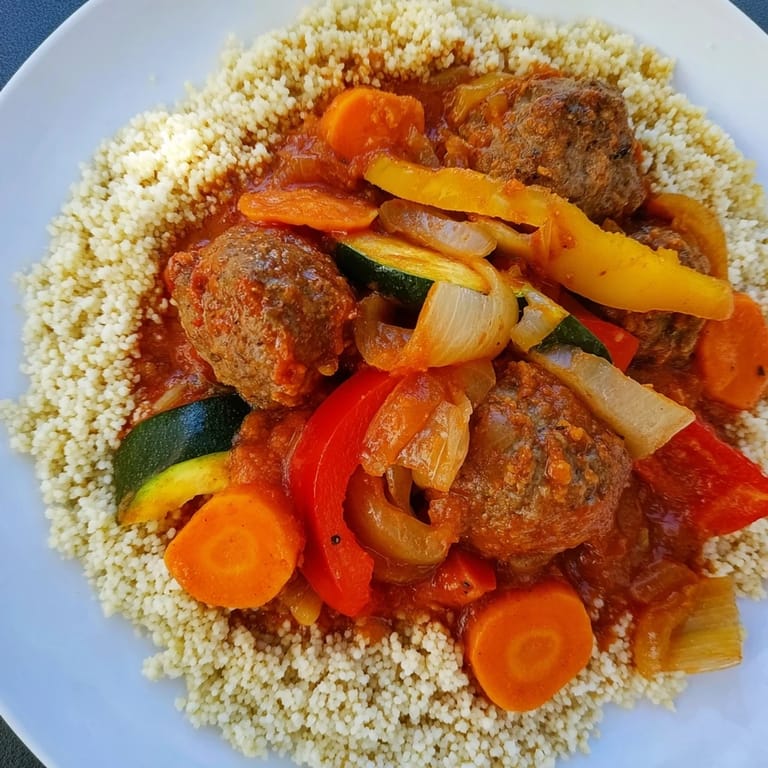
Save The first time I tasted authentic kefta, it was at a small family table in Marrakech, and the meatballs were so tender they almost melted on my tongue, flavored with spices I'd never quite encountered in that exact combination. Years later, I recreated that moment in my own kitchen, grinding the meat by hand, grating onion until my eyes watered, and discovering that the secret wasn't just the spices but the patience to let them simmer together. Now whenever I make this dish, the whole house fills with that warm, complex aroma that instantly transports me back to that dusty street and that generous table. It's become my way of honoring that memory while making it entirely my own.
I made this for friends during a particularly cold March evening when everyone needed something warm and a little exotic, and watching their faces light up when they tasted it was worth every chopped vegetable and stirred pot. The couscous turned out a little too firm the first time because I rushed the steeping, but that mistake taught me to be patient with the smallest steps, and now I use those five minutes to set the table and pour wine instead of hovering over the pot.
Ingredients
- Ground beef or lamb: Lamb gives you that authentic North African depth, but beef is leaner and works just as well; mix them if you want the best of both.
- Fresh parsley and cilantro: Don't skip these or use dried versions, as the fresh herbs are what make the kefta taste alive rather than just spiced.
- Cumin and coriander: Toast these briefly in a dry pan before grinding if you can; it wakes them up and makes the whole dish taste more vibrant.
- Couscous: Use the instant variety, not the pearl kind, and measure by weight if you have a scale for consistent, fluffy results.
- Vegetable broth: A good broth makes all the difference; I use homemade when I can, but quality store-bought works perfectly fine.
Tired of Takeout? 🥡
Get 10 meals you can make faster than delivery arrives. Seriously.
One email. No spam. Unsubscribe anytime.
Instructions
- Mix the kefta with your hands:
- Combine ground meat with the grated onion, garlic, herbs, and all spices in a large bowl, squeezing everything together with your fingers until the mixture is sticky and uniform. Shape into walnut-sized balls, working quickly so the meat doesn't warm up too much and become dense.
- Build the vegetable base:
- Heat olive oil in your pot and sauté the sliced onion until it's soft and just starting to caramelize, about five minutes, then add your harder vegetables like carrots and peppers and let them begin to soften. The smell at this point should be almost sweet before you add the tomatoes.
- Toast the spices into the vegetables:
- Once you've added the tomatoes and garlic, sprinkle in your cumin, coriander, turmeric, cinnamon, paprika, and cayenne, stirring constantly for a minute or two so the spices toast slightly in the oil and release their essential oils. This small step is what separates a good version of this dish from a truly memorable one.
- Simmer the meatballs gently:
- Pour in your broth, bring everything to a simmer, then gently lower in the kefta meatballs one by one so they don't crack from the shock of heat. Cover and let them cook for about twenty-five minutes, stirring once halfway through, until the meatballs are cooked through and the sauce has thickened slightly.
- Steep the couscous:
- While the meatballs cook, place couscous in a bowl with salt and olive oil, pour boiling water over it, cover tightly with a plate, and walk away for five minutes. The residual heat does all the work, and you'll be amazed at how fluffy and separate each grain becomes when you fluff it with a fork.
- Bring it all together:
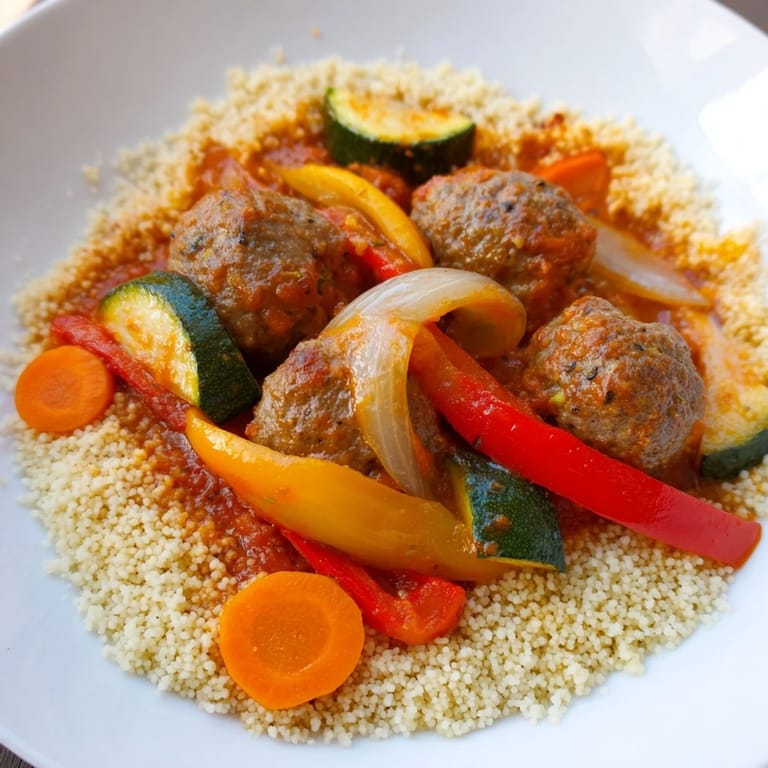
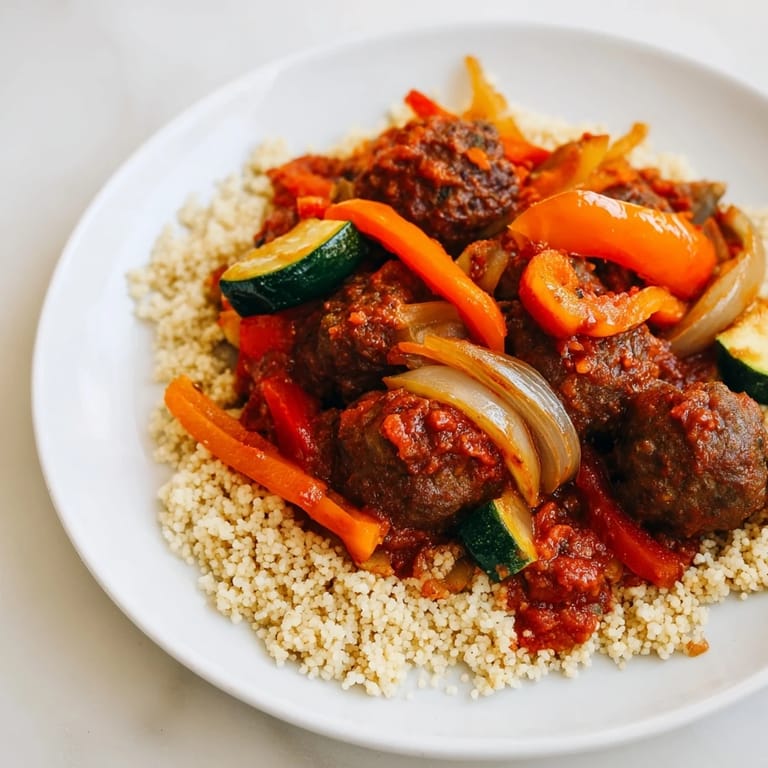
- Mound the couscous on a platter or individual plates, spoon the kefta and vegetables with their sauce over the top, and finish with a generous handful of fresh cilantro or parsley.
 Save
Save There was a moment during one dinner party when a guest who'd spent years in Fez tasted this and nodded slowly, then asked me where I'd learned to make it, and I realized that food is the most honest way to tell someone you've been thinking about a place and its people. That moment made me understand that cooking isn't really about following instructions perfectly; it's about showing up with intention and care.
Why These Spices Work Together
The beauty of this spice combination is that it doesn't compete; instead, each spice plays a specific role in building flavor. Cumin and coriander form the earthy foundation, turmeric adds a subtle bitterness that balances richness, cinnamon brings a hidden warmth that makes people ask what that incredible flavor is, and paprika gives everything a warm color and gentle smoky undertone. It took me several versions to understand that removing even one of these changes the entire character of the dish, so don't skip anything.
Making This Dish Your Own
The beauty of North African cooking is that it's forgiving and flexible, designed for cooks who work with what they have on hand rather than what a recipe demands. I've made this with chickpeas stirred in for extra protein, with a pinch of saffron when I wanted to feel a little fancy, and even with chicken instead of beef when I had it in the freezer. Some nights I add a small pinch of harissa for heat, other times I go gentler with the spices to suit whoever's coming to dinner.
Serving and Storage Tips
This dish tastes even better the next day because the flavors meld and deepen in the refrigerator, making it perfect for meal prep or when you want to cook ahead for guests. You can make the kefta and sauce up to two days ahead, then reheat gently on the stovetop while you prepare fresh couscous just before serving.
- Leftover kefta and sauce keep beautifully in the fridge for up to four days and freeze well for up to three months.
- If you're reheating, do it low and slow to keep the meatballs tender rather than toughening them up.
- Cold leftover couscous can be broken up and pan-fried with a little olive oil the next morning for a completely different texture and meal.
 Save
Save This recipe has a way of turning an ordinary evening into something special, filling your kitchen with the kind of warmth that makes people linger at the table. Every time I make it, I'm grateful for that first encounter with real kefta and for the friends and family who've gathered around this dish since then.
Recipe Help
- → What type of meat works best for the kefta?
Ground lamb or beef are ideal for authentic flavor and texture, but chicken or plant-based mince can be used as alternatives.
- → How is couscous prepared to be fluffy?
Couscous is soaked in boiling salted water with olive oil, then fluffed gently with a fork after resting to create a light texture.
- → Can the vegetable sauce be made spicier?
Yes, add more cayenne pepper or paprika according to your spice preference for added heat.
- → Are there suggested variations for this dish?
Try adding chickpeas for extra protein or a pinch of saffron to the sauce to deepen the traditional flavors.
- → How long should the meatballs simmer in the sauce?
Simmer the meatballs gently for about 25 minutes until fully cooked and tender, allowing flavors to meld.
- → Is this dish suitable for nut-free diets?
Yes, it contains no nuts and is naturally nut-free.