 Save
Save I discovered labneh not in a cookbook but watching my neighbor's hands work through the motions—standing in her kitchen one afternoon, she explained that the magic was simply patience and gravity. The yogurt transforms into something richer, tangier, almost luxurious without any effort beyond waiting. Once I tried it at home, I realized this wasn't just a cheese; it was an invitation to slow down and trust the process.
I remember serving labneh for the first time at a casual dinner party, and people kept asking what it was—not because it seemed strange, but because they couldn't believe something this good came from my kitchen. That moment taught me that simple, honest food often impresses people more than anything complicated ever could.
Ingredients
- Full-fat plain yogurt (1 kg or 4 cups): Use Greek yogurt or something already thick; thin yogurt takes much longer and you'll end up with less final cheese, which I learned the frustrating way.
- Fine sea salt (½ tsp): This seasons the yogurt as it drains and helps draw out the whey through osmosis—don't skip this step even though it seems small.
- Extra-virgin olive oil (2 tbsp): The drizzle at the end elevates labneh from functional to special, so use something you actually enjoy tasting.
- Dried mint or zaatar (1 tsp, optional): These aren't just garnish; they whisper hints of the Levantine kitchen and add character to every spoonful.
- Aleppo pepper or sumac (a pinch, optional): Either one adds color and a subtle complexity that makes people pause and wonder what you did differently.
Tired of Takeout? 🥡
Get 10 meals you can make faster than delivery arrives. Seriously.
One email. No spam. Unsubscribe anytime.
Instructions
- Season your yogurt:
- Stir the salt into the yogurt until it's evenly distributed—the grains should dissolve into the white. This feels almost too simple, but salt is how the yogurt begins its transformation.
- Prepare your strainer:
- Line a large sieve or colander with two layers of cheesecloth or a clean, thin kitchen towel, then set it over a deep bowl that will catch the whey below. The double layer keeps tiny yogurt bits from slipping through while the bowl catches what drips.
- Transfer and cover:
- Pour the salted yogurt into the cloth-lined sieve and gather the cloth edges up and over the yogurt like you're wrapping a gift. This keeps the top from drying out and contains any splashing as gravity does its work.
- Let time do the work:
- Refrigerate and leave it alone for 12 to 24 hours—12 hours gives you something spreadable and soft, while 24 hours yields a firmer cheese closer to ricotta. I usually peek after about 16 hours just to see the progress, even though peeking doesn't change anything.
- Transfer to serving dish:
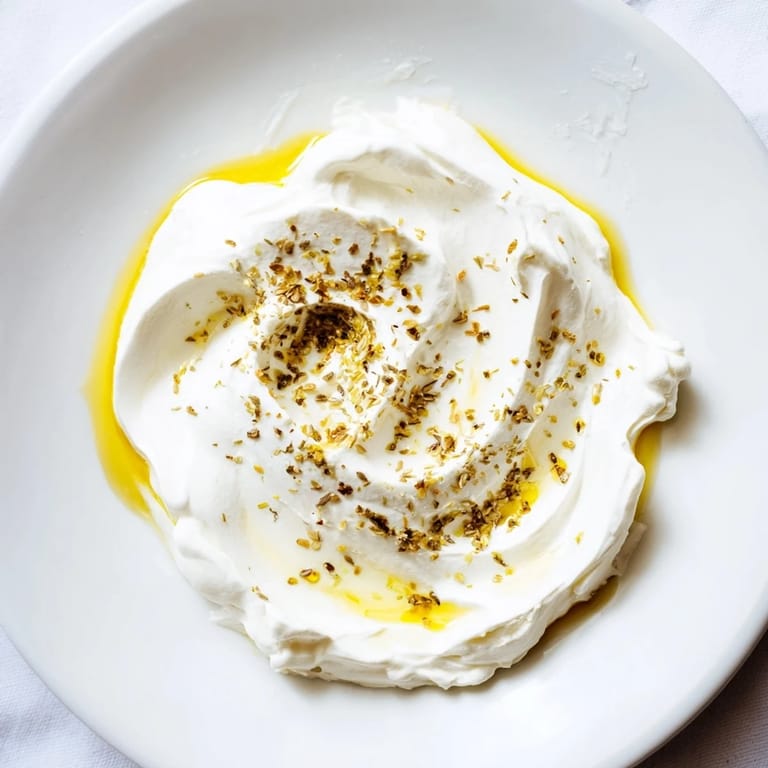
- Once it reaches your preferred thickness, unwrap the cloth and gently spoon the labneh into a shallow serving bowl. It should look thick, creamy, and slightly tangy.
- Finish with oil and herbs:
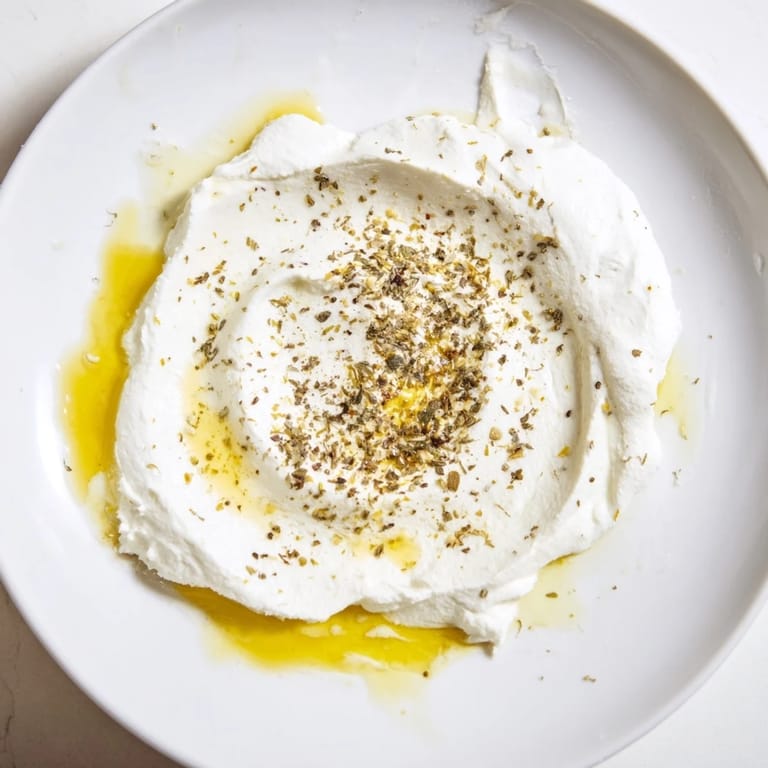
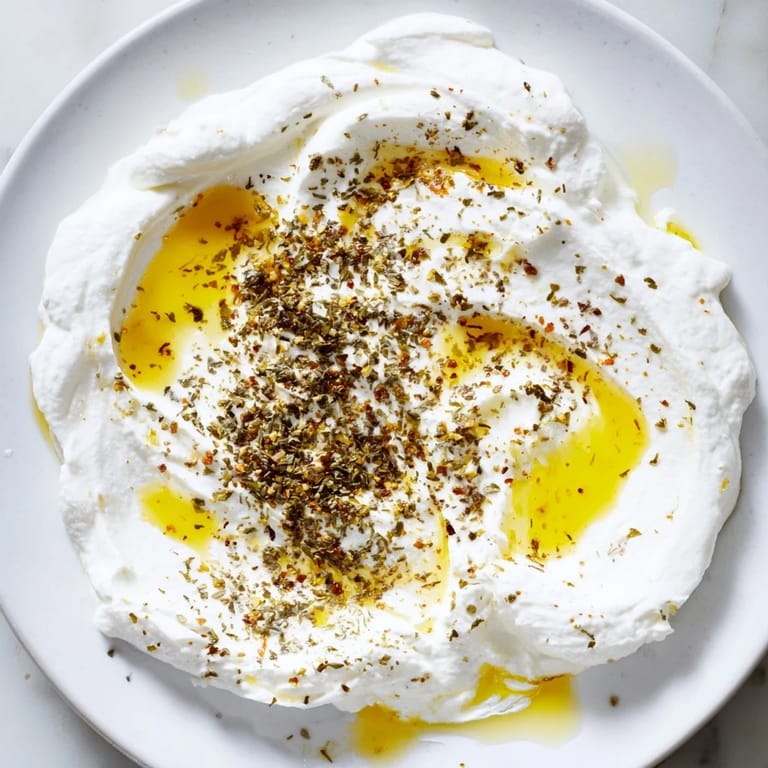
- Drizzle the labneh generously with olive oil and sprinkle on dried mint, zaatar, or sumac if you have them. This final step is where labneh becomes something you want to show off.
 Save
Save One evening, a friend tasted my labneh and immediately started planning a mezze board around it—and I realized this humble cheese had somehow become the centerpiece everyone gathered around. That's when I understood that sometimes the simplest things we make carry the most warmth.
Making Labneh Your Own
The beauty of labneh is how it adapts to what you have on hand and what mood you're in. Some mornings I drizzle it with hot paprika and crispy sumac; other times, a whisper of nigella seeds and fresh thyme transforms it entirely. The base stays the same, but the personality changes completely.
Storage and Keeping
Labneh keeps wonderfully in the refrigerator for up to five days, though in my house it rarely lasts that long. If you want to make it last longer or give it as a gift, you can roll the firm cheese into walnut-sized balls and pack them in a jar with olive oil and whatever herbs you love—this way it becomes even more elegant and lasts for weeks.
Serving Possibilities
Labneh deserves to be treated as something special, whether you're spreading it thickly on warm pita or dolloping it onto a plate of fresh vegetables and olives. It bridges the line between appetizer, dip, and spread, so it fits almost anywhere on your table. I've even used it as a surprising sandwich base, swapped in for mayo, and watched people try to figure out what made the sandwich taste so good.
- Serve it chilled with warm pita, raw vegetables, olives, and fresh herbs for an instant mezze platter that feels generous.
- Use it as a protein-rich spread on sandwiches, grain bowls, or even crackers for a quick snack that feels intentional.
- For a vegan version, choose a thick, full-fat plant-based yogurt and follow the exact same method—the transformation works just as beautifully.
 Save
Save Making labneh is a quiet act of trust—you place something in cloth, refrigerate it, and the world does the work for you. By the time you unwrap it, you'll have something delicious that tastes like you spent hours in the kitchen, even though you barely did anything at all.
Recipe Help
- → What type of yogurt is best for labneh?
Full-fat plain yogurt, especially Greek or strained, works best to create a creamy and tangy labneh.
- → How long should yogurt be strained for labneh?
Strain the yogurt for 12 to 24 hours depending on the desired thickness – shorter for softer, longer for firmer labneh.
- → Can labneh be garnished for extra flavor?
Yes, garnishing with extra-virgin olive oil and herbs like dried mint, zaatar, or sumac enhances its aroma and taste.
- → How should labneh be served?
Serve chilled as a spread or dip alongside warm pita, fresh vegetables, or as part of a mezze setup.
- → Is there a vegan alternative for this dish?
Using thick plant-based yogurt allows for a vegan variant, retaining a similar texture and tangy profile.