 Save
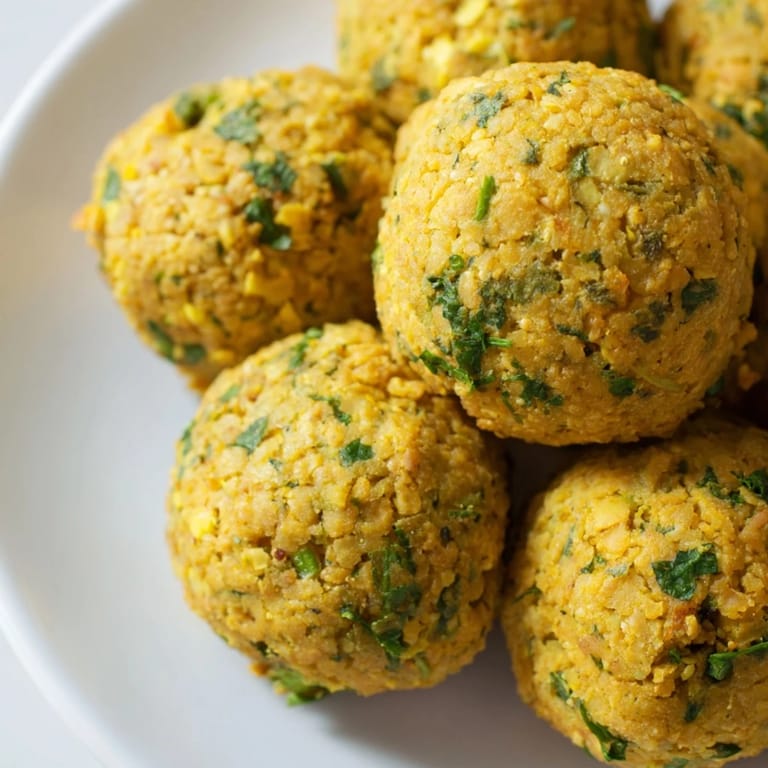
Save My neighbor's grandmother taught me the real secret to falafel one afternoon when I was supposed to be helping her prepare for a family gathering. She pulled out a bag of dried chickpeas and laughed when I asked if we could use the canned kind, saying that would be like trying to dance in someone else's shoes. By the time the oil was hot and those first balls turned golden, I understood—the texture, the way they stayed tender inside while crisping at the edges, was something only soaked raw chickpeas could deliver. That day I stopped thinking of falafel as something complicated and started seeing it as the easiest, most forgiving friend in the kitchen.
I made these for the first time during a kitchen test with my partner, and we both went quiet after that first bite—the kind of silence where you know something worked out exactly right. He said they tasted like what he'd eaten in Beirut years ago, and I realized that this recipe wasn't just teaching me technique, it was teaching me how to carry a flavor memory across continents. Now whenever I make them, I think about that moment, and about how food becomes a conversation across time and place.
Ingredients
- 1 cup dried chickpeas: Soaking these overnight is non-negotiable—it keeps them tender at the center and helps them stay together when you pulse them, nothing like the mealy texture canned ones give you.
- 1 small yellow onion, roughly chopped: The gentle sweetness balances the earthiness of the chickpeas and keeps the falafel from tasting one-dimensional.
- 3 cloves garlic, peeled: Don't mince these before the processor; let the blade do the work so they distribute evenly through the mixture.
- 1 cup fresh parsley leaves, packed, and 1/2 cup fresh cilantro leaves, packed: These aren't decoration—they're what make falafel taste alive and bright, so don't skimp or substitute dried herbs.
- 2 tsp ground cumin and 1 tsp ground coriander: Toast them gently in a dry pan the day before if you have time; it wakes up their flavor in a way that transforms the whole batch.
- 1/2 tsp cayenne pepper: This is your choice—add it if you want warmth, skip it if you're cooking for people who avoid heat.
- 1 tsp baking powder, 1 tsp salt, and 1/2 tsp black pepper: The baking powder does something magical; it keeps the insides airy, almost custardy.
- 3 tbsp all-purpose flour: This is the glue; use chickpea flour if you're avoiding gluten, and know that the mixture might need an extra teaspoon or two depending on how juicy your fresh herbs are.
- Vegetable oil for frying: Use whatever neutral oil you trust; the temperature matters more than the brand.
Tired of Takeout? 🥡
Get 10 meals you can make faster than delivery arrives. Seriously.
One email. No spam. Unsubscribe anytime.
Instructions
- Soak the chickpeas overnight:
- Rinse them under cold water, place them in a bowl, and cover with plenty of cold water—they'll nearly double in size as they plump up. After eight to twelve hours, drain them well and pat them dry with a clean towel; any excess water makes the mixture harder to control later.
- Pulse everything together:
- In your food processor, combine the drained chickpeas, onion, garlic, parsley, and cilantro. The sound changes from loud and sharp to a quieter, more rhythmic pulse—that's your cue to stop; you want texture and looseness, not a smooth paste.
- Season and incorporate:
- Add all your spices, baking powder, salt, pepper, and flour in one go, then pulse briefly until everything is evenly mixed. Stop and scrape down the sides once so nothing hides at the bottom of the processor.
- Form the balls:
- Wet your hands and pinch off pieces about the size of a walnut, rolling them gently between your palms until they're smooth and compact. If the mixture feels loose and won't hold together, work in another teaspoon of flour and try again.
- Heat the oil carefully:
- Pour oil into a deep pot until it reaches about two inches high, then heat to 350°F using a thermometer if you have one; if you don't, test with a small piece of onion—it should sizzle aggressively but not smoke or burn immediately.
- Fry in batches:
- Gently lower the falafel balls into the hot oil and listen for the satisfying sizzle; fry for three to four minutes, rolling them gently halfway through so all sides turn a deep golden brown, not pale or dark.
- Drain and serve:
- Lift them out with a slotted spoon and place them on paper towels to cool for a minute. Serve them warm in pita bread with tahini sauce, crisp salad, and pickled vegetables, or scatter them across a mezze platter.
 Save
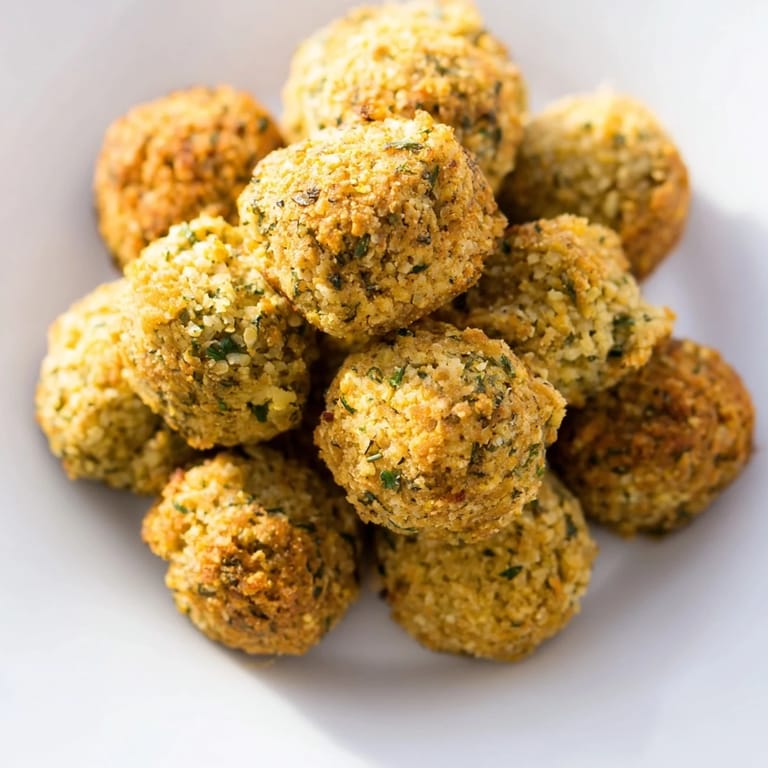
Save There's a moment when you're standing at the stove, watching a batch of falafel turn from pale green to that perfect burnished gold, where you realize you've just created something that makes people happy in a simple, uncomplicated way. It's not fancy or complicated, but it's real and it's yours, and that's when cooking stops being a task and becomes something like a small gift you keep giving.
The Soaking Secret
Soaking dried chickpeas is the moment where everything hinges, and I learned this the hard way after trying shortcuts that led nowhere. The water softens the skin and loosens the tannins while keeping the interior firm enough to pulse into texture rather than paste. I've soaked chickpeas overnight in the fridge and even in cool water during the day when I forgot to plan ahead; both work, though the cold overnight method feels gentler and more reliable. Think of soaking less as waiting and more as the chickpeas getting ready to become something better than they were.
Fresh Herbs Are Your Foundation
The moment I stopped thinking of parsley and cilantro as optional garnishes and started seeing them as the main flavor event, my falafel changed entirely. These herbs carry the whole personality of the dish—they're what make it taste bright and alive rather than spiced and dull. I pack them loosely into the measuring cup and pulse them with the other ingredients so they distribute evenly instead of clumping. If you're cooking this in winter or fresh herbs are hard to find, make peace with dried herbs if you must, but know you're trading some vibrancy; the fresh version tastes like someone opened a window in the kitchen.
Temperature and Timing
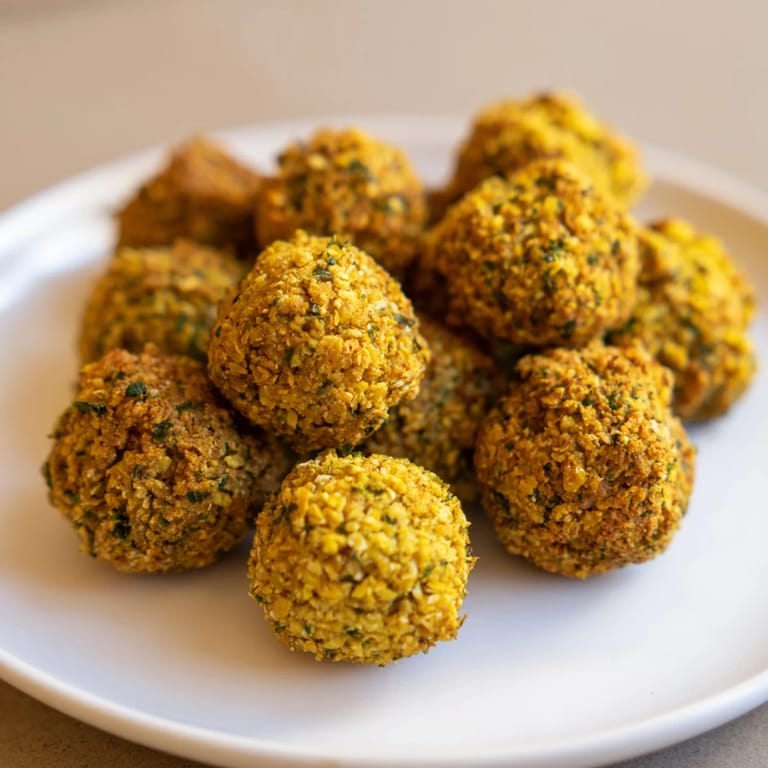
The oil needs to be hot enough to crisp the outside while the inside stays tender, and that sweet spot sits right around 350°F. If you don't have a thermometer, a small piece of onion will tell you what you need to know—it should sizzle immediately and turn golden-brown in about a minute. Watch the falafel as it cooks; they'll bob to the surface when they're almost done, and that's when you give them one final gentle roll to make sure every side gets equal time in the heat. I like to have a cooling rack or paper towels ready before the oil is even hot, because transferring them quickly stops the cooking and keeps them from getting greasy.
- If your batch comes out pale, the oil wasn't hot enough; if they're dark too quickly, it was too hot.
- Make them all the same size so they cook at the same pace and nobody ends up with a raw center while the others are crisp.
- Leftovers reheat beautifully in a low oven for five minutes if you need them later.
 Save
Save These falafel have traveled with me to countless table conversations, potlucks, and quiet meals at home, and they've never failed to remind me why simple food made with attention is the kind that stays with you. I hope they bring you that same quiet joy.
Recipe Help
- → What is the best way to soak chickpeas for falafel?
Soak dried chickpeas overnight (8–12 hours) in plenty of cold water to soften them and ensure a tender interior when cooked.
- → Can I bake falafel balls instead of frying?
Yes, brush falafel balls with oil and bake at 400°F (200°C) for 20–25 minutes, turning halfway for even crispness.
- → Which herbs enhance the flavor of Levantine falafel?
Fresh parsley and cilantro add a bright, herbal flavor that complements the earthiness of chickpeas and spices.
- → How do I achieve a crispy exterior on falafel balls?
Deep frying in hot oil (about 350°F) until golden ensures a crunchy crust while keeping the interior moist.
- → Can I use gluten-free flour in this mixture?
Yes, chickpea flour works well as a binding agent without gluten, maintaining texture and flavor.