 Save
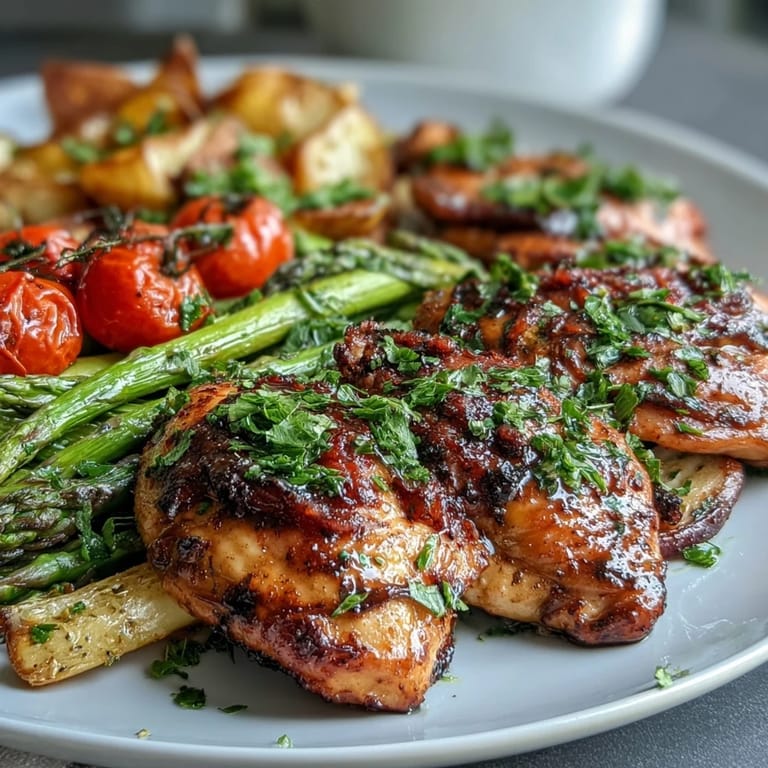
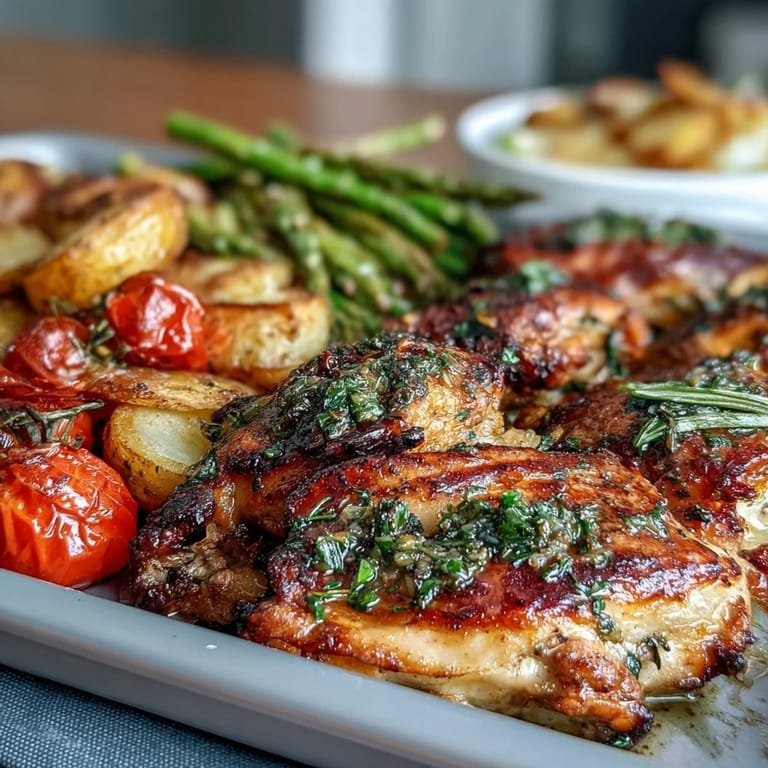
Save There's something magical about opening the oven to find an entire dinner golden and fragrant on a single pan—no fuss, no mountain of dishes. My partner walked into the kitchen mid-March when I was testing this sheet pan chicken, and the smell of roasted spring vegetables with lemon and garlic stopped them in their tracks. What started as a quick weeknight solution became our go-to proof that healthy eating doesn't require complicated technique or hours of prep.
I made this for my mom last spring when she was between kitchen renovations and eating from a single burner setup. Watching her face light up when she realized it was all protein and vegetables—no rice, no pasta required—reminded me why I love cooking food that makes people feel cared for without feeling restricted.
Ingredients
- Boneless, skinless chicken breasts: Look for breasts that are roughly the same thickness so they cook evenly; if one side is thicker, gently pound it to match before seasoning.
- Fresh asparagus: The woodier ends snap off naturally when you bend them—trust that instinct instead of measuring with a knife.
- Cherry tomatoes: Halving them prevents them from rolling around and allows the cut sides to caramelize beautifully against the pan.
- Sugar snap peas: These stay snappiest when they still have a slight firmness, so don't feel pressured to cook them until they're soft.
- Baby carrots: Halving lengthwise exposes more surface area for browning and makes them feel less like a side dish and more like a proper roasted vegetable.
- Red onion: The sweetness develops as it roasts, balancing the acidity from the lemon and mustard in your marinade.
- Yellow bell pepper: Its natural sweetness works as a flavor bridge between the savory chicken and the brighter vegetables.
- Olive oil: Use something you'd actually taste on a salad—this isn't the moment for your bargain-basement bottle.
- Fresh lemon juice: Bottled lemon juice feels tired here; fresh juice adds brightness that keeps the whole dish from feeling heavy.
- Garlic: Mincing it finely helps it distribute evenly and prevents raw, sharp bites in some areas while others get none.
- Dijon mustard: Just a teaspoon adds depth without making anything taste mustard-y; it's more of a flavor amplifier.
- Honey: A touch of sweetness rounds out the acidity and helps the marinade coat everything with a subtle sheen.
- Dried oregano and thyme: These Mediterranean herbs feel right at home with spring vegetables and lean protein.
- Fresh parsley: A final scatter of green adds visual brightness and a gentle herbaceous note that ties everything together.
Tired of Takeout? 🥡
Get 10 meals you can make faster than delivery arrives. Seriously.
One email. No spam. Unsubscribe anytime.
Instructions
- Heat your oven and prep your stage:
- Set the oven to 425°F and line your sheet pan with parchment paper—this makes cleanup actually worth celebrating and prevents sticking. If you don't have parchment, a light coat of oil works, but parchment is genuinely the move here.
- Build your marinade:
- Whisk together olive oil, lemon juice, minced garlic, mustard, honey, oregano, thyme, salt, and pepper in a small bowl until everything feels emulsified and cohesive. The marinade should smell bright and herbaceous, not overly pungent.
- Season the chicken:
- Pat your chicken breasts dry with a paper towel—this helps them brown instead of steam—then arrange them on the sheet pan and brush both sides generously with half of your marinade. The wet brush strokes should feel like you're painting, not drowning the chicken.
- Coat your vegetables:
- Toss all your chopped vegetables in a large bowl with the remaining marinade, making sure every piece gets kissed with the oil and herbs. Take your time here; it's worth ensuring even coating so nothing roasts naked.
- Arrange and roast:
- Scatter the vegetables around your chicken in a single layer, leaving a little space between pieces so steam can escape and browning can happen. Slide the whole thing into the oven and roast for 25 to 30 minutes until the chicken reaches 165°F internally and the vegetables are tender with caramelized edges.
- Rest and finish:
- Pull everything from the oven and let the chicken rest for five minutes—this keeps the meat from drying out when you slice it. Scatter fresh parsley over the top and serve with lemon wedges for anyone who wants to add extra brightness.
 Save
Save My nephew asked for seconds of the vegetables, which honestly made my entire week—this is the recipe that changed his mind about spring vegetables being something to tolerate. Seeing someone genuinely excited about eating asparagus and carrots reminded me that cooking is partly about nutrition, but mostly about making people feel good.
Why Sheet Pan Dinners Changed My Life
Before I embraced one-pan cooking, I was the person with four burners going and two pots simmering while the oven was preheating—chaos disguised as multitasking. Realizing that everything could roast together in the same pan at the same temperature felt like permission to slow down and actually enjoy the cooking process instead of racing against the clock.
Spring Vegetables That Actually Taste Like Something
Raw spring vegetables can feel delicate and precious, but roasting transforms them into something deeply satisfying. The combination of high heat and time allows their natural sugars to concentrate and caramelize, which is why these vegetables never feel like a compromise or a health obligation—they're genuinely delicious.
Making This Recipe Your Own
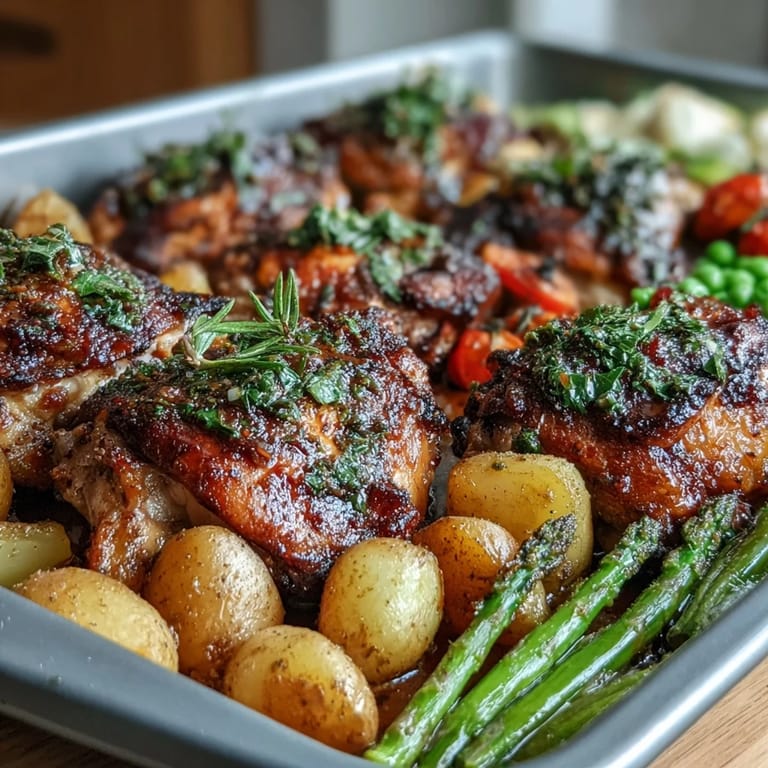
The beauty of this recipe is that it invites improvisation without falling apart. Swap the chicken breasts for thighs if you prefer darker meat that stays juicier, or add zucchini, radishes, or baby potatoes to the vegetable mix depending on what looks good at your market. For extra richness, crumbled feta scattered over the top just before serving adds a salty, creamy note that feels indulgent without being heavy.
- Keep the roasting temperature at 425°F unless you're adding dense vegetables like potatoes, which need an extra 10 to 15 minutes.
- Fresh herbs like parsley, chives, or dill all work beautifully as a final garnish depending on your mood or what you have on hand.
- Leftovers keep well in the fridge for three days and taste equally good cold the next day, making this perfect for meal prep without tasting like meal prep.
 Save
Save This is the dinner I make when I want to feel capable and organized without pretending to be a chef. It's proof that healthy cooking can be this straightforward, this delicious, and this kind to yourself on a busy week.
Recipe Help
- → Can I use chicken thighs instead of breasts?
Yes, boneless skinless chicken thighs can replace breasts. Adjust cooking time slightly as thighs may cook faster.
- → What other vegetables work well with this dish?
Spring vegetables like zucchini, radishes, and baby potatoes are great options. Add potatoes cautiously as they may need longer roasting.
- → How do I know when the chicken is done?
Check that the internal temperature reaches 165°F (74°C) for safe consumption and juices run clear.
- → Can I prepare the marinade in advance?
Yes, the dressing can be mixed ahead and stored in the fridge up to a day to enhance flavor.
- → What beverages pair well with this dish?
A crisp Sauvignon Blanc or a light rosé complement the fresh, herbaceous flavors nicely.