 Save
Save The distinct, sunny aroma of melted butter always makes me think of the spontaneous brunches I pull together when friends drop by unannounced. There’s a certain thrill to realizing you can whip up something luxurious in just minutes, and this blender hollandaise has rivaled more than one lazy weekend’s expectations. There were mornings when I swore off hollandaise for being too fussy, but this shortcut defied all my doubts. The whirlwind hum of the blender, eggs and lemon colliding, means brunch is about to get serious. Few sauces transform simple ingredients so swiftly and satisfyingly.
I first tried this for a tiny Easter get-together when I found myself with just three eggs left in the fridge and some asparagus on hand. Standing in my kitchen, I nearly talked myself out of making sauce, but curiosity won and the blender took care of the rest. My sister, in a hurry, swiped a spoon through the fresh hollandaise before the eggs were even plated. The laughter as she declared it 'dangerously good' is now inseparable from the zippy taste of lemon and butter in my memory.
Ingredients
- Unsalted butter (½ cup, 115 g): Using good butter brings out the silkiness of the sauce; melt it until frothy, but keep a sharp eye to avoid browning.
- Large egg yolks (3): The backbone of hollandaise, these must be fresh—room temperature if possible for best blending.
- Fresh lemon juice (1 tablespoon): This brightens the sauce and keeps it from feeling heavy; always squeeze your own for the freshest tang.
- Dijon mustard (½ teaspoon, optional): Just a little boosts flavor and helps stabilize the emulsion, a trick I gratefully adopted after one too many curdles.
- Salt (¼ teaspoon): Season gently—add at first, then taste after blending to get it just right.
- Cayenne or black pepper (pinch): Adds subtle warmth and depth, and it looks lovely flecked through the finished sauce.
Tired of Takeout? 🥡
Get 10 meals you can make faster than delivery arrives. Seriously.
One email. No spam. Unsubscribe anytime.
Instructions
- Melt the butter:
- Cut the butter into pieces and let it bubble in a small saucepan or the microwave, watching closely—stop before it browns, just as the aroma smells toasty and sweet.
- Blend your base:
- Add the egg yolks, lemon juice, mustard if you like, salt, and a pinch of cayenne or black pepper to the blender; pulse for about 10 seconds so the mixture becomes pale and smooth.
- Emulsify the sauce:
- With the blender running on its lowest setting, pour in the hot butter slowly in a pencil-thin stream; magically, the sauce thickens in seconds and grows glossy and rich.
- Taste and adjust:
- Pause to taste with a spoon (the best part), then decide if a little more lemon or salt is needed; blend briefly again if you tweak it.
- Serve up:
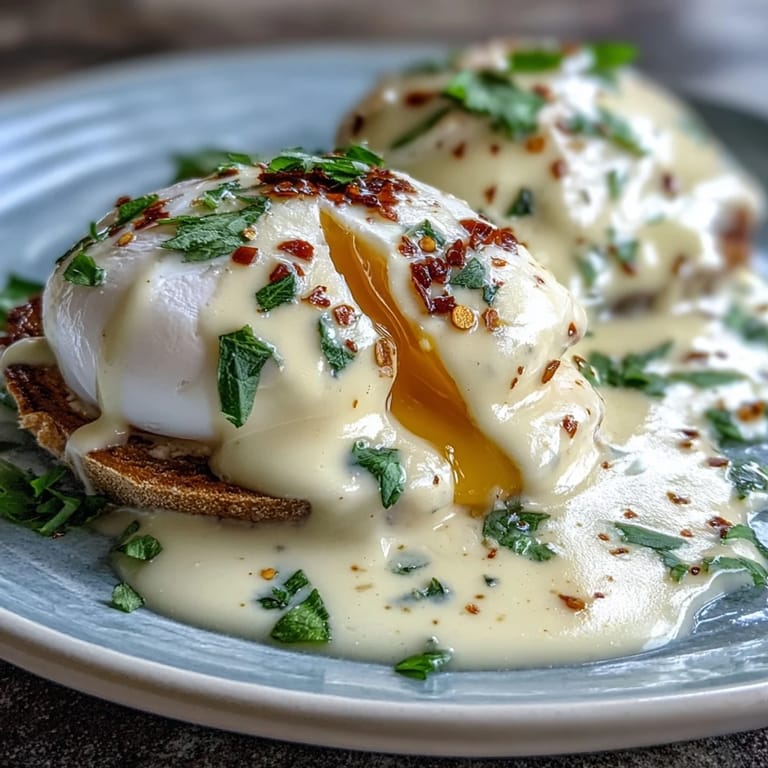
- Pour the sauce generously over warm eggs, vegetables, or salmon—don't wait too long or it may thicken further, but you can whisk in a splash of hot water to revive it.
 Save
Save There’s a photo of my nephew grinning, face smeared with hollandaise after he sneakily licked the spoon—proof that even the youngest critics can’t resist a good sauce. That stint in the kitchen shifted brunch from a routine meal into a collective celebration, as we scooped up every last buttery drop.
How to Fix a Broken Hollandaise
I’ve faced split hollandaise more times than I’d like to admit—when it looks curdled instead of silky, don't panic. Whisking in a teaspoon of hot water, or blending in another yolk, often brings it right back together. Low, slow blending and steady butter are key, and remembering this saves brunch every time.
Creative Pairings
While eggs Benedict are classic, I found drizzling hollandaise over roasted new potatoes or spooning it onto grilled artichokes makes a weekday dinner feel extraordinary. Sometimes I swap half the butter for a good, neutral oil for a lighter finish that’s ideal on spring vegetables. Even a humble bowl of steamed broccoli gets a standing ovation with this on top.
Make-Ahead and Storage Hacks
If you find yourself with leftovers, store the hollandaise in a small jar, then gently rewarm in a warm water bath while stirring. I’ve also learned that whisking in a splash of hot water revives any leftover sauce, bringing back its signature silkiness. Don't let it sit at room temperature for long—food safety always trumps convenience.
- Warm only as much as you need, keeping the rest chilled.
- A thermos makes a brilliant sauce-keeper for outdoor brunches.
- Always taste and adjust seasonings after reheating.
 Save
Save Sometimes the simplest sauces deliver the most delight. I hope this easy hollandaise leaves you feeling a little more clever in the kitchen, brunch or not.
Recipe Help
- → How does the blender method create a smooth hollandaise?
The blender uses steady shear and a little heat to emulsify egg yolks with hot butter quickly. Start by combining yolks and acid, then slowly drizzle in hot butter on low speed until the sauce thickens and becomes glossy.
- → What prevents the sauce from curdling or splitting?
Use room-temperature yolks, very hot but not browned butter, and add the butter slowly while blending on low. If it splits, whisk in a tablespoon of hot water to bring the emulsion back together.
- → Can I use clarified butter or a substitute for a lighter finish?
Clarified butter improves stability and gives a cleaner butter flavor. For a lighter version, replace half the butter with a neutral oil and adjust lemon and salt to taste.
- → How should I keep the sauce warm without breaking it?
Keep the blender jug in a bowl of warm water to hold temperature gently. Avoid direct stovetop heat, which can overcook the yolks and cause the emulsion to separate.
- → How long will the sauce hold its texture?
Best used immediately for optimal silkiness. It can be held warm for 30–45 minutes but may thicken; thin with a little hot water and whisk lightly before serving.
- → What are classic pairings for hollandaise made this way?
Classic pairings include eggs Benedict, poached salmon, steamed asparagus, artichokes, or a drizzle over spring vegetables and fish for an elegant finish.