 Save
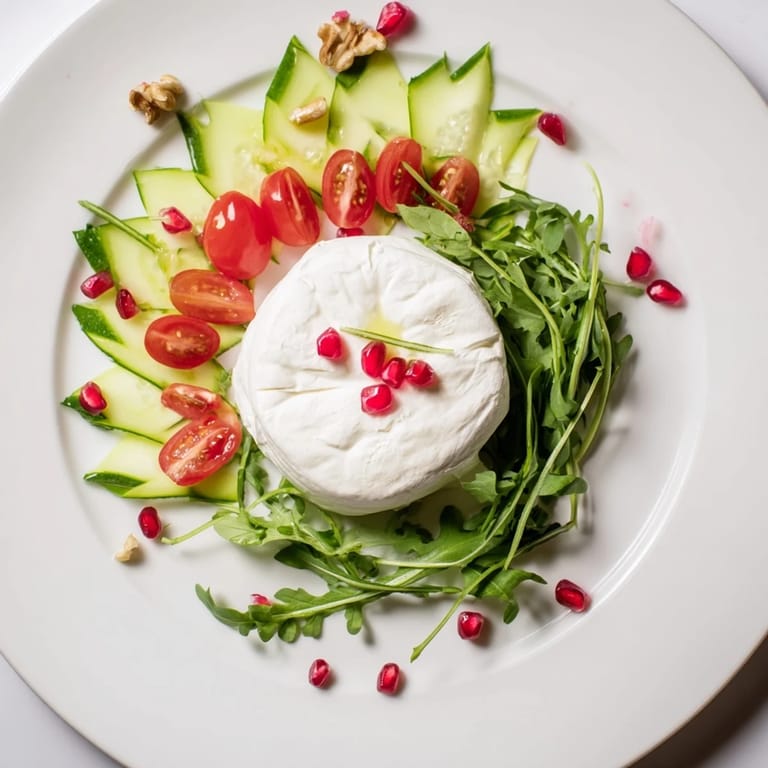
Save I discovered this salad by accident while standing in my kitchen on a lazy Sunday afternoon, staring at a beautiful wedge of Saint-Marcellin cheese and wondering how to make it the star of the meal rather than just a side note. There's something about soft-ripened cheese that demands to be the focal point, and that's when the idea struck—what if every ingredient on the plate pointed toward it like a visual compass? The result was this stunning arrangement that feels more like edible art than a simple salad, and now it's become my go-to for impressing guests without breaking a sweat.
The first time I plated this for friends, I was nervous about whether the visual concept would actually work, but when they walked into the room and everyone stopped talking, I knew I'd nailed something special. One friend asked if I'd taken a plating class, and I had to admit it was just me playing around with how to make a cheese wheel look important. Now whenever someone asks for a recipe that feeds four without much fuss, this is the one I recommend—it's become the salad that proves you don't need complicated techniques to create something memorable.
Ingredients
- Baby arugula: Use it as your radiating line, starting from the cheese and sweeping outward like the spokes of a wheel.
- Cherry tomatoes, halved: These brighten everything and their round shape nestles perfectly between other ingredients.
- Cucumber, thinly sliced: I learned to slice these paper-thin on a mandoline so they catch the light and feel delicate.
- Watermelon radish, thinly sliced: The shocking pink interior adds that wow factor—it's basically edible confetti that tastes good.
- Pomegranate seeds: These are your jewels; they stay nestled in place and add little bursts of tartness.
- Toasted walnuts: Toast them yourself if you can—the smell alone makes the whole kitchen feel like a special occasion.
- Extra-virgin olive oil: This is your dressing's backbone, so use one you actually enjoy tasting on its own.
- White balsamic vinegar: It's milder than regular balsamic and won't turn your beautiful arrangement muddy brown.
- Honey: Just a teaspoon rounds out the sharpness and adds a whisper of sweetness.
- Dijon mustard: This tiny amount acts like a flavor translator, making everything taste more like itself.
- Artisanal cheese wheel: Choose something that's just soft enough to cut through with a butter knife but structured enough not to collapse—Saint-Marcellin, Brie, or a local soft-ripened cheese all work beautifully.
Tired of Takeout? 🥡
Get 10 meals you can make faster than delivery arrives. Seriously.
One email. No spam. Unsubscribe anytime.
Instructions
- Set your stage:
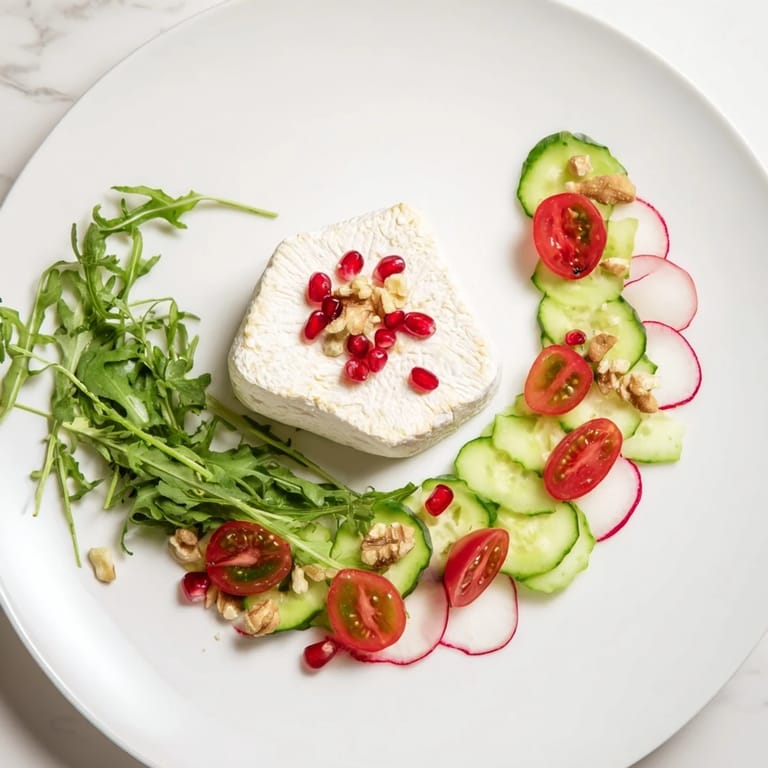
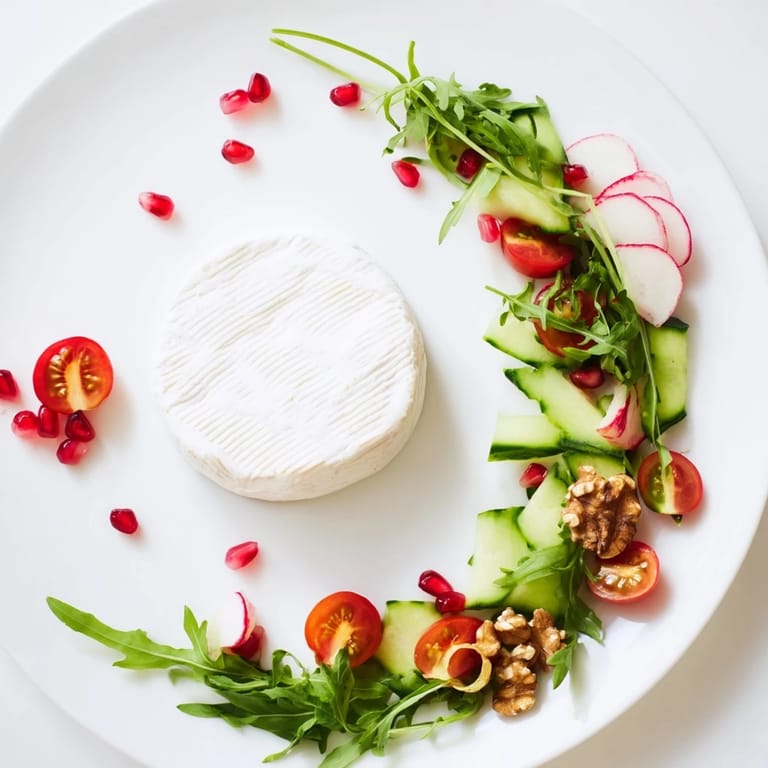
- Place the cheese wheel on a small pedestal or plate positioned off to one side of your large serving board—think of it as the sun, with everything else orbiting around it. This small choice completely changes how people perceive the whole plate.
- Create your first lines:
- Arrange the arugula in a sweeping arc radiating outward from the cheese, like you're drawing lines of direction with a greens-based pencil. The peppery leaves become both a flavor and a visual guide.
- Layer with intention:
- Now arrange cherry tomatoes, cucumber slices, and watermelon radish in orderly rows, all angled so they point back toward the cheese—this is where the magic happens, where randomness becomes a design. You'll feel yourself getting into a rhythm, almost meditative.
- Scatter the precious bits:
- Drop pomegranate seeds and toasted walnuts along your arranged ingredients, keeping that directional pattern alive—they should feel like they're being pulled toward the center, not randomly placed. Step back and look; if something feels off-balance, adjust one element and everything usually clicks.
- Make your dressing:
- Whisk together olive oil, white balsamic vinegar, honey, Dijon mustard, salt, and pepper in a small bowl—taste it before the salad goes out because this is your final seasoning moment. I always taste it on a piece of arugula to make sure it plays well with what's already on the plate.
- Finish with restraint:
- Drizzle the dressing lightly over everything except the cheese wheel itself—you want people to taste the cheese on its own first, then discover how the dressing brings the whole thing together. A light hand here keeps your artwork looking intentional, not drenched.
- Serve and watch:
- Bring it to the table and invite guests to cut from the cheese wheel, combining it with the arranged ingredients as they go—this moment when people realize they get to interact with their food is pure joy. Let them discover which combinations they love most.
 Save
Save There was a moment at dinner when someone asked if I'd learned to plate food professionally, and I realized this salad had crossed over from being just dinner into being an experience. The cheese became the conversation starter, the arrangement became the entertainment, and somehow that simple idea of pointing everything toward the center made the whole meal feel intentional and special.
The Art of Building Around a Center
Plating with purpose changes how people eat. When every ingredient is arranged to draw the eye inward, guests naturally eat more mindfully, noticing flavors they might have rushed past on a regular plate. The geometry of the dish also means everyone gets the same ratio of cheese to vegetables, which is harder to achieve than it sounds but makes the eating experience feel fair and balanced.
Cheese Selection as Your Starting Point
The cheese wheel you choose becomes the entire personality of this dish, so think of it as your creative decision rather than just an ingredient. A tangy Humboldt Fog brings brightness, a rich Camembert brings decadence, and a crumbly blue cheese brings boldness—each completely changes the story you're telling. Once you pick your cheese, build the salad around what it needs as accompaniment, not the other way around.
Making This Salad Your Own
This is a framework, not a straitjacket, so play with it.
- Add paper-thin prosciutto or smoked salmon arranged like ribbons if you want to go non-vegetarian.
- Scatter edible flowers like violas or nasturtiums across the finished plate for extra visual drama.
- Pair it with a chilled Sauvignon Blanc or dry rosé and watch how the wine finds new flavor notes in the cheese and greens.
 Save
Save This salad proves that the simplest idea—pointing everything toward the center—becomes something extraordinary when executed with intention and care. Every time you make it, you're creating a moment worth remembering.
Recipe Help
- → What cheeses work well as the centerpiece?
Soft-ripened cheeses like Saint-Marcellin, Brie, Camembert, or Humboldt Fog provide creamy textures and complement the fresh ingredients.
- → Can this dish accommodate non-vegetarian options?
Yes, thinly sliced prosciutto or smoked salmon can be added to introduce savory depth and protein variety.
- → How should the ingredients be arranged for best presentation?
Arrange arugula in a sweeping arc radiating from the cheese wheel, layering tomatoes, cucumber, and radish slices angled toward it, and scatter nuts and seeds to maintain a directional flow.
- → What dressing complements the flavors here?
A simple vinaigrette of extra-virgin olive oil, white balsamic vinegar, honey, Dijion mustard, salt, and pepper enhances the fresh produce without overpowering the cheese.
- → Are there suggested pairings for serving?
This salad pairs beautifully with a chilled Sauvignon Blanc or a dry rosé, balancing the creamy cheese and fresh ingredients.