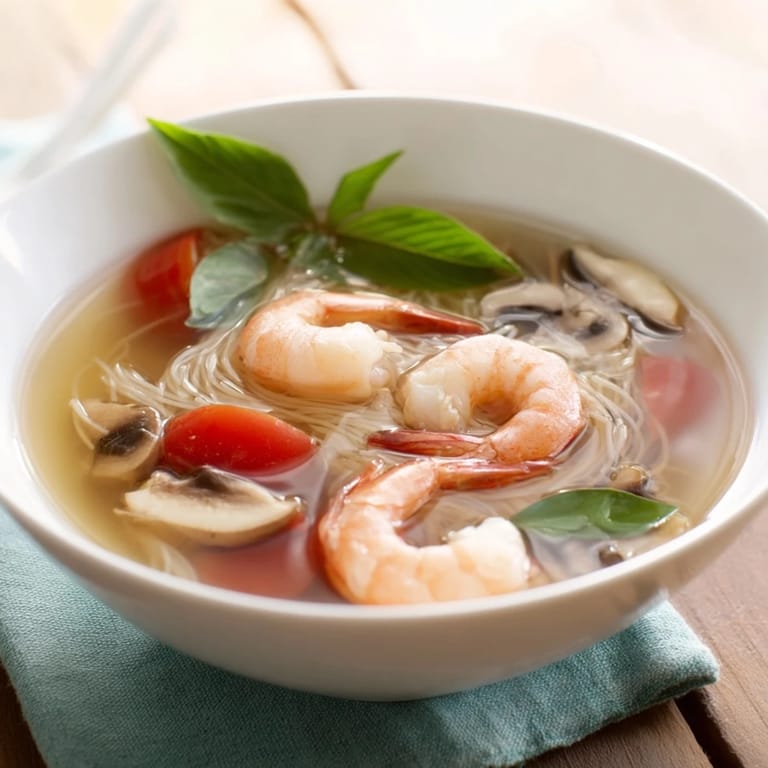
 Save
Save The first time I tasted authentic Tom Yum, I was sitting on a plastic stool outside a Bangkok street vendor's cart, sweat dripping down my face from both the heat and the soup itself. The vendor stirred a pot with such casual precision, dropping in lemongrass like she'd done it ten thousand times, and when she handed me that steaming bowl, the aroma hit me so hard I almost couldn't taste it properly. Now whenever I make it at home, I chase that exact feeling—that moment when the kitchen fills with something alive and electric, when you know the next spoonful is going to be unforgettable.
I made this for my neighbor last winter when she mentioned she'd never had proper Tom Yum, and I watched her face transform with that first spoonful—eyes widening, then closing, then reaching for more lime. That's when I understood it wasn't just about technique, it was about sharing something that makes people pause and really taste.
Ingredients
- Chicken or vegetable stock (4 cups): This is your foundation, so use something with genuine flavor—homemade is ideal, but a good quality broth matters more than the brand name.
- Fresh lemongrass (2 stalks): Trim the dry ends and smash the stalks before adding so they release those citrusy oils that define the whole soup.
- Kaffir lime leaves (4): These aren't optional; they add a specific floral bitterness that makes the soup taste authentic, but you can find them frozen if fresh isn't available.
- Fresh galangal (3 slices): It's sharper and more peppery than ginger, but honestly ginger works if you're in a pinch and adjust the quantity slightly.
- Thai birds eye chilies (2): Start with two and taste as you go—these are genuinely spicy, not the playful kind of hot.
- Large shrimp (250 g): Buy them fresh if possible and peel them yourself; the shells can go into your stock next time for even deeper flavor.
- White mushrooms (150 g): Slice them by hand if you have time—you'll get a better feel for their texture and can catch any that need cleaning.
- Tomatoes (2 medium): Use whatever's in season; the acidity they add is what makes the soup sing, not their exact type.
- Fish sauce (2 tablespoons): This is the umami backbone, so don't skip it and definitely don't be shy—it smells funky on its own but transforms everything.
- Lime juice (1 tablespoon plus more): Fresh squeezed only; bottled lime juice tastes flat by comparison and this soup is all about brightness.
- Sugar (1 teaspoon): A pinch of sweetness balances the heat and sour, so taste and adjust rather than measuring exactly.
Tired of Takeout? 🥡
Get 10 meals you can make faster than delivery arrives. Seriously.
One email. No spam. Unsubscribe anytime.
Instructions
- Build the aromatic base:
- Pour your stock into a medium pot and bring it to a gentle simmer—not a rolling boil, which can make the broth taste harsh. Add the smashed lemongrass, torn lime leaves, galangal slices, and sliced chilies all at once, then let them infuse for 5 to 7 minutes while your kitchen fills with an aroma that smells like you actually know what you're doing.
- Add the vegetables:
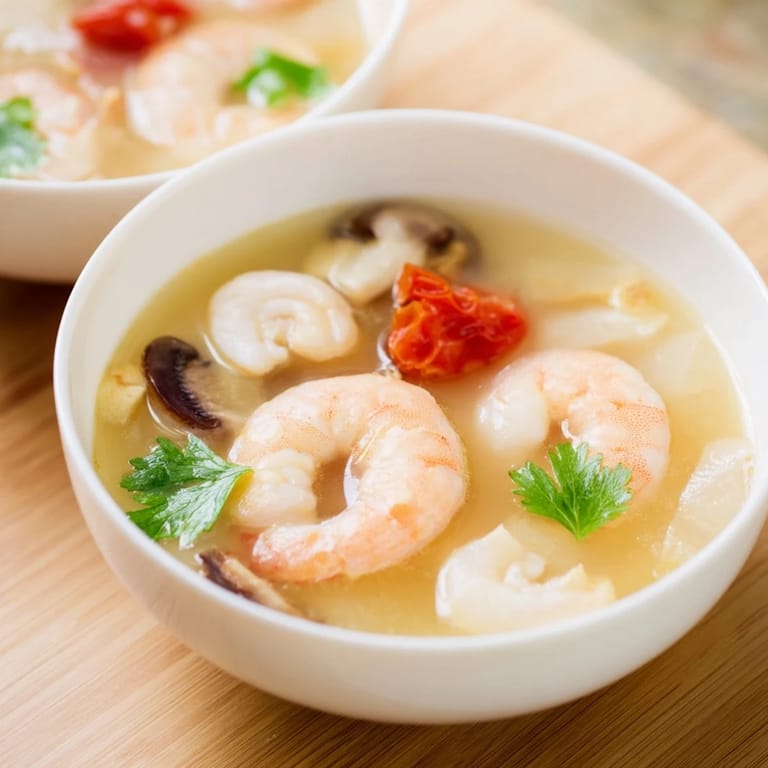
- Toss in the mushrooms, tomato wedges, and onion slices, then let them soften for 3 to 4 minutes until they've released some of their juices and the broth has turned a pale golden color. You'll notice the soup starting to taste like itself now rather than just aromatic water.
- Cook the shrimp:
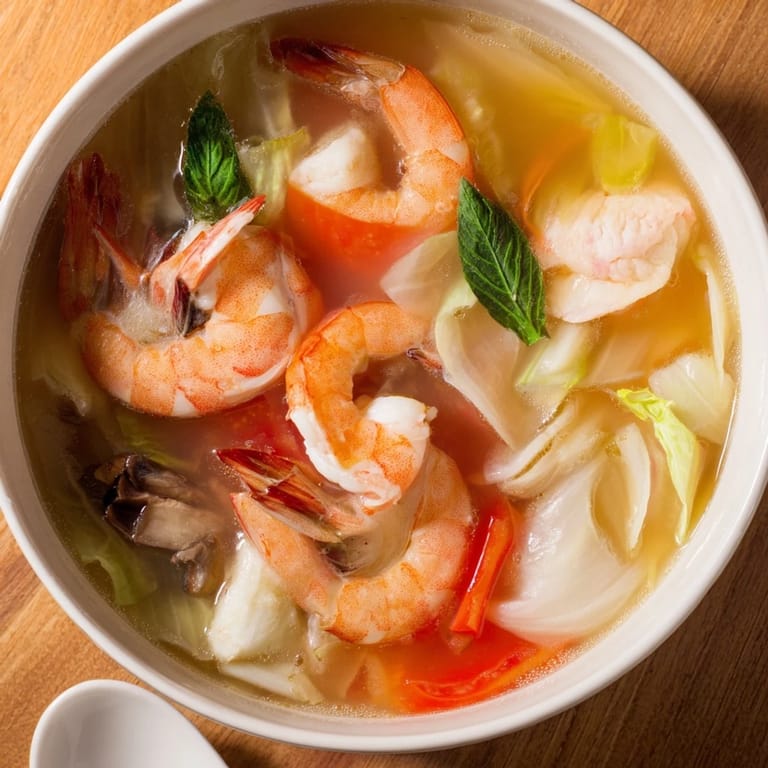
- Drop in the shrimp and watch them carefully—they go from gray to pink in about 2 to 3 minutes, and overcooked shrimp turns rubbery faster than you'd think. The moment they look opaque all the way through, move to the next step.
- Season and taste:
- Stir in the fish sauce, fresh lime juice, sugar, and chili paste if you're using it, then taste a spoonful on its own. This is where you become the boss of your own soup—add more fish sauce for depth, more lime for brightness, more salt for balance, whatever's calling to you in that moment.
- Finish and serve:
- Remove from heat and fish out the lemongrass and galangal pieces if you prefer (they're edible but chewy), then ladle the soup into bowls and crown each one with fresh cilantro, green onions, and a lime wedge on the side. That lime wedge is essential—let people squeeze it in themselves and find the exact balance they want.
 Save
Save My roommate came home unexpectedly one evening and caught me making this, and instead of leaving me alone she just sat at the counter asking questions—why the smashing, why the balance of heat and sour, whether lime really made that much of a difference. By the time we sat down to eat, the soup tasted better because we'd talked through it, because she'd witnessed the care, and because good food tastes better when someone's genuinely curious about how it came to be.
Why This Soup Feels Different
Tom Yum isn't delicate or subtle—it announces itself the moment it hits your tongue, all heat and brightness and complexity at once. That's not a flaw; it's the whole point. The soup doesn't whisper, it speaks, and that directness is exactly why it cuts through fatigue or a crowded day and makes you feel awake again. Every element has a job: the lemongrass and galangal provide earthiness, the chilies provide heat, the lime provides acid, and the fish sauce brings everything together into something that's somehow greater than its parts.
Variations That Actually Work
The vegetarian version with tofu is genuinely excellent, not a compromise—substitute soy sauce for fish sauce and add a splash of sesame oil for depth, then let the tofu cubes absorb the broth flavors. You can also swap the shrimp for chicken if that's what you have, or keep things light with just mushrooms and vegetables. I've even made a version with squid that turned out beautifully, though the texture is completely different and the broth tastes slightly more mineral. The skeleton of the recipe is what matters; the protein is just the vehicle for that perfect balance of sour, spicy, and savory.
The Details That Change Everything
The difference between a good Tom Yum and an unforgettable one often comes down to how you treat those aromatics at the beginning. Smashing the lemongrass isn't just for show—it cracks open the fibers and releases essential oils that infusing gently does. The same goes for tearing the lime leaves instead of dropping them whole; you're increasing surface area and letting them contribute more fully to the broth. These tiny choices accumulate into something remarkable.
- Taste constantly as you add seasoning instead of following the measurements exactly, because every stock is different and your heat tolerance might not match mine.
- Serve this with jasmine rice on the side if you want something more substantial, letting people stir spoonfuls of soup into their rice.
- Make extra broth and keep it in the freezer for nights when you want Tom Yum but don't have time to infuse again.
 Save
Save This is the kind of soup that reminds you why you cook at all—it's honest, it's flavorful, and it brings people together around something that feels both exotic and somehow deeply familiar. Make it for someone you want to impress, or make it for yourself on a day when you need something that tastes like more than just dinner.
Recipe Help
- → What gives Tom Yum its distinctive spicy and sour flavor?
The unique blend of fresh lemongrass, kaffir lime leaves, galangal, bird’s eye chilies, lime juice, and fish sauce creates Tom Yum’s signature hot and sour taste.
- → Can I adjust the heat level in this soup?
Yes, you can increase or reduce the number of chilies or omit the chili paste to suit your preferred spice level.
- → What can be used instead of shrimp for a vegetarian option?
Firm tofu works well in place of shrimp, paired with soy sauce instead of fish sauce to keep similar savory notes.
- → How long should the broth simmer to develop flavors?
Simmering the broth with herbs and spices for 5-7 minutes allows their aromas and tastes to fully infuse for a rich base.
- → What garnishes complement Tom Yum soup best?
Fresh cilantro leaves, sliced green onions, and extra lime wedges enhance the bright, fresh character of the soup.
- → What sides pair well with this Thai dish?
Steamed jasmine rice balances the bold broth, while a crisp Riesling or lager complements the flavors perfectly.