 Save
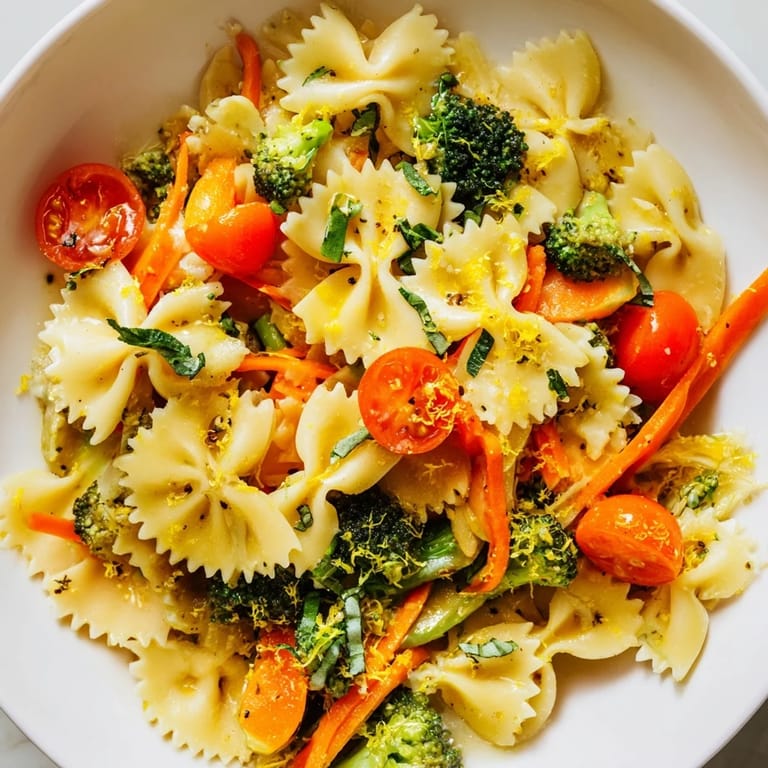
Save My kitchen window was wide open one April afternoon, and I had eight different vegetables lined up on the counter like paint tubes. I'd been staring at them for ten minutes, wondering if this was too ambitious for a weeknight. But the sunlight hit that pile of color just right, and I thought, why not make dinner look like spring? That's how this pasta became a regular in my rotation—not from a plan, but from a moment of deciding beauty belongs on the plate too.
I made this for a friend who swore she didn't like vegetables unless they were hidden in sauces. She picked up her fork, twirled a bite with a piece of asparagus sticking out, and paused. Then she went quiet for three bites and finally said, I think I've been cooking them wrong my whole life. That's the magic of barely cooking vegetables—they stay sweet, they stay bright, and they taste like themselves instead of mush.
Ingredients
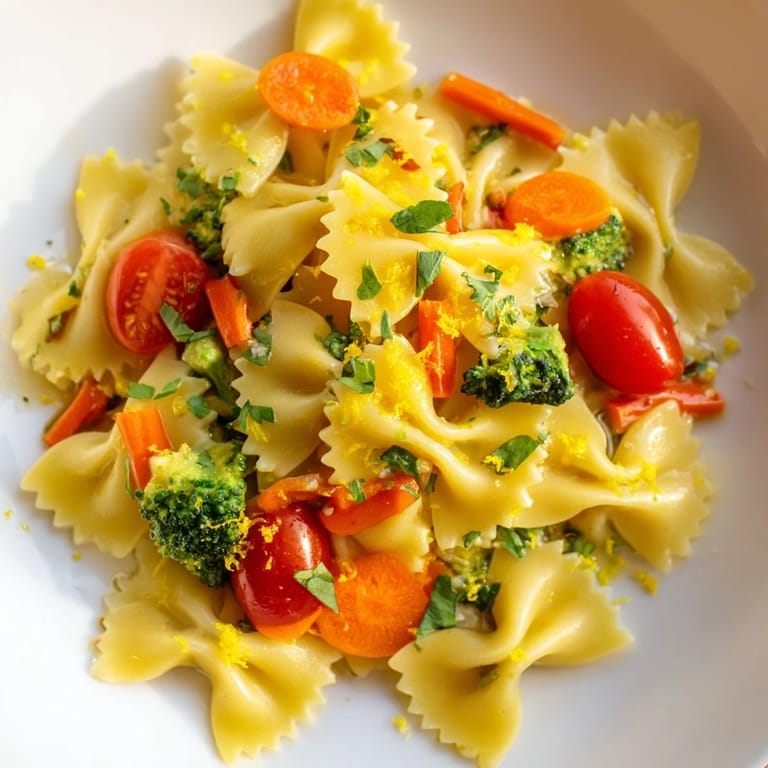
- Bow-tie pasta: The shape catches bits of vegetables and sauce in its folds, making every bite complete instead of letting things slide off like they do with spaghetti.
- Cherry tomatoes: Halve them so they release just enough juice to mingle with the olive oil and create a light, natural sauce without any heaviness.
- Asparagus: Cut them into one-inch pieces so they cook evenly and give you that tender-crisp snap that tells you spring has arrived.
- Red bell pepper: Slice it thin so it wilts just slightly and adds sweetness without crunch that fights the other textures.
- Yellow squash: Half-moons cook faster than rounds and their mild flavor lets the lemon and garlic shine through.
- Broccoli florets: They soak up olive oil and garlic better than almost any vegetable and add a hearty bite that makes this feel like a real meal.
- Carrots: Julienned strips cook faster and look more elegant than chunky coins, plus they add a slight sweetness that balances the lemon.
- Red onion: Thinly sliced and barely cooked, it stays sharp enough to wake up your palate without overpowering the vegetables.
- Frozen peas: They need almost no cooking and their pop of green makes the whole dish feel complete, like the final brushstroke.
- Extra-virgin olive oil: Use the good stuff here because it's doing all the work of building flavor without butter or cream to hide behind.
- Garlic: Minced fine and cooked just until fragrant, it perfumes everything without turning bitter or stealing the spotlight.
- Crushed red pepper flakes: Optional, but a pinch adds a warmth that makes the dish feel alive instead of just pleasant.
- Lemon zest and juice: The zest gives you bright oils that cling to the pasta, and the juice adds acid that makes all the vegetables taste more like themselves.
- Parmesan cheese: A little goes a long way, adding salty richness that ties everything together without making it heavy.
- Fresh basil and parsley: Toss them in at the end so they stay green and aromatic, like a garden finishing touch.
Tired of Takeout? 🥡
Get 10 meals you can make faster than delivery arrives. Seriously.
One email. No spam. Unsubscribe anytime.
Instructions
- Boil the pasta:
- Salt your water generously so the pasta tastes seasoned from the inside out, and cook it until it still has a slight firmness when you bite it. Save that pasta water before you drain—it's starchy magic that will help everything cling together later.
- Start the aromatics:
- Heat your olive oil until it shimmers, then add the garlic and red pepper flakes, stirring constantly so the garlic turns golden and fragrant without burning. This step only takes a minute, but it sets the flavor foundation for everything that follows.
- Cook the sturdy vegetables first:
- Add carrots, broccoli, and asparagus to the hot oil and let them sizzle, stirring occasionally so they get a little color on the edges. They need a few minutes to go from raw to tender-crisp, so don't rush this part.
- Add the softer vegetables:
- Toss in the red onion, bell pepper, and yellow squash with a pinch of salt to help them release moisture. Stir them around until they're just tender but still holding their shape and color.
- Finish with tomatoes and peas:
- Stir in the cherry tomatoes and frozen peas, cooking just long enough for the tomatoes to soften slightly and the peas to thaw. You want everything warm and mingling, not mushy.
- Toss with pasta and brighten:
- Add the drained pasta, remaining olive oil, lemon zest, and lemon juice directly into the skillet, tossing everything together over low heat. If it looks dry, splash in some reserved pasta water a little at a time until it's glossy and cohesive.
- Season and garnish:
- Taste it now and add more salt or pepper if needed, then remove from heat and toss in the Parmesan, basil, and parsley. Serve it right away while everything is still vibrant and warm.
 Save
Save One night I served this to my neighbor who'd just moved in, and she asked if I'd trained at a cooking school. I laughed and told her it was just vegetables and pasta, but she said it tasted like someone cared. That's when I realized this dish isn't fancy—it's just generous. It's the kind of food that says, I took a little extra time because you're worth it.
How to Keep Your Vegetables Bright
High heat and short cooking time are your friends here. If you crowd the pan or cook everything on low, the vegetables steam instead of sauté, and they lose that vibrant color. Work in batches if your skillet isn't big enough, and don't cover the pan—trapped steam turns everything drab. The goal is barely cooked, still snappy, and so colorful it almost looks unreal.
Making It Your Own
I've made this with zucchini when I didn't have squash, sugar snap peas instead of frozen ones, and even thinly sliced fennel when I was feeling adventurous. The backbone is always garlic, lemon, and olive oil, but the vegetables can shift with the seasons or whatever's about to go bad in your fridge. It's more of a method than a rigid recipe, and that's why it never gets boring.
Serving and Storing
This tastes best the moment you toss it together, when the pasta is still steaming and the herbs are just wilted. Leftovers are fine cold as a pasta salad, though the vegetables lose a bit of their snap. If you're reheating, do it gently in a skillet with a splash of water or broth, and add a squeeze of fresh lemon to wake everything back up.
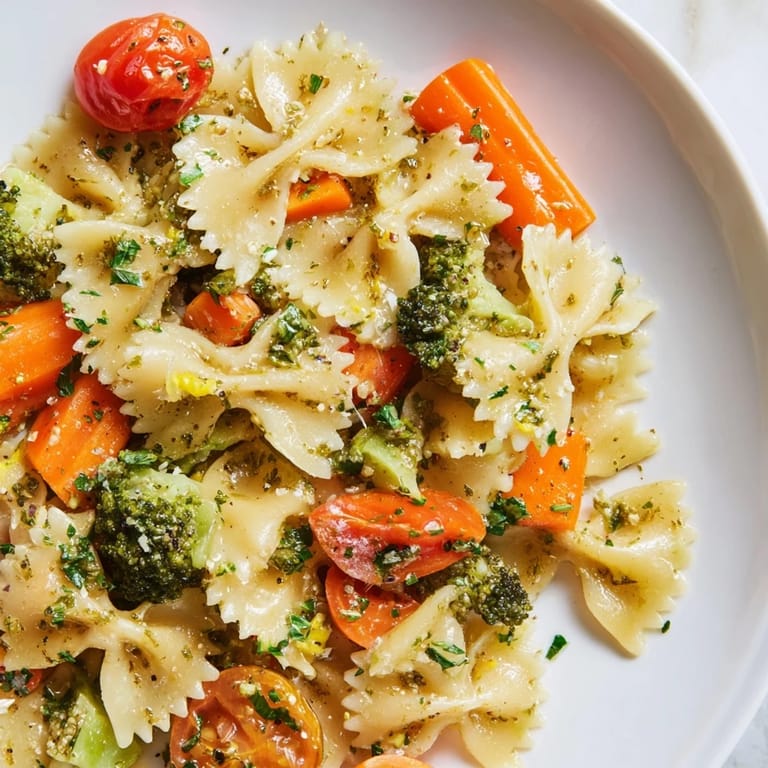
- Serve it in wide, shallow bowls so you can see all the colors instead of piling it high.
- A handful of toasted pine nuts or a drizzle of good balsamic adds a finishing touch without extra work.
- If you want protein, grilled chicken or shrimp work beautifully, but it's hearty enough on its own if you're keeping it vegetarian.
 Save
Save This is the dish I make when I want to feel like spring is happening in my kitchen, even if it's dreary outside. It's proof that simple ingredients, treated with a little respect and good timing, can make dinner feel like a celebration.
Recipe Help
- → Can I prepare this dish ahead of time?
Yes, you can prep vegetables and cook the pasta several hours in advance. Store separately in airtight containers. Combine and finish with sauce just before serving to maintain the vegetables' vibrant color and crisp texture.
- → What vegetables work best as substitutes?
Any colorful spring or summer vegetables work well. Try zucchini, snap peas, green beans, or snow peas. Stick with vegetables that cook quickly at medium heat to keep them tender-crisp and visually appealing.
- → How do I make this dish vegan?
Simply omit the Parmesan cheese or use a plant-based parmesan alternative. The garlic and lemon sauce is naturally vegan-friendly. Consider adding nutritional yeast for a cheesy flavor boost if desired.
- → Can I add protein to this pasta?
Absolutely. Grilled chicken, shrimp, or white fish pair beautifully with this dish. Add protein during the final tossing step, or cook separately and serve alongside for better portion control.
- → Why is my pasta water important in this dish?
Reserved pasta water contains starches that help create a silky, cohesive sauce when tossed with the vegetables and olive oil. This prevents the dish from being dry and helps the sauce coat the pasta evenly.
- → What wine pairs best with this meal?
Crisp white wines work wonderfully. Try Sauvignon Blanc, Pinot Grigio, or Vermentino. Their acidity complements the lemon brightness and light olive oil sauce while cutting through the richness of the pasta.