 Save
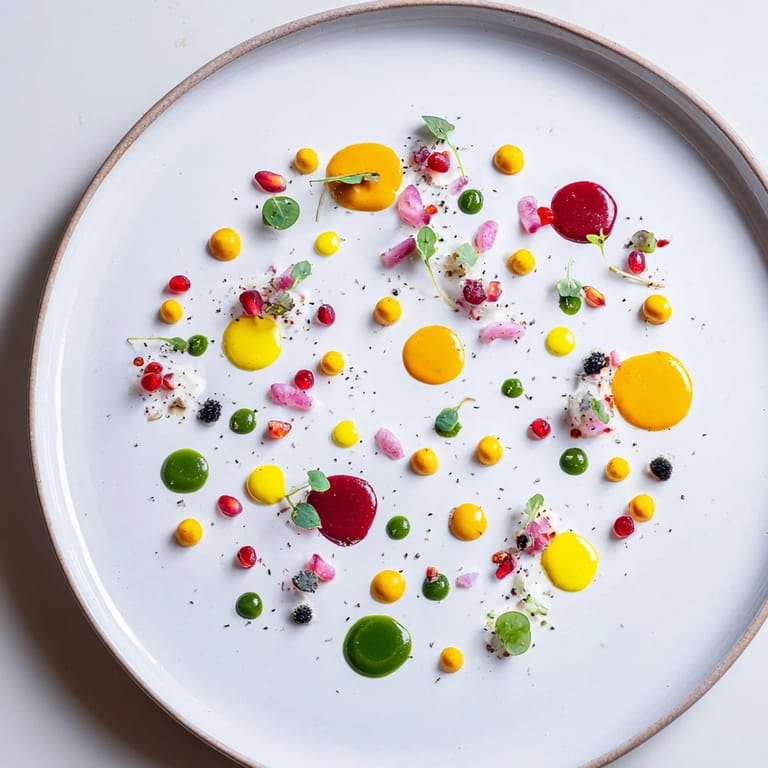
Save I'll never forget the afternoon I discovered this dish at a small contemporary restaurant tucked away on a quiet street. The plate arrived like a carefully composed painting—dots of vibrant color scattered across white ceramic, each one telling a different story. I was mesmerized. That evening, I decided to recreate it in my own kitchen, and what started as an ambitious experiment became one of my favorite ways to celebrate vegetables and transform simple ingredients into something that feels like edible art.
I made this for a dinner party last spring when my friend mentioned she'd been craving something beautiful and nourishing. When she took her first bite and paused to really look at the plate, then smiled—that's when I knew this recipe had become something special. It wasn't just about the food; it was about creating a moment.
Ingredients
- Beetroot puree (80 g): Deep crimson and earthy, this becomes your richest color. Roasting it first concentrates the sweetness and makes blending easier—a trick that genuinely matters.
- Carrot puree (80 g): Warm golden-orange that feels like sunshine on the plate. Cook until completely tender so it purées silky smooth without lumps.
- Green pea puree (80 g): Bright and fresh, this is your most delicate flavor. Use frozen peas if fresh aren't available—they're actually more reliable.
- Yellow bell pepper puree (80 g): Roasting brings out a subtle sweetness that raw peppers don't have. It's worth the extra step.
- Greek yogurt (60 g): Thick and creamy, this becomes your neutral canvas. The tanginess balances all the other flavors beautifully.
- Crème fraîche (40 g): Richer than yogurt with a slight tang. If you can't find it, sour cream works in a pinch, though the taste shifts slightly.
- Basil pesto (1 tbsp): Herbaceous and bold. Make it fresh if you can—the difference is remarkable, though store-bought saves time on busy nights.
- Red pepper coulis (1 tbsp): Silky, slightly sweet, and stunningly colored. This is essentially roasted red peppers blended smooth with a touch of vinegar.
- Balsamic reduction (1 tbsp): Deep, glossy, and concentrated in flavor. Use the real thing—it transforms from simple vinegar into something almost syrupy and sophisticated.
- Pickled red onions (20 g): Thinly diced, these add a sharp brightness and beautiful magenta color. The acidity cuts through richness beautifully.
- Microgreens: Delicate and peppery, they're your textural surprise. Any variety works—arugula, radish, or mixed greens all add visual pop.
- Toasted black sesame seeds (1 tbsp): Nutty and dramatic against lighter colors. Toast them yourself for deeper flavor than pre-toasted versions.
- Pomegranate seeds: Jewel-like and tart-sweet, they add a burst of juice and unexpected crunch.
- Sea salt flakes and black pepper: Final seasoning that brings everything into focus. Toast the pepper yourself if you have the time—it's noticeably fresher.
Tired of Takeout? 🥡
Get 10 meals you can make faster than delivery arrives. Seriously.
One email. No spam. Unsubscribe anytime.
Instructions
- Prepare Your Canvas of Flavors:
- Start by cooking each vegetable separately until completely tender. As you blend them one by one—beetroot first, then carrot, then peas, finally bell pepper—you'll notice how each puree has its own personality. Add just a pinch of salt and a few drops of good olive oil as you blend. The goal is silky smoothness with no graininess. Transfer each to its own piping bag or squeeze bottle. This is where patience pays off—rushed blending leads to lumpy purees that won't look right on the plate.
- Ready Your Creams and Sauces:
- While your purees cool slightly, place the yogurt and crème fraîche into separate piping bags. Keep them cold until plating. The pesto, pepper coulis, and balsamic reduction go into squeeze bottles—you want control and precision here. This step takes just minutes but sets you up completely.
- Compose Your Pointillist Masterpiece:
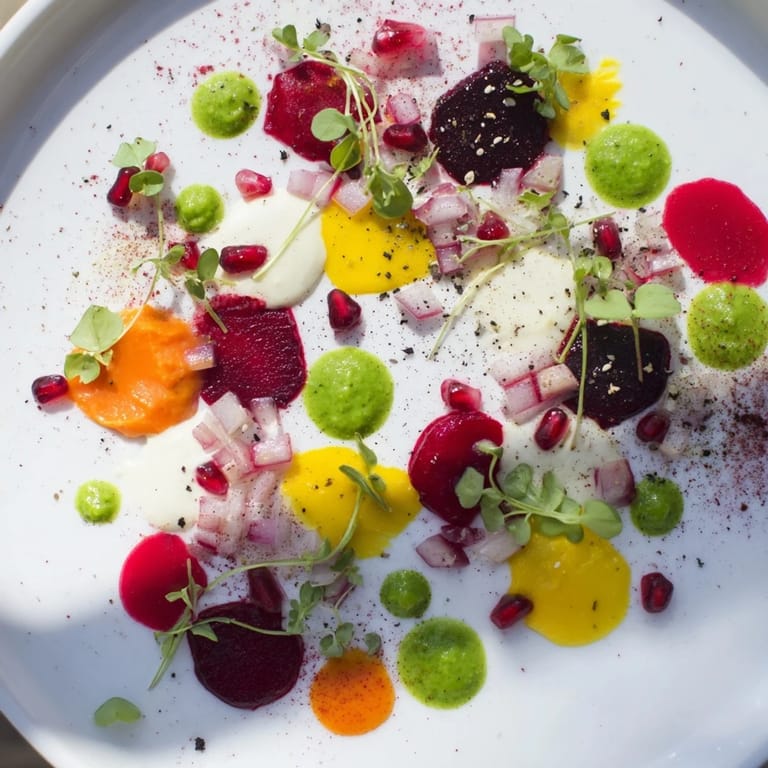
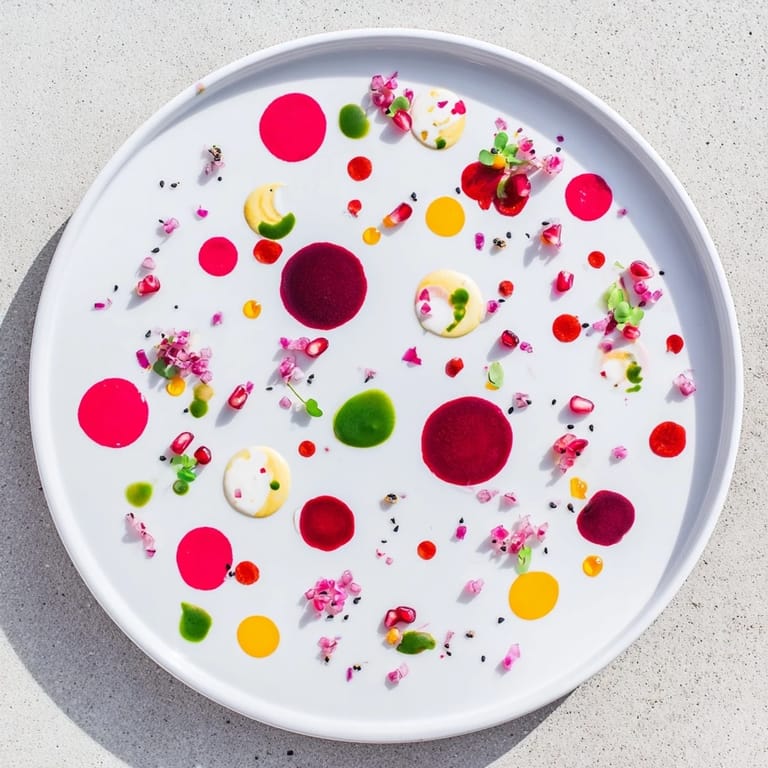
- This is the heart of it all. Take a clean white plate and begin dotting—scattered, deliberate, non-touching. Use the piping bags to create small mounds about the size of a hazelnut, varying their sizes slightly for visual interest. Alternate colors thoughtfully: beetroot next to yellow pepper, pea puree beside yogurt cream. Think of Seurat's paintings where tiny dots of color create something larger. There's no wrong way, only your way. Work deliberately; you have time.
- Layer Your Textural Accents:
- Now comes the garnishing. Carefully distribute your pickled red onions—use tweezers if you have them, or your fingers work too. Add microgreens in small clusters, letting them rise slightly off the plate. Scatter the black sesame seeds, pomegranate seeds, and any edible flowers you're using. Each element should feel intentional, like you're adding the final brushstrokes.
- Finish and Serve with Intention:
- Give the entire plate a final assessment. Add a few sea salt flakes in strategic spots, finish with freshly cracked black pepper, and serve immediately. This dish is about visual impact—the longer it sits, the more the elements begin to blur together. Present it before plating, let people admire it, then enjoy.
 Save
Save There's something magical about watching someone encounter this dish for the first time. The hesitation before the fork—should they taste this or photograph it?—then the realization that it tastes as good as it looks. That moment transformed how I think about cooking. Food can be art, and art can nourish us completely.
Making This Your Own
The beauty of this dish is that it's a framework, not a formula. I've made it with purple sweet potato, roasted beet greens, and charred broccoli purees. Each version taught me something new about how colors interact and how flavors either complement or compete. Start with the classics while you're learning, then experiment confidently. The vegetable purees are completely interchangeable—use what's in season, what calls to you, what grows near you.
About Serving and Pairing
Serve this as the opening act of a meal, not the main event. It's an appetizer that makes people pause and appreciate the work of eating mindfully. I love pairing it with crisp sourdough bread or delicate crackers—the textural contrast is genuinely satisfying. If you're thinking about wine, a bright Sauvignon Blanc or even a dry Riesling will echo the freshness of the vegetables without overwhelming the plate's subtle flavors. The acidity refreshes the palate between bites.
Kitchen Lessons and Shortcuts
I've learned that this dish rewards preparation more than technique. Everything can be made ahead—purees stay fresh in the refrigerator for three days, and sauces keep even longer. On the day you're serving, the actual plating takes maybe ten minutes once you're practiced. The first time might take longer, but that's part of the joy. You're not rushing; you're creating. Give yourself grace and time.
- Make extra purees and freeze them in ice cube trays—you'll have instant components for future plates or to swirl into soups
- If you can't find all the exact vegetables, substitute freely; this is about color and flavor balance, not rigid recipes
- Toast your own sesame seeds and crack your own pepper right before plating; these small freshnesses make a real difference that guests will taste without knowing why
 Save
Save This dish taught me that the most elegant food often comes from the simplest ingredients, arranged with intention and care. Every time you make it, you're creating something completely unique—your personal interpretation of an idea.
Recipe Help
- → How are the vegetable purees prepared?
Vegetables such as beetroot, carrot, green pea, and yellow bell pepper are cooked and blended separately with olive oil and salt until smooth, then transferred into piping bags for precise plating.
- → What creates the contrasting textures on the plate?
Textures come from smooth purees, creamy yogurt and crème fraîche, and crunchy garnishes like toasted sesame seeds and pomegranate seeds, providing a dynamic mouthfeel.
- → Can this dish be adapted for a vegan diet?
Yes, substitute plant-based yogurt and omit crème fraîche to maintain the creamy elements while keeping it vegan-friendly.
- → What are the ideal tools for assembling the dish?
Use piping bags or squeeze bottles for precise dot placement, along with tweezers for delicate garnishes and small spoons for careful arrangement.
- → How should the dish be served for best experience?
Serve immediately after plating to preserve freshness, color contrast, and textural impact, ideally paired with crisp crackers or sourdough.