 Save
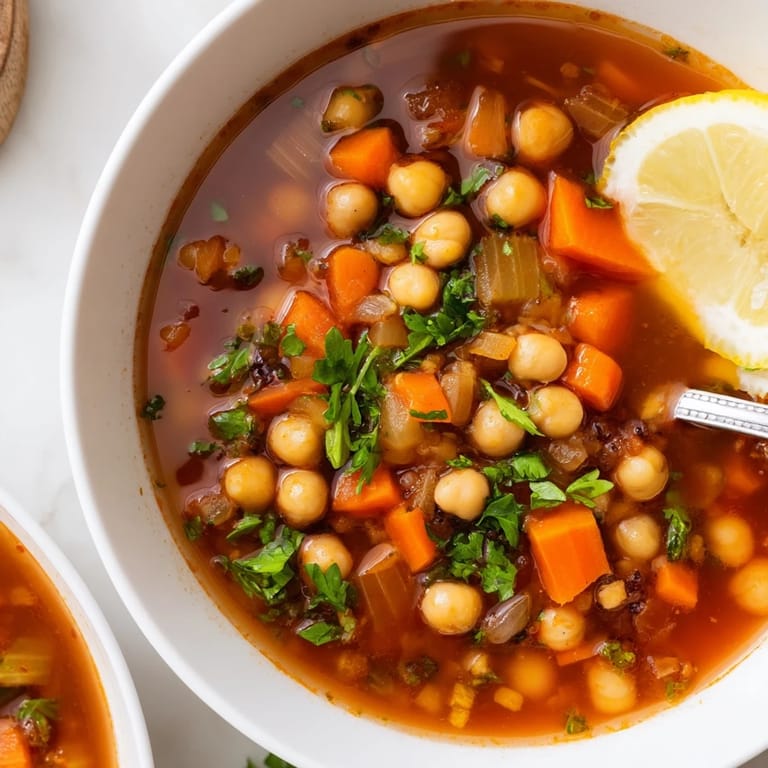
Save My first bowl of harira came on a cold February evening at a Moroccan friend's kitchen, steam rising from a copper pot while she chopped cilantro with practiced speed. She explained that her grandmother made this soup every Ramadan, filling the house with warmth long before sunset, and watching her work—the casual confidence, the way she tasted and adjusted—I understood it wasn't just a recipe but a way of caring. Years later, I finally made it myself, and that first spoonful transported me back to her kitchen: the cinnamon and cumin dancing with tomato and lemon, the chickpeas yielding softly, the whole thing tasting like comfort and intention wrapped in a bowl.
I made this for my sister when she was going through something difficult, and she called me the next day asking for the recipe because she'd eaten the entire pot for lunch. There's something about a soup this gentle and nourishing that reaches people differently than fancier food—it listens to you while you eat.
Ingredients
- Dried chickpeas: Soaking them overnight is worth the planning because they develop a creamier texture than canned, though honestly, canned works beautifully when you're short on time.
- Lentils: Red lentils would dissolve into the broth, so stick with brown or green for structure and bite.
- Olive oil: Use something you'd actually taste on bread—it matters more than you'd think in a simple soup.
- Onion, celery, and carrots: This foundation should be chopped small enough to almost disappear into the soup, creating sweetness rather than texture.
- Cinnamon: Ground, not stick, and measured carefully because it's the signature note that makes people ask what makes this taste so special.
- Cumin, ginger, turmeric, and paprika: These warm spices layer on each other, so don't skip any or the soup loses its complexity.
- Tomato paste and canned tomatoes: The paste concentrates flavor, so let it caramelize slightly in the oil before adding the broth.
- Dried apricots: They soften into the broth and add a subtle sweetness that balances the savory spices perfectly.
- Lemon juice: Squeeze it fresh just before serving—bottled never quite captures the brightness this soup needs.
- Cilantro and parsley: Fresh herbs stirred in at the end are what transform a good soup into one you crave.
Tired of Takeout? 🥡
Get 10 meals you can make faster than delivery arrives. Seriously.
One email. No spam. Unsubscribe anytime.
Instructions
- Build your base:
- Heat the olive oil in a large pot and add your chopped onion, celery, and carrots, stirring occasionally for about 6–8 minutes until they're soft and starting to smell sweet. You'll know you're there when the onion turns translucent and everything has released its aroma into the oil.
- Wake up the spices:
- Add your minced garlic and all the ground spices—cumin, cinnamon, ginger, turmeric, paprika, and cayenne if you like heat—stirring constantly for just 1 minute. This is crucial: you're blooming the spices in hot oil so they release their essential oils and fragrance without burning.
- Deepen the flavor:
- Stir in the tomato paste and let it cook for another minute in the oil, where it'll turn darker and more concentrated. Then add your chopped tomatoes, drained chickpeas, rinsed lentils, and chopped apricots, stirring everything together until well combined.
- Simmer until tender:
- Pour in the vegetable broth, bring it to a boil, then reduce the heat and let it simmer uncovered for 45–50 minutes, stirring occasionally. The chickpeas should be creamy when you press one with a spoon, and the lentils should have softened but still hold their shape.
- Finish with freshness:
- Stir in your fresh cilantro, parsley, and the juice of a whole lemon, then taste and adjust the salt and black pepper. The lemon should brighten everything without tasting citrusy—it's about balance.
- Optional heartiness:
- If you'd like a thicker, more filling soup, stir in cooked vermicelli or rice, which is the traditional approach in some North African regions.
 Save
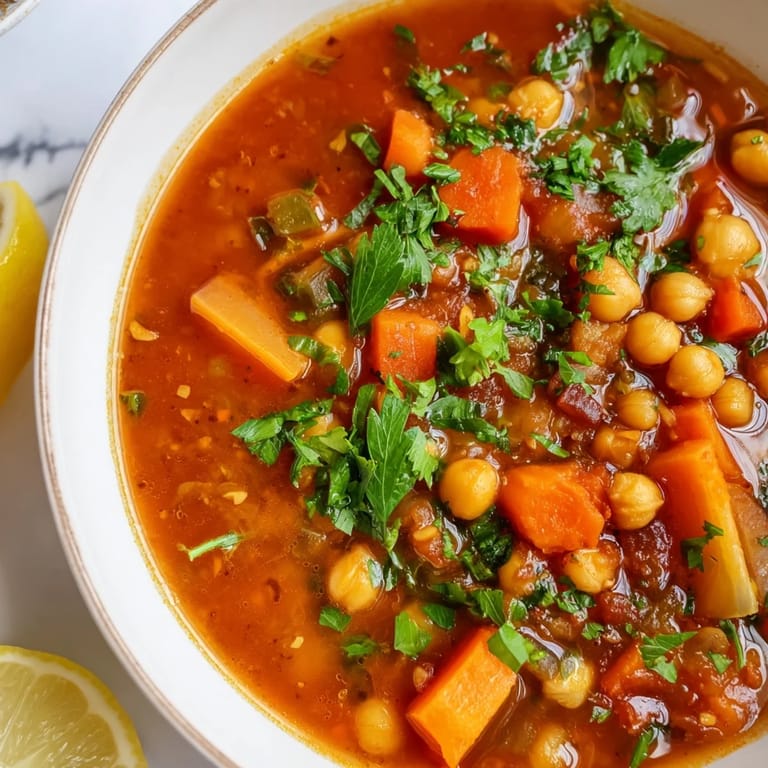
Save There's a moment when you ladle this soup into a bowl and see the chickpeas, lentils, and apricots suspended in that gorgeous russet-gold broth, and you understand why this soup shows up at family tables and religious observances across North Africa—it's nourishment that feels like love.
The Spice Story Behind Harira
Harira isn't complicated, but it's also not your average soup, and that's because of the way the spices work together. Cinnamon and cumin are the backbone, but the ginger adds warmth, the turmeric brings earthiness, and the paprika rounds everything out with subtle depth. The apricots are the secret—they're not enough to make it taste sweet, but they smooth the edges and create a flavor you can't quite name, which is exactly the point. It's the kind of soup that teaches you that spices aren't additions to food; they're the conversation that makes the food interesting.
Making It Your Own
The beauty of harira is that it's forgiving and adaptable without losing its soul. If you want it spicier, harissa paste stirred in at the end adds a different kind of heat than cayenne does—it's more integrated, less sharp. A pinch of saffron if you're feeling luxurious will deepen the color and add a floral note that some versions include. You can add spinach or kale if you want more greens, or skip the apricots and add dates instead for a different sweetness entirely.
Serving and Storage
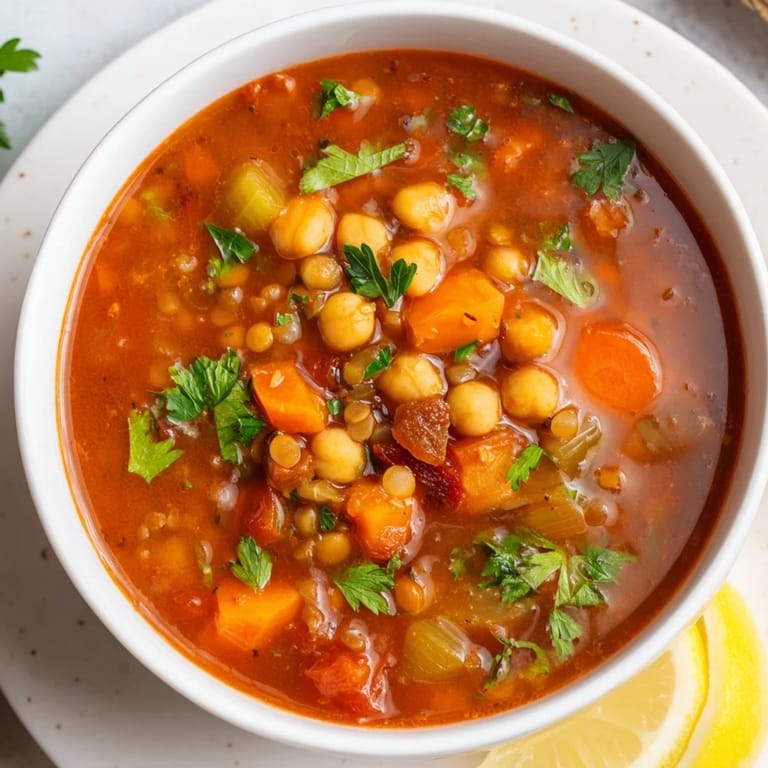
This soup is best served hot in deep bowls with lemon wedges on the side so people can squeeze their own brightness into it, and fresh cilantro or parsley scattered on top for that final living quality. It keeps beautifully in the fridge for up to four days and tastes even better reheated, so it's perfect for meal prep or cooking when you have time and eating when you don't.
- Vermicelli or rice can be added to the pot or served on the side depending on how hearty you want each bowl.
- A dollop of yogurt or a drizzle of harissa oil on top adds another layer if you're in the mood.
- This soup freezes well for up to three months, making it a smart choice for building up an easy dinner library.
 Save
Save This soup is the kind of cooking that reminds you why spending time in the kitchen matters—not because the result is fancy, but because the result is true. Serve it to people you care about.
Recipe Help
- → What are the key spices in North African Harira?
Cumin, cinnamon, ginger, turmeric, paprika, and a hint of cayenne create the distinctive warm and aromatic profile.
- → Can I use canned chickpeas instead of dried ones?
Yes, canned chickpeas can be used to reduce preparation time; just rinse and drain them before adding.
- → How do the dried apricots affect the flavor?
Dried apricots add a subtle sweetness that balances the savory and spicy elements in the broth.
- → Is this dish suitable for vegans?
Absolutely, use plant-based broth and omit any dairy-based garnishes to keep it fully vegan.
- → What garnishes complement this soup best?
Fresh cilantro, parsley, lemon wedges, and optionally vermicelli or rice enhance texture and freshness.