 Save
Save The first time I watched someone make pastilla, I was transfixed by how the phyllo sheets crackled under a pastry brush, each one becoming translucent and golden as butter soaked through. There's something almost magical about how a savory meat filling wrapped in those delicate layers transforms into something that demands both powdered sugar and cinnamon on top—a contradiction that somehow becomes inevitable the moment you taste it. I spent the next three years thinking I could never pull it off at home, convinced it was too fussy, too many steps. Then one rainy afternoon, I realized the fussiness was actually the whole point: each small gesture of brushing butter, folding edges, stirring eggs into meat—these were the meditative parts that made the dish worth making.
I remember bringing this to a potluck and watching people lift a wedge onto their plate, then pause mid-bite, confused by the sweetness layered over the savory spiced chicken. One friend actually asked if I'd made a mistake with the sugar. But thirty seconds later, they went back for another piece, and then another—there's this moment where your brain catches up with your palate and suddenly the whole thing makes perfect sense. That's when I knew this recipe was worth keeping.
Ingredients
- Bone-in chicken thighs (1.5 lbs): Dark meat stays moist during the long braise and absorbs the spice blend better than white meat; you can substitute squab or Cornish hen if you want to be traditional.
- Onions and garlic (2 medium, 3 cloves): These build the aromatic base and will dissolve slightly into the sauce, creating a silky texture.
- Olive oil (2 tbsp): Use it for the initial sauté to brown the chicken and bloom the spices.
- Ground spices (ginger, cinnamon, turmeric, black pepper, nutmeg): Each one matters—don't skip or swap; together they create that unmistakable warm Moroccan flavor that makes people ask what you did differently.
- Saffron threads (1/2 tsp, optional but recommended): Soak them in warm water first so they release their color and subtle floral notes into the filling.
- Chicken stock (2 cups): This becomes your braising liquid and then reduces to coat the meat; use homemade if you have it.
- Toasted almonds (1/2 cup) and fresh herbs (parsley and cilantro): The almonds add crunch and slight bitterness, while the herbs brighten everything at the last moment.
- Eggs (6 large): Scrambled until just set, they bind the filling and add richness.
- Phyllo pastry (10 sheets): Handle it gently—it tears easily when dry, so keep unused sheets under a damp towel.
- Melted butter (1/2 cup): Brush it generously between layers so every sheet becomes golden and crisp in the oven.
- Powdered sugar and cinnamon for dusting: This final layer is the signature sweet-savory flourish that makes pastilla unforgettable.
Tired of Takeout? 🥡
Get 10 meals you can make faster than delivery arrives. Seriously.
One email. No spam. Unsubscribe anytime.
Instructions
- Build your aromatic base:
- Heat olive oil in a large Dutch oven over medium heat, then sauté the chopped onions and garlic until they turn translucent and fragrant, about 4-5 minutes. You'll notice the kitchen starting to smell warm and inviting already.
- Brown the chicken with spices:
- Add the chicken thighs to the pot along with the ginger, cinnamon, turmeric, black pepper, nutmeg, salt, and saffron (if using). Let everything cook together for about 5 minutes, stirring occasionally, until the chicken picks up color and the spices become deeply fragrant—you'll see the oil turn golden and smell the warm spice blend fully bloom.
- Braise low and slow:
- Pour in the chicken stock, bring to a gentle simmer, cover the pot, and let it cook for 30-35 minutes until the chicken is fork-tender and cooked through. The liquid should be gently bubbling, not boiling hard, so it stays silky rather than becoming muddy.
- Shred and reduce:
- Remove the chicken from the pot and set it aside to cool slightly, then shred the meat, discarding bones and skin. Return the pot to medium heat and let the braising liquid reduce for about 10 minutes until roughly 1 cup remains and it coats the back of a spoon—this concentrated sauce is what flavors the entire filling.
- Combine filling components:
- Return the shredded chicken to the pot, stir in the toasted almonds, chopped parsley, and cilantro, then remove from heat and let the mixture cool completely. This cooling step is important because you'll be folding in scrambled eggs next and you don't want them to overcook.
- Scramble and fold eggs:
- In a separate pan, melt the butter over medium-low heat, beat the eggs with salt until well combined, then pour them into the pan and stir gently until they're softly scrambled but still moist and custardy—they'll continue cooking slightly when folded into the warm filling. Gently fold the eggs into the cooled chicken mixture until everything is evenly distributed.
- Layer the pastry:
- Preheat your oven to 375°F (190°C) and brush a 10-inch round baking dish generously with melted butter. Take 5 sheets of phyllo and layer them one at a time, brushing each sheet thoroughly with butter as you go, letting the edges overhang the rim of the pan by several inches—this creates a natural border.
- Fill and fold:
- Spread the chicken-egg filling evenly across the phyllo base, then fold the overhanging sheets back over the filling to partially cover it. Layer 4 more phyllo sheets on top, brushing each with butter and tucking the edges down into the pan as you go, then finish with one final buttered sheet on top.
- Bake until golden:
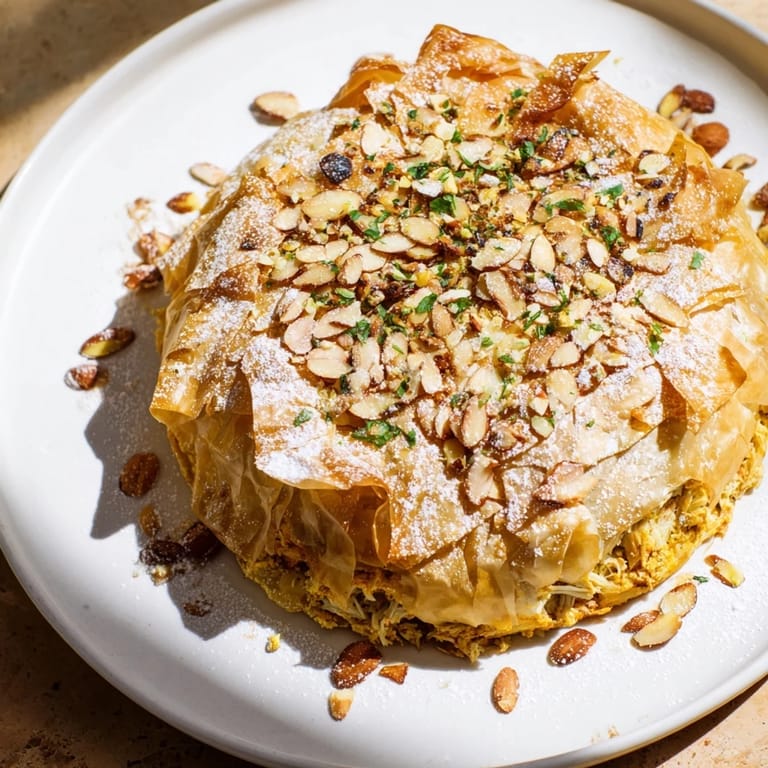
- Bake for 35-40 minutes until the top is deep golden and you can hear the phyllo crackling slightly when you move the pan—the butter between the layers will have created countless thin, crispy sheets. Let the pastilla rest in the pan for 10 minutes before serving so it firms up slightly and becomes easier to cut.
- Finish with the signature dusting:
- Just before serving, dust the top generously with powdered sugar and ground cinnamon, creating that beautiful contrast between the crispy savory pastry below and the sweet spiced coating on top.
 Save
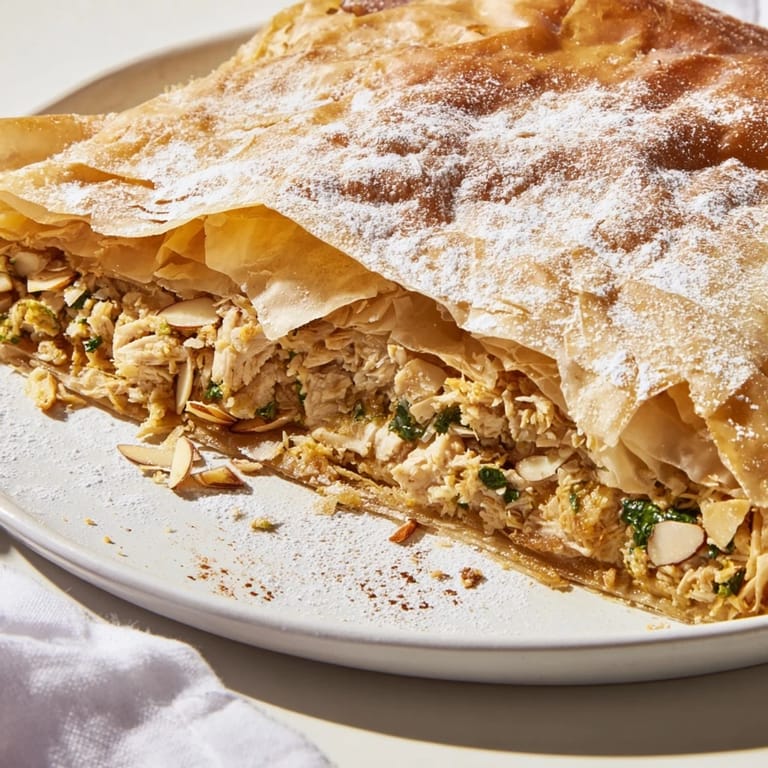
Save There was this moment during a dinner party when someone cut into the pastilla and the knife made that sharp crackling sound as it hit the phyllo, and the whole table went quiet for just a second. Then everyone watched the wedge slide onto the plate, still steaming slightly, the layers visible from the side, and I realized that sometimes food is as much about the experience of serving it as it is about the eating. That moment made me understand why this dish has been made for centuries in Morocco—it's inherently generous and a little bit theatrical.
Choosing Your Meat
Chicken thighs are forgiving and stay moist through the long braise, which is why I always reach for them when I'm teaching someone this recipe for the first time. But if you want to go traditional, squab or Cornish hen will work beautifully and taste slightly richer. The cooking time stays the same regardless, and the spices will embrace whatever you choose. I once had someone make this with duck breast, sliced thin instead of shredded, which was unconventional but absolutely delicious—so don't feel locked into one approach once you understand the logic of the dish.
The Spice Blend as a Whole
What surprised me most when I first made this was how the spices don't fight each other the way I thought they might—instead, they build on each other, creating layers of warmth that develop as you eat. The cinnamon plays against the turmeric, the ginger adds brightness, and the nutmeg ties everything together in a way that feels inevitable in retrospect but mysterious while you're eating it. I've learned to bloom these spices in the oil at the beginning because it wakes them up and makes them part of the sauce rather than just additions on top.
Building the Perfect Layers
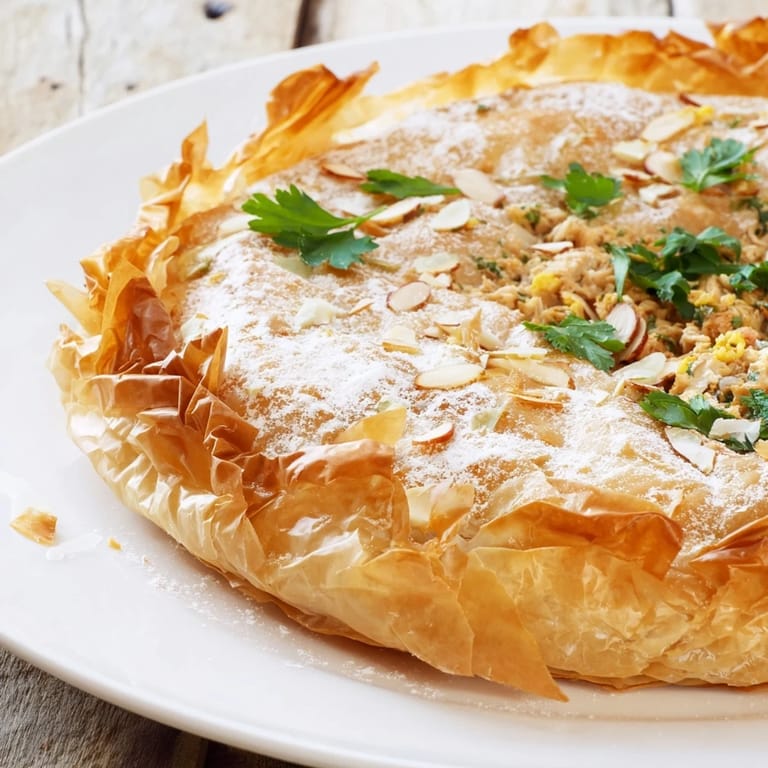
The phyllo work looks intimidating until you realize you're just brushing butter and folding—it's meditation more than technique, and each sheet becomes golden and crisp on its own. I've ruined batches by rushing, trying to layer too quickly, and I've created masterpieces by going slowly and actually listening to the sound the phyllo makes as it hits the butter. One thing that changed everything for me was learning to overhang the edges on the first half of the layers, because those extra sheets create a golden border that looks intentional and protects the filling from drying out.
- Keep unused phyllo covered with a damp kitchen towel so it stays workable throughout assembly.
- Brush each layer generously with melted butter—don't skimp, because that's what creates the crackling texture.
- If phyllo tears while you're working, just press another piece on top and brush it with butter; nobody will ever notice once it's baked.
 Save
Save This dish taught me that the best recipes are the ones that make you slow down and pay attention—to butter melting, to spices blooming, to eggs setting just right. Once you make pastilla once, you'll understand why it's been worth the effort for so long.
Recipe Help
- → What is pastilla?
Pastilla is a Moroccan savory pie combining tender spiced meat and flaky phyllo, typically balanced with sweet and savory flavors.
- → Can I substitute the chicken with other meats?
Yes, traditional pastilla can use pigeon, but chicken, squab, or Cornish hen are excellent alternatives offering similar flavor.
- → How do I keep the phyllo crisp?
Brushing each phyllo sheet generously with melted butter and baking until golden helps maintain a crisp texture throughout.
- → Are toasted almonds necessary?
Toasted almonds add a pleasant crunch and nutty flavor, enhancing the texture and richness of the filling.
- → What spices create the iconic pastilla flavor?
Key spices include cinnamon, ginger, turmeric, black pepper, nutmeg, and optionally saffron to create the signature warm and aromatic profile.
- → How is the sweet-savory balance achieved?
A dusting of powdered sugar and cinnamon atop the baked pie introduces a gentle sweetness that contrasts the savory meat filling.