 Save
Save My neighbor brought hummus to a potluck on a hot summer evening, and I watched people gravitate toward it like moths to a lamp—nobody touched the other dips. She told me the secret was letting the food processor run longer than seemed necessary, which seemed counterintuitive until I made my own batch and tasted that impossibly silky texture. Now I understand that hummus isn't just blended chickpeas; it's about patience and the right technique turning something humble into something irresistible.
I made this for a small gathering and caught my friend mid-bite when she was about to dip her pita—her eyes actually widened. She later confessed she'd been buying hummus from the store for years because she thought it was complicated, which made me realize how many people underestimate their own kitchen abilities. Watching someone discover they can make restaurant-quality food at home never gets old.
Ingredients
- Chickpeas (1½ cups cooked): The backbone of everything here—use canned if that's your reality, just rinse them thoroughly to wash away the excess sodium that can muddy the flavor.
- Tahini (⅓ cup): This sesame paste is non-negotiable and worth finding a good one; cheap tahini tastes bitter and grainy, while quality tahini contributes that luxurious, almost nutty smoothness.
- Lemon juice (2 tablespoons fresh): Fresh is mandatory because bottled lemon juice tastes sharp and flat by comparison, and it's the bright note that keeps hummus from becoming heavy.
- Garlic (1 small clove, minced): Just one clove is enough—garlic can easily take over if you're not careful, and you want it as a whisper, not a shout.
- Cold water (3 tablespoons): This seems simple but is actually the secret to achieving that cloud-like texture; cold water helps emulsify everything rather than making it thin.
- Ground cumin (½ teaspoon): Adds warmth and depth without announcing itself, though you can adjust up or down depending on your spice preferences.
- Sea salt (½ teaspoon): Fine sea salt dissolves seamlessly, and you'll always want to taste and adjust since different batches of tahini and lemon have different salt needs.
- Extra virgin olive oil (2 tablespoons for serving): This is the finishing touch that transforms hummus from food to art; drizzle it like you mean it.
- Paprika or sumac (½ teaspoon): Sweet paprika is warm and approachable, while sumac adds a tart, citrusy sparkle that feels more authentic if you can find it.
- Fresh parsley (2 tablespoons chopped): The fresh green color is half the appeal, plus it adds a subtle herbaceous note that keeps things lively.
Tired of Takeout? 🥡
Get 10 meals you can make faster than delivery arrives. Seriously.
One email. No spam. Unsubscribe anytime.
Instructions
- Gather and measure everything:
- Having all ingredients prepped and ready (called mise en place by fancy cooks) means you won't be searching for something halfway through and forgetting where you started. It takes two minutes and changes everything.
- Add ingredients to the food processor:
- Combine the chickpeas, tahini, lemon juice, minced garlic, cold water, cumin, and salt in the bowl, then give it a quick pulse to bring things together before the real blending starts.
- Blend until impossibly smooth:
- This is where patience pays off—let the processor run for a solid minute or two, stopping to scrape down the sides with a spatula, because the longer it runs, the more air gets incorporated and the silkier the result. You're aiming for the texture of Greek yogurt or soft serve ice cream.
- Adjust the consistency:
- If it feels too thick (which it often does), add cold water one tablespoon at a time while blending, tasting as you go, because you can always add more but you can't take it back.
- Taste and season:
- This is the moment where you become the chef—taste it and decide if it needs more salt for depth, more lemon for brightness, or more cumin for warmth. Trust your palate here.
- Transfer and present:
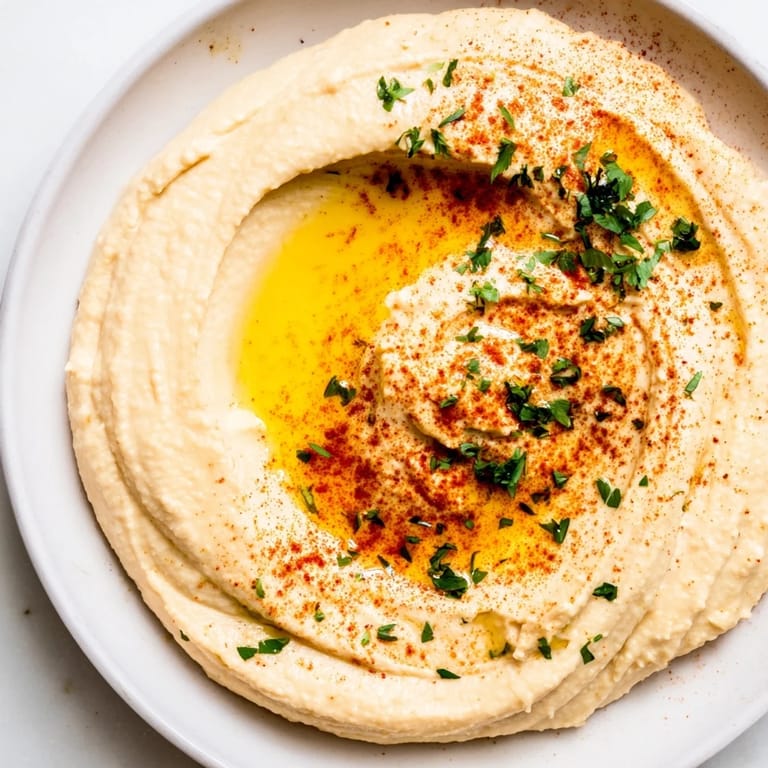
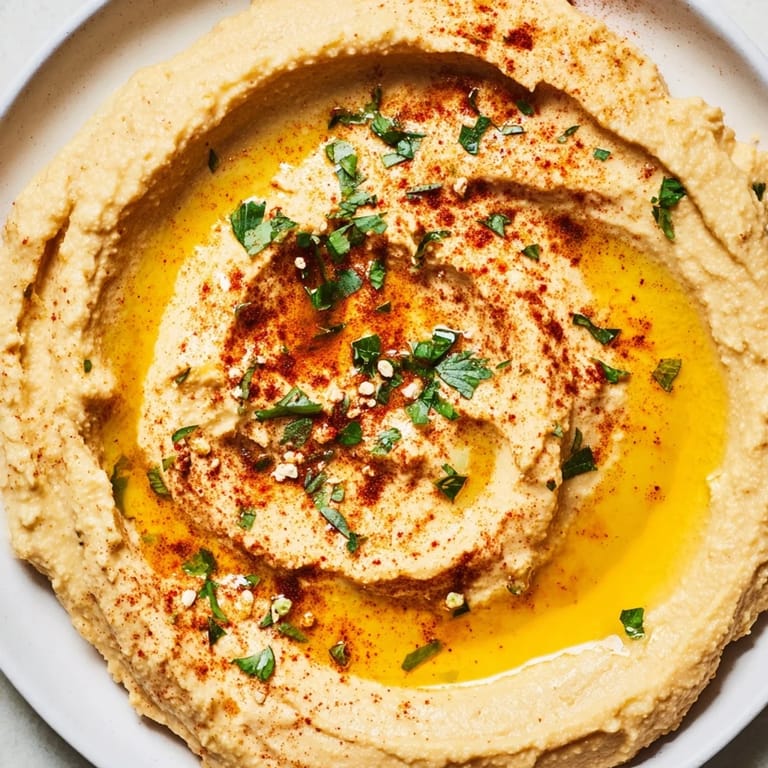
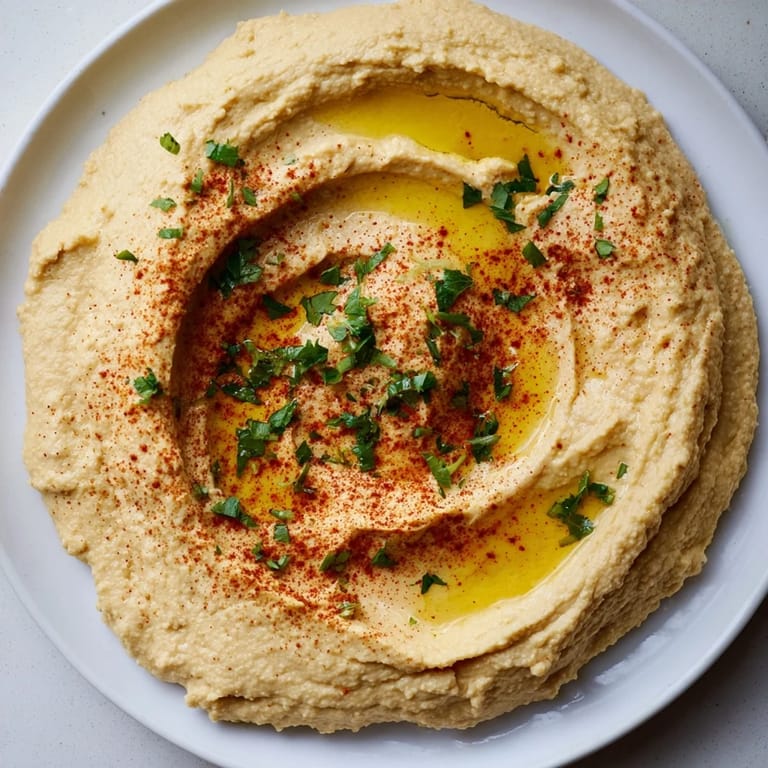
- Scoop the hummus into a shallow serving dish and use the back of a spoon to create a little well or swirl in the center, which serves the double purpose of looking intentional and giving you a place to pool that final olive oil drizzle.
- Garnish with intention:
- Drizzle the olive oil in a thin spiral or pool in the center, sprinkle the paprika or sumac for color and subtle flavor, and finish with the fresh parsley so it looks like you put thought into every detail.
 Save
Save I learned the depth of this dish's importance when a friend from Beirut tried my version and nodded slowly before taking another spoonful—not gushing, just quiet approval. That moment taught me that hummus carries history and cultural weight; it's not just appetizer food, it's a foundation, a way of bringing people together. Now every time I make it, I'm aware I'm participating in something older and bigger than myself.
The Texture Evolution
The first time I made hummus, I pulled it from the processor after what felt like forever of whirring, only to find it still had a slight graininess. A cookbook note mentioned that the longer you blend, the warmer the tahini becomes, and warm tahini actually becomes more fluid and blends more seamlessly with the other ingredients. That's when I understood that hummus-making is slightly scientific—the heat from friction, the emulsification of oils, the way water molecules attach to proteins—all of it contributes to that cloud-like result that makes people close their eyes when they taste it.
Building Flavor Depth
There's a moment when you taste the hummus before the final garnish and it tastes good but somehow incomplete, and then you add that drizzle of olive oil and sprinkle of paprika, and suddenly all the flavors snap into focus. The oil isn't just decoration; it adds richness and actually helps carry the spice of the paprika or the tartness of sumac into every bite. I've learned to never skip or rush this final step because it's the difference between good hummus and the kind people ask you to make again.
Serving and Keeping
Hummus is one of those magical dishes that tastes good immediately but tastes even better the next day when the flavors have had time to marry and settle. I always make a batch when I know guests are coming the following day, which means less stress and better food—a winning combination in my kitchen. It keeps for up to four days in an airtight container in the refrigerator, though honestly it rarely lasts that long once people discover it's in there.
- Serve it with warm pita bread, because the contrast of cool hummus against warm, slightly chewy bread is one of life's small pleasures.
- Add crisp vegetable sticks like cucumber, carrot, and bell pepper for textural contrast and to make a more complete mezze spread.
- If you're building a larger spread, surround it with olives, fresh cheese, and grilled vegetables to create something that feels abundant and celebratory.
 Save
Save Hummus has this quiet generosity about it—fill a bowl and people automatically gather, reaching and tasting and suddenly you're not just serving food, you're creating a moment. That's the magic of this simple, patient dish.
Recipe Help
- → What gives hummus its creamy texture?
The smoothness comes from blending cooked chickpeas thoroughly with tahini, olive oil, and a bit of water or lemon juice until silky.
- → Can I adjust the flavor to be more tangy?
Yes, adding extra freshly squeezed lemon juice brightens the taste and adds a refreshing zing.
- → How is the garnish chosen for this dish?
Extra virgin olive oil adds richness, while paprika or sumac provides subtle spice and color, accented by fresh parsley.
- → What are good accompaniments to serve alongside?
Warm pita bread, cucumber slices, and carrot sticks complement the spread well, enhancing texture and flavor contrast.
- → Is peeling chickpeas necessary for smoothness?
Peeling chickpeas before blending yields an extra silky texture but is optional depending on desired consistency.