 Save
Save There's something about the sound of noodles hitting cold water that signals summer to me—that sharp sizzle and steam rising up, the kitchen suddenly feeling alive. I stumbled onto this garlic noodle salad by accident one afternoon when I had half a fridge of vegetables and a craving for something cold and garlicky. The first time I made it, I nearly burned the garlic oil, but that slight toasty edge actually made it better. Now it's become my go-to when friends drop by hungry and I need something that feels both effortless and special.
I remember bringing a big bowl of this to a neighborhood potluck last summer, and it was gone before anything else on the table. Everyone kept asking about the secret, expecting something complicated, but it was just good garlic, good timing, and letting the noodles soak up every bit of flavor. That moment made me realize simple food done with care beats fancy every time.
Ingredients
- Dried wheat noodles (250 g): Use lo mein, spaghetti, or soba depending on what you have—they all work beautifully and take on the garlic oil like little flavor sponges.
- Neutral oil (3 tbsp): Grapeseed or vegetable oil disappears into the background and lets the garlic shine, unlike stronger oils that can overwhelm.
- Garlic cloves (5 large, minced): Fresh garlic is non-negotiable here—this is where all the personality comes from, so don't skimp or use the jarred stuff.
- Toasted sesame oil (1 tsp): A tiny drizzle adds warmth and complexity that makes people pause and wonder what that amazing smell is.
- Carrots (1 cup, julienned): The slight sweetness balances the savory elements, and their crunch stays intact even after sitting in the dressing.
- Red bell pepper (1 cup, sliced): Adds brightness and a subtle sweetness that rounds out the whole dish.
- Cucumber (1 cup, julienned): This keeps everything fresh and crisp—deseeding matters because watery centers will make your salad soggy later.
- Spring onions (2, sliced): A sharp, clean bite that cuts through the richness of the oil.
- Fresh cilantro (1/2 cup): Cilantro lovers will appreciate it; if you're on team "cilantro tastes like soap" just use more green herbs you enjoy.
- Soy sauce (3 tbsp): Low sodium is your friend here so you can actually taste the garlic and not just salt.
- Rice vinegar (1 tbsp): Adds a gentle brightness without harshness—the kind of acidity that makes your mouth water.
- Honey or maple syrup (1 tsp): Just enough to round the edges and balance the sharp notes.
- Chili flakes (1/2 tsp, optional): For anyone who likes their food to wake them up a little.
- Black pepper: Freshly ground makes all the difference; pre-ground loses its punch too quickly.
- Toasted sesame seeds (2 tbsp): These scatter on top like little flavor bombs—don't skip toasting them yourself if you can, the difference is real.
- Lime wedges (optional): A squeeze at the end brightens everything and feels like a finishing touch.
Tired of Takeout? 🥡
Get 10 meals you can make faster than delivery arrives. Seriously.
One email. No spam. Unsubscribe anytime.
Instructions
- Prep and cook the noodles:
- Bring a big pot of water to a rolling boil, then add your noodles and follow the package time. When they're just tender, drain them into a colander and rinse under cold running water until they stop steaming—this stops the cooking and cools them down so they stay springy.
- Create the garlic oil magic:
- Heat your neutral oil in a small saucepan over medium-low heat, then add the minced garlic. You want it to turn golden and fragrant, about 2 to 3 minutes—listen for a gentle sizzle, and watch that it doesn't brown or it gets bitter. Once it smells incredible, pull it off heat, stir in that sesame oil, and let it cool for a minute while the aroma fills your kitchen.
- Mix your dressing:
- In a small bowl, whisk together the soy sauce, rice vinegar, honey, chili flakes if using, and a good grind of black pepper. This is your flavor foundation, so taste as you go and adjust—it should taste bold but balanced.
- Bring noodles and dressing together:
- Pour the cooled garlic oil and the dressing over your noodles in the large bowl, then toss everything together so every strand gets coated. This is the moment where everything comes alive.
- Add the vegetables and freshness:
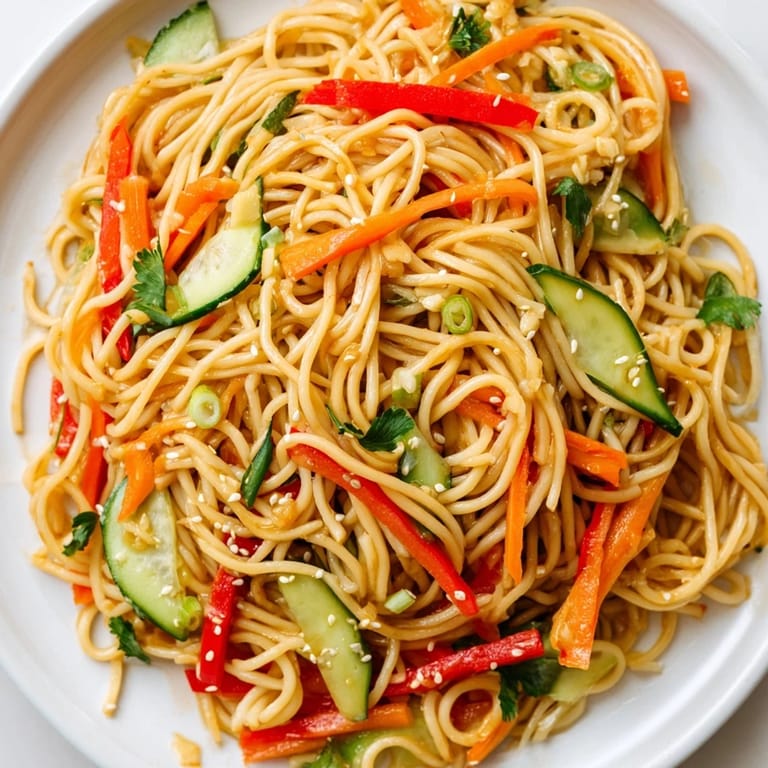
- Gently toss in the carrots, bell pepper, cucumber, spring onions, and cilantro, folding everything together softly so you don't break up the noodles. You want this to feel lively, not compressed.
- Serve and finish:
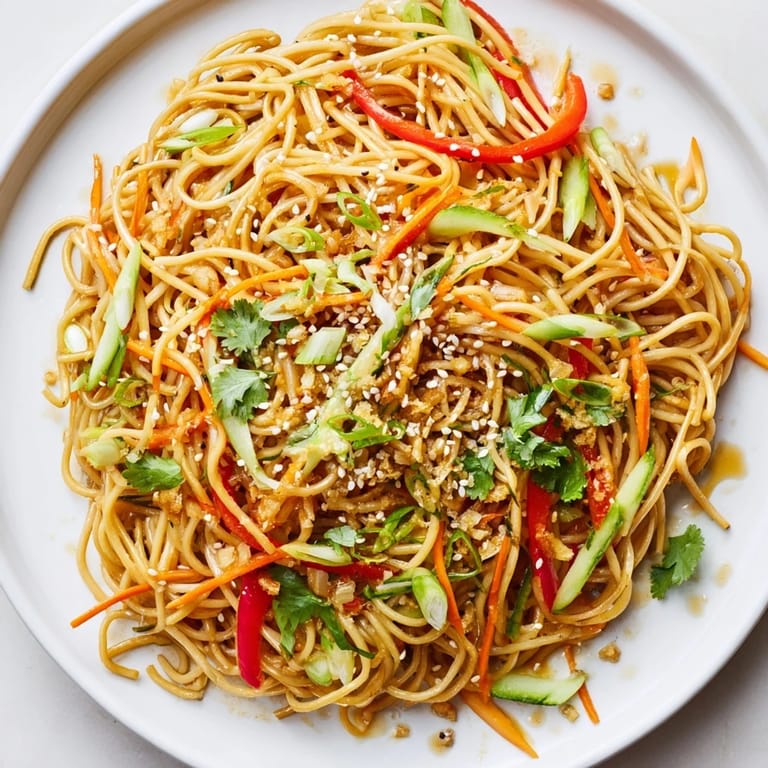
- Move everything to a serving platter or into bowls, then scatter that toasted sesame seeds on top and set out lime wedges. The presentation is part of the joy here—it should look as good as it tastes.
 Save
Save There was an evening last month when I made this for my partner who had had a brutal day, and watching them take that first bite and just exhale with relief reminded me why cooking matters. It wasn't about technique or fancy ingredients—it was about creating a moment of quiet deliciousness when someone needed it most.
Why This Salad Never Fails
The magic of garlic noodle salad lives in its simplicity and its forgiveness. You can't overthink it, you can't mess up the ratios too badly, and it actually improves as it sits—the noodles absorb more flavor, the vegetables stay firm, and the whole thing becomes a conversation between garlic, acid, and fresh vegetables. It's the kind of dish that proves you don't need complicated techniques or rare ingredients to make something people crave.
Build Your Own Version
The skeleton of this recipe is flexible enough to welcome whatever you have on hand or whatever you're craving. Snap peas add a delicate crunch, shredded radishes bring peppery heat, thinly sliced cabbage gives you substance without heaviness, and if you want protein, shredded rotisserie chicken, marinated tofu, or edamame slip in seamlessly. The dressing stays the same, but the supporting cast can shift with the season and your mood.
Make It Last
This salad stores beautifully for up to two days in the fridge in an airtight container, and honestly, it often tastes better on day two when everything has had time to mingle. If the noodles start to dry out, a splash more sesame oil or a squeeze of lime juice brings them right back to life. For gluten-free needs, swap in soba or rice noodles and use tamari instead of regular soy sauce—the result is just as delicious, and no one will feel like they're eating a compromise.
- Toast your sesame seeds fresh if you can—the difference in flavor is worth the two minutes.
- Keep the garlic oil separate from the vegetables until the last moment if you're prepping ahead, then toss everything together right before serving for maximum freshness.
- A squeeze of fresh lime at the table takes this from good to unforgettable.
 Save
Save This salad has become my answer to the question "what can I make quickly that everyone actually wants to eat?" It's proof that the best meals don't have to be complicated—they just have to be made with good ingredients and a little bit of care.
Recipe Help
- → What type of noodles work best?
Dried wheat noodles like lo mein, spaghetti, or soba are ideal for texture and absorbing flavors.
- → How is the garlic oil prepared?
Garlic is gently cooked in neutral oil until fragrant and golden, then mixed with toasted sesame oil for added aroma.
- → Can this dish be served warm?
While traditionally served cold for freshness, gently warming is possible but may soften the vegetables.
- → Are substitutions available for soy sauce?
Gluten-free tamari can be used to maintain the savory profile without gluten.
- → What vegetables complement the noodles best?
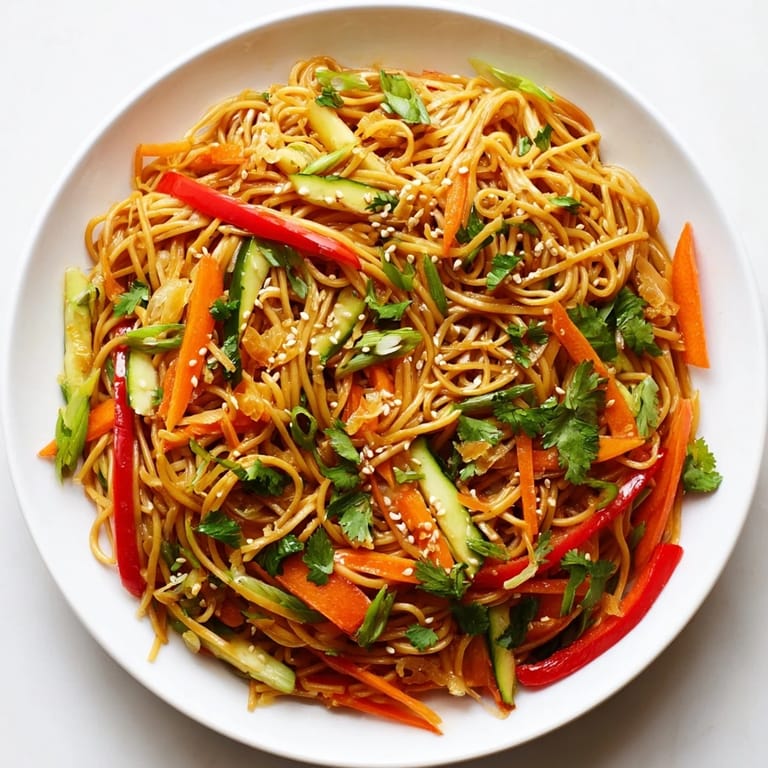
Julienned carrot, red bell pepper, cucumber, spring onions, and cilantro add crispness and vibrant color.
- → How to add protein to this dish?
Shredded cooked chicken, tofu, or edamame can be mixed in to boost protein content.