 Save
Save I stumbled onto the Fibonacci spiral while reading about how nature builds itself, and something clicked—why not bring that golden ratio into my kitchen? The first time I arranged ingredients in expanding arcs on a round platter, I felt like I was cracking some secret code between math and flavor. My dinner guests actually leaned in closer before eating, noticing how each section flowed into the next. It was then I realized a salad could be both delicious and a small work of art, no fuss required.
Last spring I made this for a friend who'd been having a rough week, and watching her face light up when I set it down—not because it was fancy, but because it felt thoughtful—reminded me that sometimes the smallest gestures land the hardest. She ate slowly, savoring it, and later told me the colors alone had shifted her whole mood that day.
Ingredients
- Baby spinach leaves: The tender green heart of the spiral—they wilt slightly under the lemon dressing, becoming silky and earthy.
- Arugula: A peppery second arc that cuts through the richness of cheese and nuts with just enough bite.
- Cherry tomatoes, halved: They burst open when you bite them, releasing bright acidity that makes everything else taste sharper.
- Cucumber, thinly sliced: Cool and crisp, these watery slices act as a palate cleanser between richer components.
- Radishes, thinly sliced: Razor-thin slices give you spicy crunch without overpowering the delicate greens.
- Red onion, finely sliced: A whisper of sharp allium that you barely see but definitely taste, especially when the dressing touches it.
- Avocado, sliced: Add these just before serving or they'll turn brown and sulky; they should be creamy and buttery, not oxidized.
- Blueberries: A surprise sweetness that somehow works with the savory greens—pop them scattered through the spiral for visual pop and gentle flavor.
- Toasted walnuts, chopped: Toasting them yourself makes all the difference; store-bought toasted never tastes as alive and nutty.
- Crumbled feta cheese: The salty, tangy anchor that ties everything together without needing much of it.
- Extra-virgin olive oil: Use the good stuff here since you can taste it; cheap oil makes the whole thing taste flat.
- Lemon juice: Freshly squeezed, never bottled—it's the brightness that makes you want another bite.
- Honey: Just enough to soften the mustard's edge and round out the dressing's personality.
- Dijon mustard: A teaspoon is all you need; it adds depth without making the dressing taste like condiment.
Tired of Takeout? 🥡
Get 10 meals you can make faster than delivery arrives. Seriously.
One email. No spam. Unsubscribe anytime.
Instructions
- Spin your base:
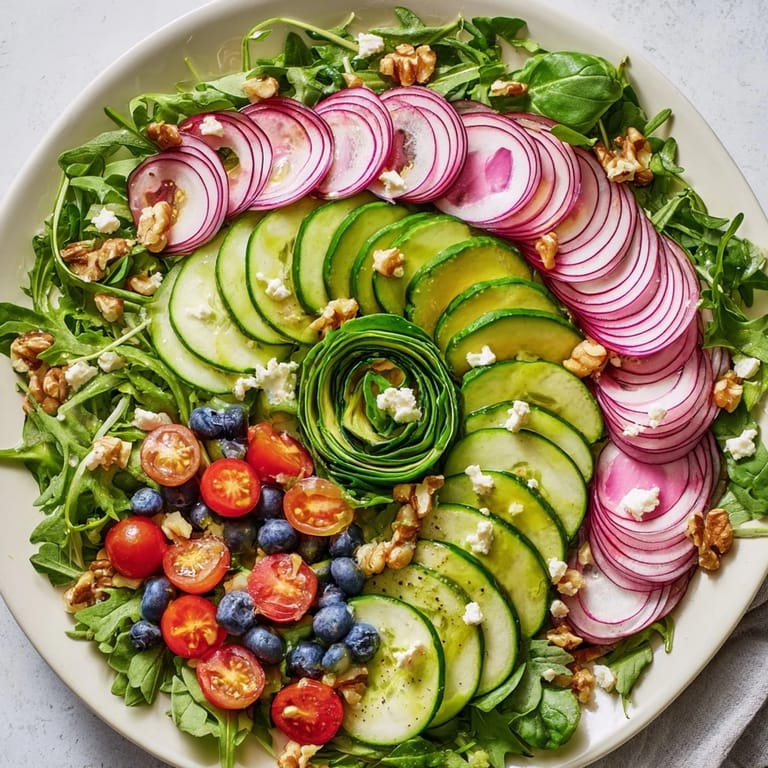
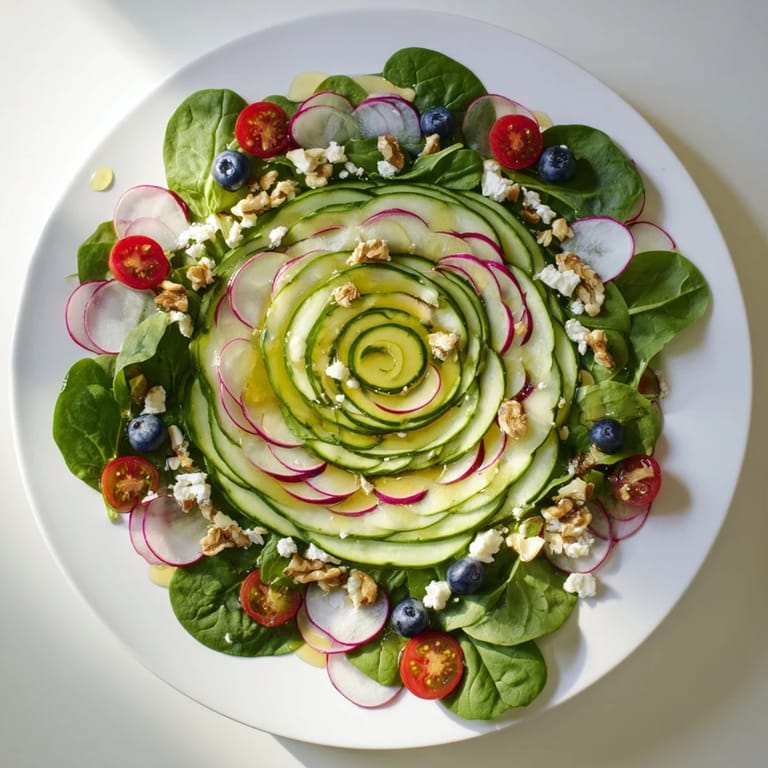
- On a large round platter, arrange baby spinach leaves in a soft crescent, overlapping them like roof tiles so they catch light. This innermost arc should feel organic and loose, not geometric.
- Layer the peppery second ring:
- Fan arugula leaves outward from the spinach, each one slightly larger and further from the center. You're building momentum now, creating the visual rhythm of expansion.
- Add the tomato arc:
- Arrange halved cherry tomatoes in an expanding semicircle, letting their red guide your eye outward. They should look almost like a sunset horizon.
- Introduce cool slices:
- Layer cucumber slices in the next expanding section, then radishes, keeping each ingredient in its own territory so colors stay distinct. This is where the spiral becomes unmistakable.
- Accent with onion:
- Create a thin ring of red onion slices near the outer edge, almost like a frame. Don't overdo it—a little onion goes a long way.
- Nestle the soft elements:
- Tuck avocado slices and blueberries into the spiral where there's visual room, spacing them so they punctuate without cluttering. Step back and squint at it; does it feel balanced?
- Crown with crunch:
- Sprinkle toasted walnuts and feta across the entire spiral, distributing them so every section gets a little of each. This final step is what makes every bite taste complete.
- Make the dressing:
- In a small bowl, whisk olive oil and lemon juice until they start to emulsify, then add honey and mustard, whisking until the honey dissolves. Season with salt and pepper, tasting as you go because dressings are personal.
- Dress just before serving:
- Drizzle the dressing evenly across the salad, working from the center spiral outward. The greens will glisten, and that's when you know it's ready.
 Save
Save There's something that happens when you slow down to arrange food carefully—you actually taste it better afterward, and so does everyone eating with you. This salad taught me that presentation and flavor aren't enemies; they're collaborators.
Why This Spiral Works
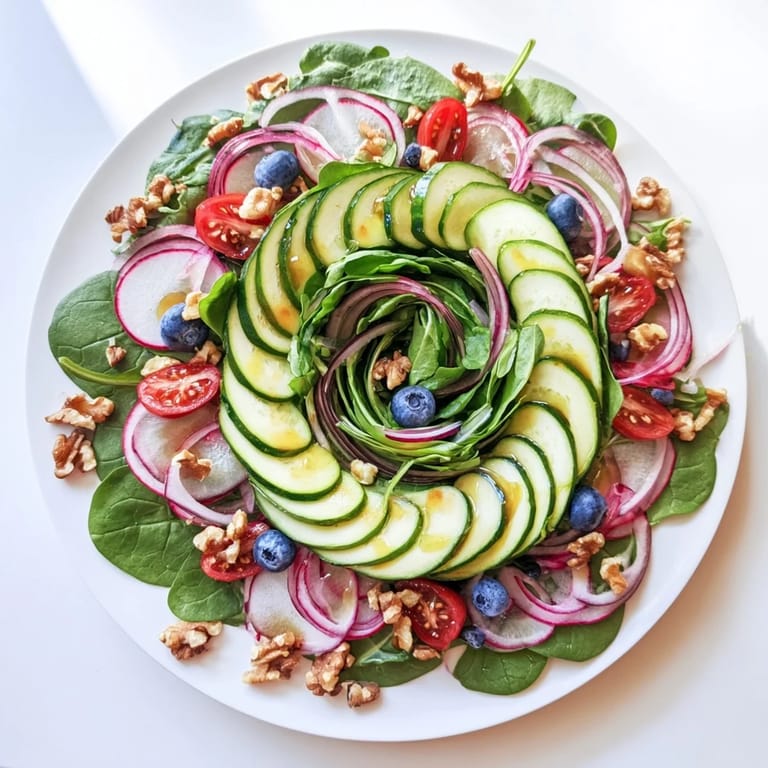
The Fibonacci sequence appears everywhere in nature, and mimicking it on a plate isn't just pretty—it actually creates a rhythm your eye follows naturally from the center outward. When ingredients are arranged this way, you're more likely to pick up one of each component with every bite, which means you taste the whole dish as it was designed rather than eating all the spinach first and the avocado last. I've tested this theory at dinner after dinner, and guests consistently comment on how well-balanced each forkful feels, even though they're just following the visual path.
Ingredient Substitutions That Still Sing
I've made this salad in different seasons and with whatever looked good at the market, and it's never let me down. Swap arugula for watercress if you want more aggressive peppery notes, use goat cheese instead of feta for something creamier, or replace walnuts with pistachios for a color surprise. The beautiful thing is that as long as you respect the spiral structure and mix textures—soft, crisp, creamy, nutty—the exact ingredients matter less than the arrangement. One winter I added roasted beets, another time I tucked in fresh herbs like dill and mint, and both times the spiral held up beautifully.
Making It a Main Course
This starts as a vegetarian side, but I've found it transforms into a satisfying main when you add protein—grilled chicken breast sliced thin and fanned alongside the outer ring, or a heap of chickpeas scattered across like edible confetti. A poached egg nestled in the center also works magic, its warm yolk becoming a bonus dressing when you cut into it. The salad stays true to its spiral shape and just becomes more substantial, which is perfect for those nights when you want something light but still filling.
- Grill chicken thin so it doesn't overshadow the delicate balance of the salad.
- If using chickpeas, toss them lightly in the dressing first so they absorb flavor.
- A poached egg should be added right before serving so the yolk stays runny and luxurious.
 Save
Save Making this salad became my quiet way of saying I care, without needing words. Every time I arrange it, I'm reminded that small, thoughtful details matter more than complicated cooking ever will.
Recipe Help
- → What is the purpose of arranging ingredients in a spiral?
The spiral arrangement mimics the golden ratio, creating visual harmony and balanced flavor distribution.
- → Can I substitute feta cheese with another type?
Yes, goat cheese can be used as a creamy alternative to feta for a different flavor profile.
- → How do walnuts contribute to the dish?
Toasted walnuts add a crunchy texture and a rich, nutty flavor complementing the fresh ingredients.
- → Is this dish suitable for gluten-free diets?
Yes, all ingredients are naturally gluten-free, making it a safe choice for gluten sensitivities.
- → How should the dressing be applied?
Whisk the olive oil, lemon juice, honey, and mustard, then drizzle evenly over the arranged greens just before serving to keep freshness.
- → Can I add protein to this dish?
Grilled chicken or chickpeas can be added to elevate protein content without altering the fresh flavors.