 Save
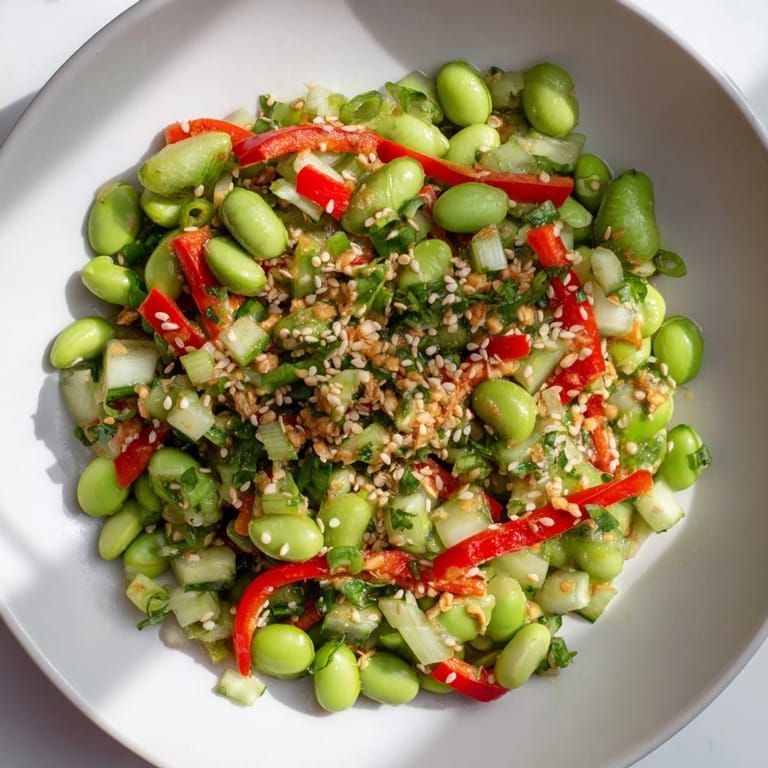
Save One summer afternoon, I was standing in my kitchen staring at a bag of frozen edamame, wondering what to do with it besides eating them straight from the pod like snacks. A friend had just texted asking what I was making for lunch, and something clicked—I'd make a salad that tasted like those vibrant bowls from the little Japanese spot downtown, but lighter and fresher. Twenty minutes later, I had something so good I couldn't stop eating it straight from the bowl, and I realized this needed to become a regular thing in my rotation.
I remember making this for a potluck where everyone else brought heavy casseroles, and watching people go back for thirds of something so simple felt like winning at something. My coworker asked for the recipe right there at the table, and I realized it wasn't just me—there's something about the combination of cool, tender edamame and that nutty sesame dressing that just works.
Ingredients
- Edamame: Use fresh or frozen shelled beans, and don't skip the brief boil—it releases their sweetness and gives them the right tender-but-still-firm texture that makes the salad feel substantial.
- Cucumber: A crisp, cool backbone that contrasts beautifully with the warm nuttiness of the sesame oil, so choose one that's firm and fresh.
- Green onions: These add a gentle onion sharpness that keeps the salad from feeling one-note, and slicing them thin means they distribute evenly throughout.
- Red bell pepper: Optional, but it brings a bright sweetness and color that makes the whole thing feel more intentional.
- Toasted sesame oil: This is non-negotiable—the toasted version has depth that regular sesame oil can't match, and a little goes a long way.
- Rice vinegar: Mild and slightly sweet, it balances the richness of the oil without overpowering anything.
- Soy sauce or tamari: Use tamari if you need gluten-free, and know that this is what ties the whole dressing together with umami.
- Fresh ginger and garlic: These aren't just flavor add-ons—they're what make this taste alive and awake instead of flat.
- Honey or maple syrup: A touch of sweetness that rounds out the dressing and helps everything feel harmonious.
- Sesame seeds: Toast your own if you can, because that nutty aroma that fills your kitchen is part of the experience.
Tired of Takeout? 🥡
Get 10 meals you can make faster than delivery arrives. Seriously.
One email. No spam. Unsubscribe anytime.
Instructions
- Boil and chill the edamame:
- Bring salted water to a rolling boil and add the edamame for 3 to 5 minutes—you want them tender but still with a slight bite. Drain immediately and run them under cold water while swishing them around to cool them down fast and stop the cooking.
- Gather your vegetables:
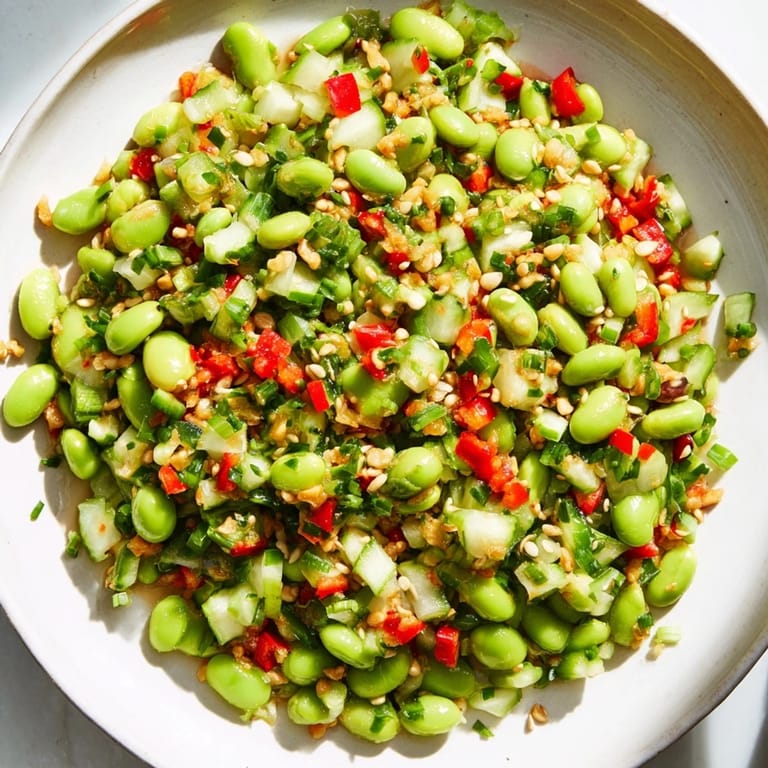
- Dice the cucumber into chunks that feel substantial in your mouth, slice the green onions so they're thin enough to distribute through every bite, and cut the bell pepper into pieces roughly the same size as the edamame. Combine everything in a large bowl and you've already got something beautiful to look at.
- Build the dressing:
- In a small bowl, whisk together the sesame oil, rice vinegar, soy sauce, honey, ginger, garlic, and one teaspoon of sesame seeds until everything looks emulsified and glossy. This is your moment to taste and adjust—if it feels too salty, add a splash more vinegar; if it feels thin, add another few drops of sesame oil.
- Bring it all together:
- Pour the dressing over the vegetables and edamame, then toss everything gently but thoroughly so every piece gets coated. If you're patient enough, refrigerate for 30 minutes before serving so the flavors have time to get to know each other.
- Finish and serve:
- Top with extra toasted sesame seeds and fresh cilantro if you have it, and serve it cold or at room temperature depending on your mood. The salad tastes best within a few hours, while everything is still crisp and the dressing hasn't started breaking down.
 Save
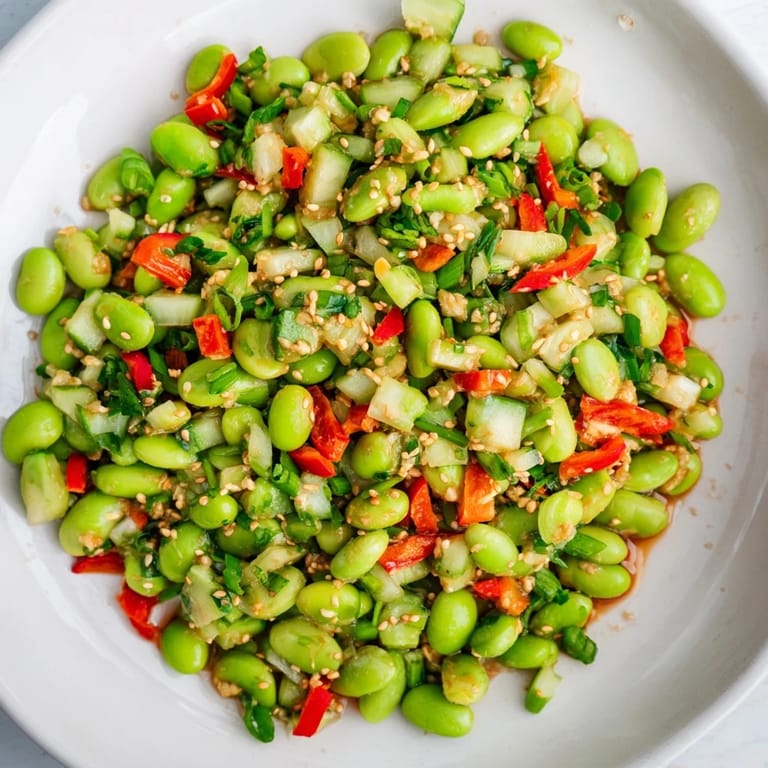
Save There's a moment when you take that first bite and everything is cold and crisp and nutty and bright all at once, and you think, this is exactly what I needed without knowing I needed it. That's when this salad stopped being just a recipe and became something I make whenever I want to feel a little more intentional about what I'm eating.
Why This Works as a Side Dish
This salad doesn't demand to be the center of attention—it slots in beautifully next to grilled fish, alongside rice bowls, or as part of a bento box where it sits quietly making everything around it taste better. The cool, light nature of it means it won't overpower other flavors, and the protein from the edamame means it actually sustains you instead of just sitting on the side of your plate.
Making It Your Own
Once you understand how the basic flavors work together, you can play with this endlessly. Some days I add shredded carrots for extra crunch, other times I throw in some blanched snap peas, and I've even made versions with a splash of sriracha when I wanted something with more personality. The framework is solid enough to handle improvisation without falling apart.
Storing and Timing
This is the kind of salad that actually tastes better after sitting for a bit, so don't stress if you're making it ahead of time. The vegetables stay crisp for hours if you store the dressing separately and toss everything together just before serving, though honestly, I've never had leftovers last long enough to test how many days they'll keep.
- Keep the dressing in a separate container and toss it with the vegetables right before you eat to maintain that crisp texture.
- If you're meal prepping, assemble everything except the dressing and keep them separate until you're ready to eat.
- Serve it cold straight from the fridge or let it sit at room temperature for 15 minutes if you want the flavors to feel a little more pronounced.
 Save
Save This salad reminds me that the best food doesn't need to be complicated or fussy—it just needs to taste like someone cared enough to get the fundamentals right. Make it once and you'll understand why it keeps showing up on my table.