 Save
Save I remember the first time I saw a truly artistic approach to food presentation. It was at a small gallery opening where a chef friend had arranged a spread that looked more like a modern art installation than dinner. Colorful geometric shapes of vegetables, fruits, and cheese were laid out in a deliberate, almost puzzle-like pattern. I couldn't help but smile—here was someone taking the humble appetizer and turning it into something that made you pause before eating, something that asked you to look first and then taste. That moment sparked my obsession with creating dishes that feed both the eyes and the palate, and this Cubist Deconstruction became my love letter to that philosophy.
I made this for my sister's art-loving friends, and I watched their faces light up when they first saw it on the table. One guest literally took out her phone to photograph it from different angles before taking a bite. When she finally did, she closed her eyes and said, "It tastes like fresh air looks." That's when I knew this wasn't just another appetizer—it was an experience that reminded people why we cook in the first place.
Ingredients
- Cucumber: Choose a firm one with minimal seeds; the crisp, cool texture provides a clean canvas for the other flavors and adds a refreshing bite.
- Golden beet: Cook it until tender but still with a slight firmness in the center, which keeps the slices intact and visually striking. The earthy sweetness grounds the brighter notes around it.
- Watermelon radish: This heirloom variety offers both visual drama with its pink and white striped interior and a subtle peppery note that adds depth.
- Ripe avocado: Choose one that yields slightly to pressure; it should slice cleanly without being mushy, and its creamy richness balances the bright acidity of the lemon.
- Feta cheese block: Using block feta instead of crumbled means you can cut it into precise geometric shapes; its tangy, salty character ties everything together.
- Ripe mango: Look for fragrant fruit that gives gently to touch; its golden sweetness adds a tropical warmth that surprises and delights.
- Extra virgin olive oil: Don't skimp here—this is your finishing touch, and quality matters when it's the only cooking element.
- Lemon juice: Fresh is essential; it brightens every ingredient and prevents the avocado from browning too quickly.
- Flaky sea salt and black pepper: These bring out the inherent flavors of each element without overwhelming the delicate, fresh character of the dish.
- Microgreens or fresh herbs: These add a final pop of color and a fresh, living quality that elevates the presentation from impressive to unforgettable.
Tired of Takeout? 🥡
Get 10 meals you can make faster than delivery arrives. Seriously.
One email. No spam. Unsubscribe anytime.
Instructions
- Prepare your ingredients:
- Arrange everything on your cutting board like you're about to paint. The cucumber should be peeled and dry; pat it with a paper towel so the knife glides cleanly through each slice. Your beet should be cooked and cooled, firm enough to hold its shape but tender enough that your knife cuts through like butter.
- Cut geometric shapes with intention:
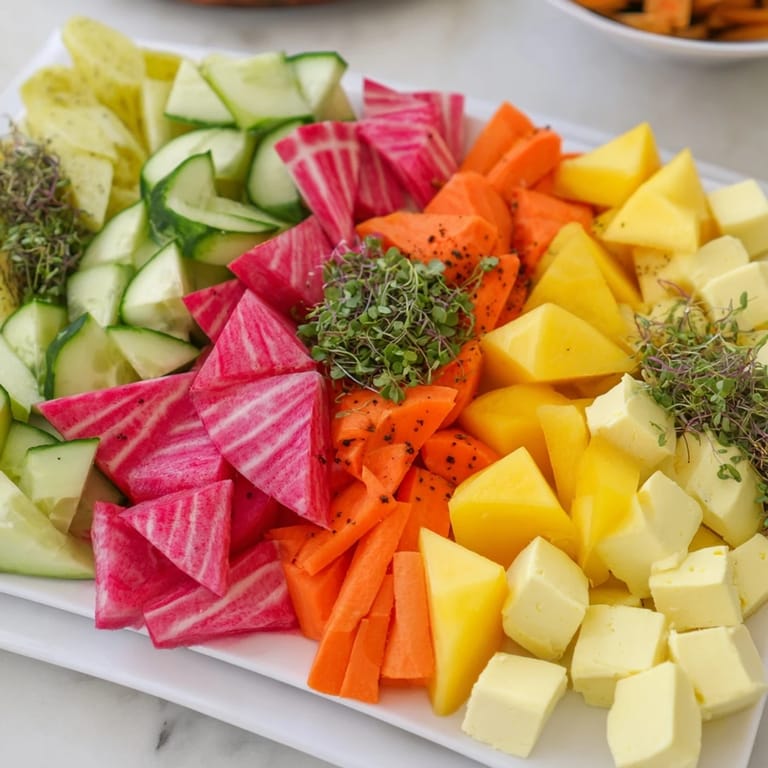
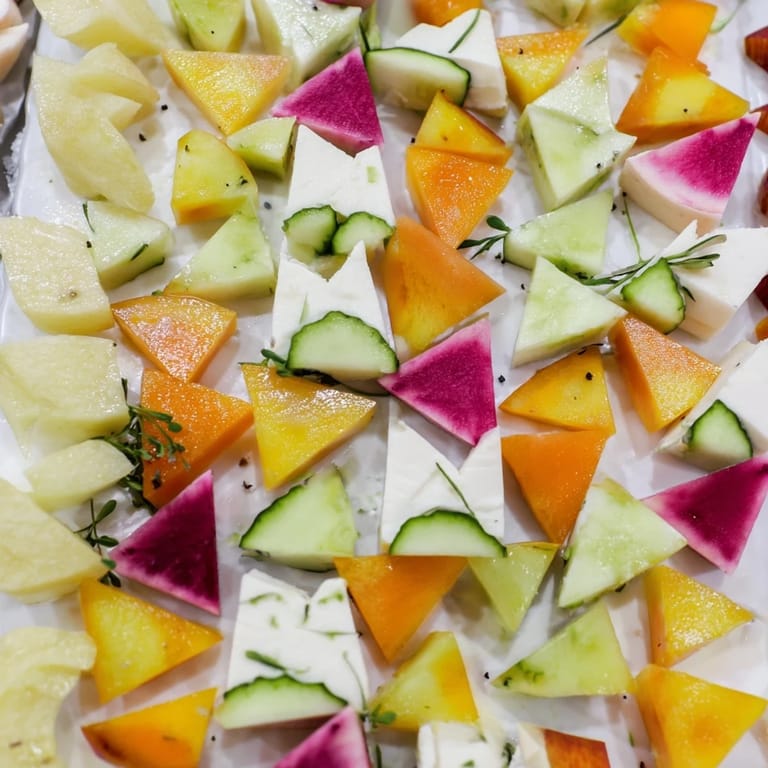
- This is where the magic happens. Slice your vegetables and fruits into triangles, parallelograms, irregular polygons—think of each cut as deliberate and purposeful. Aim for roughly 1 cm thickness so pieces have presence and stability on the platter. If you have small cookie cutters, use them for precision on firmer items like the beet or avocado. Feel the resistance of the knife; listen to the clean slice of a sharp blade through fresh produce.
- Cut the feta into architectural shapes:
- Use your sharpest knife and make clean, deliberate cuts into cubes or prisms. Cold feta cuts better than room temperature, so keep it chilled right up until the moment you cut. The geometric feta pieces should echo the shapes of the vegetables, creating a visual dialogue across the platter.
- Compose your edible canvas:
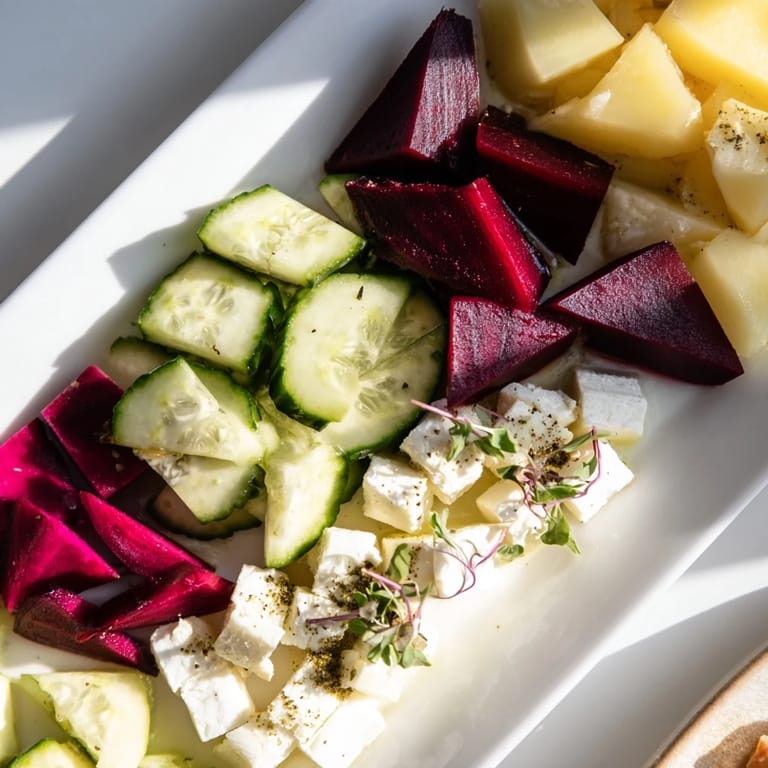
- Place your large platter in front of you and begin arranging. Position pieces close together but not overlapping, as though they're dancing partners in conversation. Mix the colors intentionally—let the golden beet sit near the mango, nestle the pink watermelon radish against the cream-colored feta. Step back and look. Turn the platter. Does it feel balanced? Does it draw the eye in an interesting way?
- Dress with oil and citrus:
- Drizzle the olive oil across the entire arrangement with a light hand, letting it pool slightly between the pieces. It should glisten, not glisten excessively. Follow with the lemon juice, distributed evenly so every bite will have that bright pop of acidity.
- Season and garnish:
- Scatter the flaky sea salt across everything; you'll hear it crackle against the platter if you listen closely. Grind black pepper over the top with intention, then crown the whole composition with your microgreens or fresh herbs, arranging them like final brushstrokes.
- Serve immediately:
- The moment you complete this dish, bring it to the table. The beauty is in the freshness—the clean lines, the vibrant colors, the just-cut quality of everything. This is meant to be experienced the moment it's finished.
 Save
Save I learned something profound while making this dish for the tenth time: beautiful food invites people to slow down. They don't just eat it; they experience it. That shift—from consumption to contemplation—is when food becomes more than sustenance. It becomes a moment, a memory, something shared.
Choosing Your Vegetables Mindfully
The vegetables you choose are your palette. Golden beets bring earthiness and warmth, while watermelon radishes add visual surprise with their internal pink striping. If golden beets aren't available, try candy cane beets or even roasted purple carrots for contrast. The principle remains the same: choose ingredients that offer something visually and texturally unique. When shopping, feel the vegetables in your hands. A good beet should feel dense and heavy; a cucumber should be crisp without any soft spots. This attention to quality before you even get home sets the foundation for everything that follows.
The Art of Geometric Cutting
Cutting geometric shapes isn't as intimidating as it sounds. Start with triangles and squares—these require only two or three confident cuts. Once you feel comfortable, experiment with parallelograms by angling your knife slightly. The goal isn't perfection; it's intention. Each cut should feel deliberate, like you're consciously choosing the shape rather than defaulting to rounds or standard slices. If you have access to small cookie cutters, hexagons and circles become effortless. The variety in shapes creates visual interest and makes every bite feel like a small surprise.
Variations and Personal Touches
While this recipe shines in its simplicity, it's a canvas for your own creativity. Swap the mango for fresh pineapple for a different tropical note, or add roasted beets alongside golden ones for a deeper color story. For a vegan version, firm tofu pressed and cubed replaces the feta beautifully, and a dusting of nutritional yeast adds a subtle savory depth. In summer, try thin slices of heirloom tomatoes or striped candy-cane beets. In cooler months, roasted squash or parsnips add warmth. The magic is in respecting the geometric principle while making it your own.
- Purple carrots and yellow bell peppers add unexpected color combinations that feel fresh and modern.
- Serve with cocktail picks or small forks so guests can enjoy this as an interactive appetizer experience.
- Pair with a crisp white wine like Sauvignon Blanc to echo the bright, fresh flavors on the plate.
 Save
Save This dish reminds me that cooking is ultimately about generosity—taking simple, beautiful things and presenting them in a way that says, "I see you, and you deserve something special." Every time you make it, you're not just preparing food; you're creating a moment.
Recipe Help
- → What vegetables work best for geometric slicing?
Firm vegetables like cucumber, golden beet, and watermelon radish hold shapes well, making them ideal for creating distinct geometric cuts.
- → How can I replace feta cheese for a vegan option?
Firm tofu cut into cubes or prisms provides a similar texture and complements the fresh vegetables and fruits.
- → How should I slice the ingredients for the best presentation?
Use a sharp knife or small cookie cutters to create neat triangular, parallelogram, hexagonal, or polygonal shapes about 1 cm thick.
- → What garnishes enhance the flavor and appearance?
Microgreens or fresh herbs like basil and cilantro add a pop of color and fresh aromatic notes to the dish.
- → How can I keep the flavors balanced in this dish?
Drizzle extra virgin olive oil and lemon juice evenly over the arrangement and season lightly with flaky sea salt and cracked black pepper to enhance the natural flavors.