 Save
Save There's something about April that makes me crave asparagus soup, that moment when the farmers market suddenly fills with those green spears and you remember why spring tastes different. I was testing recipes on a drizzly afternoon, and my kitchen filled with the most delicate, grassy steam when I blended the first batch—it reminded me why simple, seasonal cooking feels like the truest kind of luxury. This soup taught me that vegetables don't need much to shine; sometimes just butter, broth, and the patience to let them speak for themselves is enough.
I made this for my neighbor last spring when she mentioned missing fresh, simple food after a long winter, and watching her face light up with the first spoonful made me realize that good soup is really just about paying attention—to the vegetables, to the timing, to what people actually want to eat.
Ingredients
- Fresh green asparagus, 500g: Choose stalks that are bright green and firm, not woody or limp, and separate the tender tips from the tougher stalks so each cooks at the right pace.
- Leek, 1 medium: The white and light green parts are milder and sweeter than the dark greens, so don't skip the trimming or you'll get a soup that tastes overly sharp.
- Potato, 1 medium: This isn't just filler—it adds natural body to the soup and makes it feel substantial without needing cream.
- Onion, 1 small: One small onion is all you need to build a gentle flavor base without overpowering the delicate asparagus.
- Vegetable broth, 1 L: Use the best quality you can find because it's the foundation of everything; homemade broth will make you understand why this soup tastes so clean and bright.
- Heavy cream, 150 ml: This amount adds silkiness without making the soup feel heavy, though you can reduce it if you prefer something lighter.
- Unsalted butter, 2 tbsp: Starting with butter instead of oil creates a more elegant, rounded flavor in the base vegetables.
- Lemon juice, 1 tbsp: Add this at the very end—it's the secret that makes people ask what makes your soup taste so alive.
- Salt, pepper, and nutmeg: The nutmeg is optional but worth trying; just a pinch adds an unexpected warmth that makes you pause between sips.
Tired of Takeout? 🥡
Get 10 meals you can make faster than delivery arrives. Seriously.
One email. No spam. Unsubscribe anytime.
Instructions
- Build your base gently:
- Melt butter over medium heat and add your onion, leek, and diced potato, stirring occasionally for 4 to 5 minutes until they soften and release their sweetness but stay pale. You're not trying to brown them—you want their delicate flavors to stay forward.
- Introduce the asparagus:
- Add the asparagus stalks (keep those tips aside for now) and let them cook for just 2 minutes to warm through before the liquid goes in. This brief head start helps them break down more evenly.
- Simmer with patience:
- Pour in your vegetable broth, bring it to a gentle boil, then lower the heat and let it bubble softly for 15 minutes until every vegetable is completely tender. You'll know it's ready when a potato piece dissolves on your tongue.
- Blanch the tips separately:
- While the soup simmers, bring a small pot of salted water to a rolling boil and drop in those reserved asparagus tips for just 1 to 2 minutes until they're bright green and still have a little snap. They should taste fresh and delicate, not mushy.
- Blend into velvet:
- Using an immersion blender, puree the soup right in the pot with smooth, controlled motions until there are no visible vegetable pieces left. If using a countertop blender, work in batches and never fill it more than halfway—hot soup needs room to expand.
- Finish with cream and brightness:
- Stir in the cream, bring the soup back to a gentle simmer for a minute or two, then taste and adjust your seasonings with salt, pepper, and maybe that pinch of nutmeg. Add the lemon juice last—this is what transforms it from nice to memorable.
- Plate like you mean it:
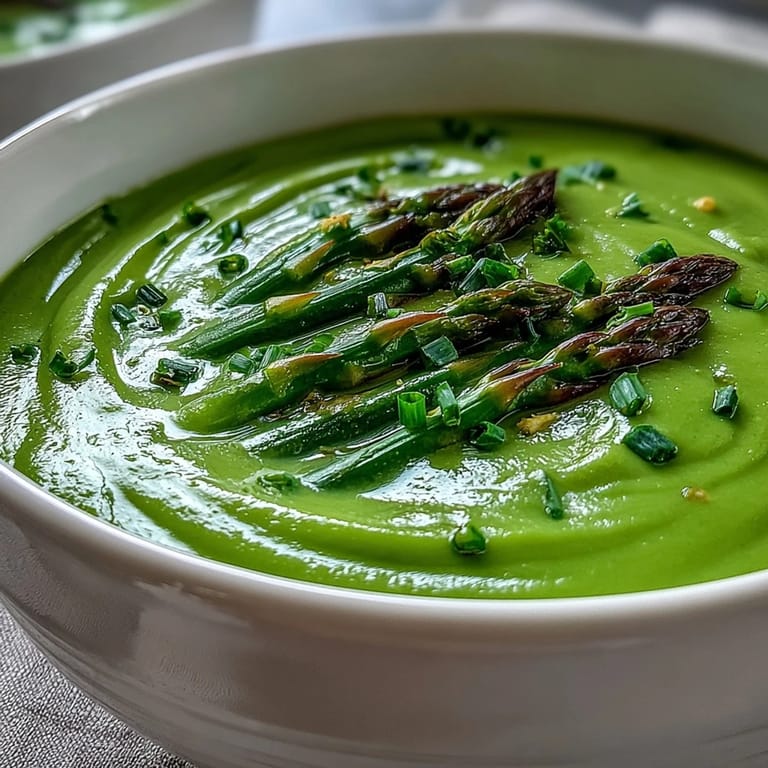
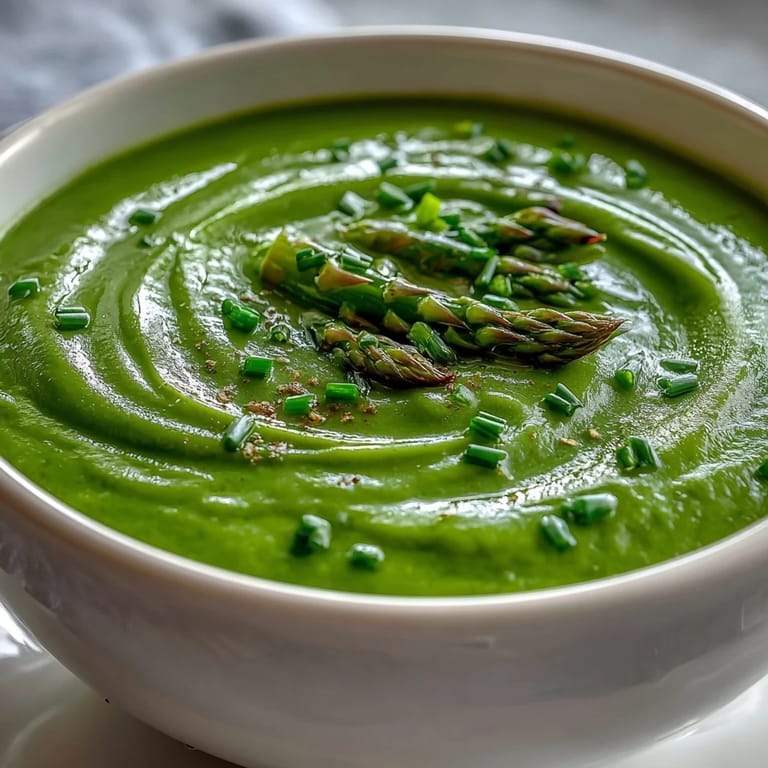
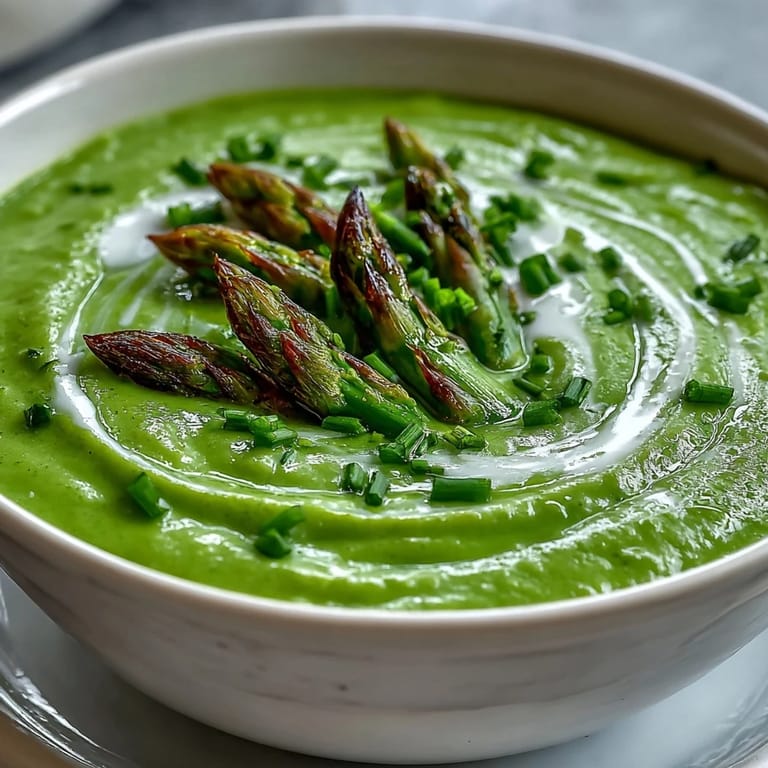
- Ladle the soup into warm bowls (warm bowls keep it tasting fresher longer), then crown each one with those vibrant asparagus tips and a scattered handful of fresh chives or parsley. The garnish isn't decoration—it's telling people what they're about to eat.
 Save
Save My favorite version of this soup happened by accident when I had people over and one guest mentioned being vegan, so I grabbed olive oil and a carton of oat cream instead of butter and dairy—and honestly, I couldn't taste the difference. It taught me that sometimes the best dishes are the ones flexible enough to welcome unexpected changes without losing their soul.
Variations That Actually Work
This soup is more forgiving than you might think, and some of my favorite versions came from working with what was in the house. I've swapped the potato for cauliflower when I wanted something lighter, and I've added a splash of white wine after sautéing the vegetables because I was opening one anyway. The core structure stays the same, but the personality shifts depending on what vegetables are in season or what you're hungry for.
Serving Suggestions and Timing
This soup is beautiful served hot, but I also love it chilled on warm days with an extra squeeze of lemon and a drizzle of good olive oil. It keeps in the fridge for three days, and reheats gently on the stove with a splash of broth to refresh the texture. You can make it the morning of a dinner party and spend your evening time on other things, which is maybe the best argument for mastering a good soup.
Why This Works So Well
Spring asparagus has this bright, almost grassy quality that gets muted if you cook it too long or with too much cream, but this recipe respects that delicate flavor while still creating something rich enough to feel like comfort food. The potato does invisible work, adding body without being obvious, and the butter-based broth creates a foundation that tastes homemade and careful. The real secret is understanding that elegant food doesn't mean complicated—it means knowing exactly what each ingredient needs and giving it that.
- Invest in fresh asparagus at the peak of the season and this soup becomes almost effortless.
- Taste constantly as you add salt and lemon—your palate is the best guide for what your version needs.
- Warm your serving bowls before ladling to keep the soup tasting fresh and hot for longer.
 Save
Save This soup reminds me that sometimes the most meaningful meals are the simplest ones, made with ingredients that taste like themselves and served to people who notice. Make it once and you'll understand why spring vegetables deserve this kind of gentle, careful treatment.
Recipe Help
- → How do I make this soup vegan?
Replace butter with olive oil and substitute plant-based cream for heavy cream. The texture and flavor profile remain excellent while making it completely dairy-free.
- → Can I freeze this asparagus soup?
Yes, freeze the soup before adding cream. Thaw overnight in the refrigerator, reheat gently, then stir in the cream and lemon juice just before serving for best texture.
- → What wine pairs well with this soup?
A crisp Sauvignon Blanc complements the fresh asparagus flavors beautifully. The wine's acidity balances the cream while enhancing the vegetable's natural sweetness.
- → Why add lemon juice at the end?
Fresh lemon juice brightens the flavors and cuts through the richness of the cream. It adds a subtle acidity that makes the asparagus taste more vibrant and fresh.
- → How do I get the smoothest texture?
Blend thoroughly with an immersion blender or countertop blender. For ultra-smooth results, pass the pureed soup through a fine-mesh sieve before adding the cream.
- → Can I use frozen asparagus?
Fresh asparagus yields the best flavor, but frozen works in a pinch. Thaw completely before adding to the pot, though the texture may be slightly less vibrant.