 Save
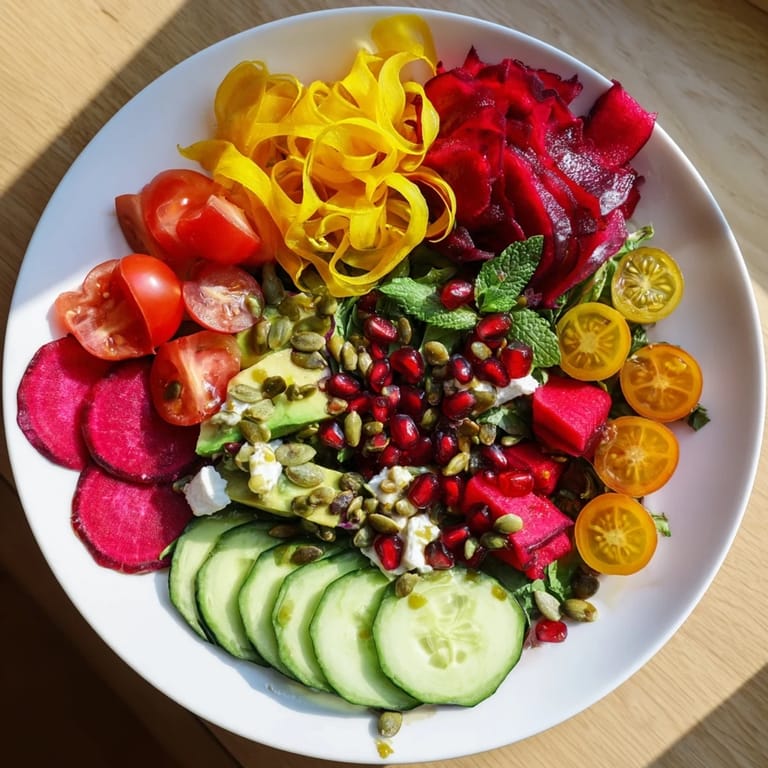
Save I'll never forget the afternoon I spent in a tiny gallery in Brooklyn, watching a Jackson Pollock exhibition. The chaos, the energy, the way colors seemed to dance together—it captivated me completely. That evening, I came home inspired and decided to channel that same wild creativity into my kitchen. I opened my refrigerator, grabbed whatever vibrant produce I could find, and created this salad. It was pure instinct, pure joy. Now, every time I make it, I'm transported back to that gallery, but this time with my hands in the ingredients, painting with food instead of canvas.
I made this for a dinner party on a summer evening, and I remember my friend Sarah's face lighting up when she saw it. She literally gasped. We all did—we were too busy admiring it to eat at first. Then someone drizzled the dressing across their portion, and suddenly permission was granted for everyone to dig in. That moment, watching people transform from appreciators to eaters, was when I realized this salad was something special.
Ingredients
- Cherry tomatoes (red and yellow), halved, 1 cup: Use the best tomatoes you can find—they're the stars here. The mix of colors gives you visual magic, and halving them lets the juice run into the greens
- Golden beet, peeled and shaved, 1 small: This earthy sweetness is your grounding note. A mandoline makes this effortless, but a sharp knife works too if you take your time
- Cucumber, sliced into ribbons, 1 small: These ribbons catch the dressing beautifully and add a cool, refreshing crunch that balances the sweetness
- Red radishes, thinly sliced, 1/2 cup: They're peppery and crisp, and they hold their color like little jewels on the plate
- Watermelon, cut into irregular cubes, 1 cup: This is your wild card—sweet, juicy, unexpected. Cut them unevenly so they look spontaneous
- Avocado, cubed, 1 ripe: Creamy and subtle, it softens the edges of all those bright flavors. Add it just before serving so it doesn't oxidize
- Mixed baby greens (arugula, baby spinach, frisée), 1 cup: These are your canvas. The slight peppery bite of arugula and the frilly texture of frisée matter more than you'd think
- Fresh mint leaves, torn, 2 tbsp: Tear by hand, never cut, so the oils stay intact and you get those bursts of cool mint throughout
- Toasted pumpkin seeds, 1/4 cup: The toasting matters—it brings out a nutty depth that raw seeds can't match. Buy them already toasted if you're short on time
- Pomegranate seeds, 1/4 cup: They pop with tartness and juice. These little bursts of flavor are non-negotiable
- Crumbled feta cheese, 1/4 cup: The salt and tang here tie everything together. Don't skip it, but don't overdo it either
- Extra-virgin olive oil, 3 tbsp: This is not the time for grocery store oil. Taste it before you use it—you should love it on its own
- White balsamic vinegar, 1 tbsp: It's gentler than regular balsamic, letting the salad shine without turning everything dark and heavy
- Honey, 1 tsp: Just a whisper of sweetness to marry the vinegar and oil together
- Dijon mustard, 1/2 tsp: An emulsifier that makes the dressing cling to the greens instead of pooling at the bottom
- Salt and freshly ground black pepper, to taste: Taste as you go—the feta is already salty, so be judicious
Tired of Takeout? 🥡
Get 10 meals you can make faster than delivery arrives. Seriously.
One email. No spam. Unsubscribe anytime.
Instructions
- Gather your palette:
- Prep all your ingredients and arrange them in separate bowls around your workspace. This is your moment to admire the colors before they become one glorious mess. Take your time shaving the beet, ribboning the cucumber, slicing the radish thin enough to see light through it
- Create the foundation:
- Scatter the baby greens and torn mint loosely across your large platter or shallow bowl. Don't worry about coverage—you want gaps, texture, air between the leaves. This is the underpainting
- Dance with color:
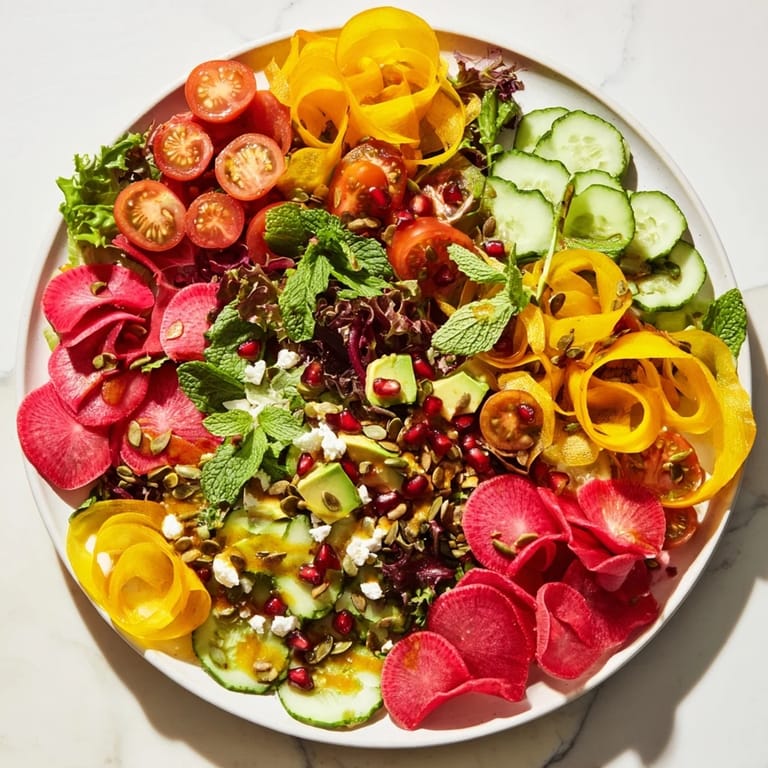
- Now comes the fun part. Toss the tomatoes, beet, cucumber, radish, watermelon, and avocado across the greens in an intentionally wild way. Let them overlap, let them cluster in some places and scatter in others. Think about how a painter doesn't plan every brushstroke—neither should you
- Add the jewels:
- Sprinkle the pumpkin seeds, pomegranate seeds, and feta across the top in an irregular pattern. These should feel like happy accidents, not a grid
- Make the magic liquid:
- In a small bowl, whisk the olive oil, white balsamic, honey, and mustard together. Watch as the mustard helps them come together into something creamy and cohesive. Taste it. Adjust. It should sing on its own
- Paint with dressing:
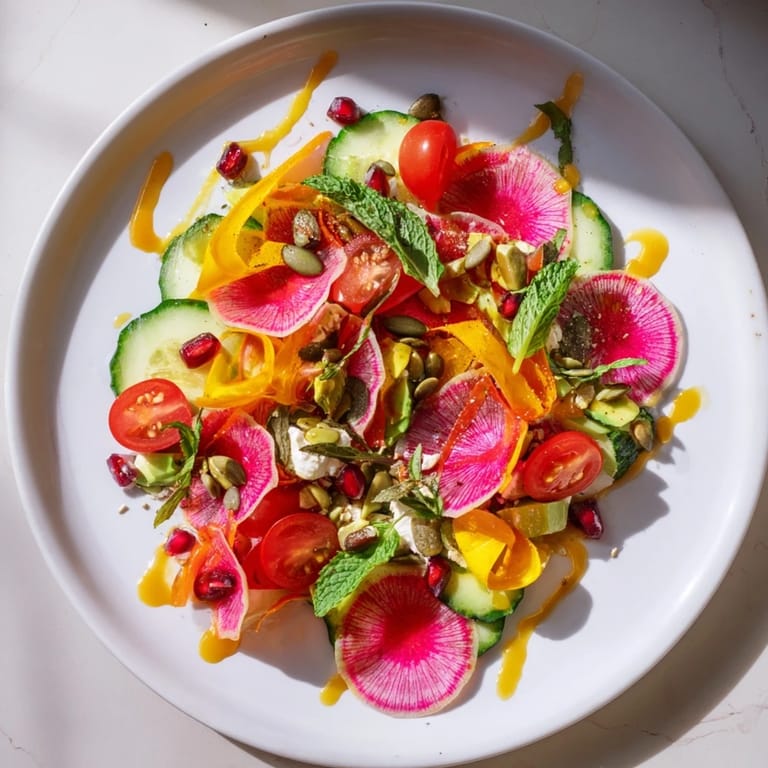
- Drizzle the dressing across the salad in zigzags and splatters, just like brushstrokes. Don't be shy. The salad needs the dressing to taste complete
- The moment of truth:
- Serve immediately. Let people admire it for a moment, then invite them to mix it as they go. There's something wonderful about watching someone create their own perfect bite
 Save
Save I think about a Wednesday night when my neighbor knocked on the door, upset about something at work. I invited her in, threw this salad together, and we sat at my kitchen counter. By the time she was halfway through, she was smiling. There's something about eating something this beautiful and this alive that makes your problems feel smaller. Food doesn't fix things, but it can make you feel less alone while you figure them out.
The Art of Arrangement
This salad is deliberately chaotic, but there's a trick to making it look intentional rather than accidental. The secret is to think in clusters and flows rather than precise placement. Group similar colors together, but let them bleed into each other at the edges. The reds should find the yellows naturally. The greens should peek through everywhere. It's like working with color theory without thinking about it too hard—trust your eye, trust your instincts, and remember that perfection would actually ruin this dish.
Why Raw Vegetables Sing Here
There's no cooking in this recipe, and that's entirely intentional. Every vegetable keeps its integrity, its snap, its sweetness. You taste the beet's earthiness without any mellowing. The radish stays peppery. The tomato juice mingles with the dressing to create its own sauce. When you cook vegetables, you're transforming them. Here, you're celebrating them as they are.
Variations and Swaps
This salad is a template, not a prescription. If you can't find golden beets, use the regular kind—the color will shift, but the flavor stays true. In winter, add shaved raw Brussels sprouts or thinly sliced fennel for crunch. For a dairy-free version, skip the feta or use cashew cheese. Add edible flowers if you're feeling fancy, or crispy chickpeas if you want more protein. The beauty is that you can follow your garden, your market, and your mood
- Toss in thinly sliced fennel or shaved raw Brussels sprouts for extra crunch and a peppery note
- Add roasted purple sweet potatoes for deeper earthiness and a touch of warmth
- Use any fresh herbs you have on hand—cilantro, basil, or dill all work beautifully
 Save
Save This salad is proof that some of the best moments in the kitchen happen when you stop thinking about rules and start listening to the colors in front of you. Make it, enjoy it, and know that every single version you create will be uniquely yours.
Recipe Help
- → What ingredients create the salad's vibrant colors?
Cherry tomatoes, golden beets, watermelon cubes, cucumber ribbons, and red radishes contribute bright reds, yellows, and greens.
- → How is crunch added to this salad?
Toasted pumpkin seeds and pomegranate seeds introduce a satisfying crunch and subtle sweetness.
- → What dressing complements the fresh ingredients?
A blend of extra-virgin olive oil, white balsamic vinegar, honey, Dijon mustard, salt, and pepper is whisked and drizzled over the salad.
- → Can this salad accommodate dietary preferences?
Yes, it's naturally vegetarian and gluten-free; feta can be swapped for vegan cheese for a dairy-free option.
- → How should the salad be served for best presentation?
Arrange ingredients loosely on a large platter, scatter seeds and cheese irregularly, and drizzle dressing in zigzags to mimic artistic brushstrokes.